
Managing taxes can be challenging for people who earn income outside of traditional employment. Employees usually have taxes automatically removed from their paychecks, but freelancers, business owners, investors, and independent workers often need to handle their own payments. According to the IRS, the estimated U.S. tax gap averages about $696 billion annually, with underreported business income making up a significant portion of unpaid taxes. This is where quarterly estimated taxes become an important part of financial planning.
Quarterly estimated taxes allow taxpayers to pay their expected tax obligation throughout the year instead of waiting until the annual tax deadline. These payments help individuals stay current with the IRS, avoid unexpected tax bills, and maintain better control over their finances.
Understanding how quarterly taxes work USA rules is especially important for people with changing income because their earnings may not remain the same every month. A proper approach includes estimating income, tracking expenses, calculating tax obligations, and making payments at the correct times.
This guide explains who needs to pay quarterly taxes in USA, how the IRS system works, how to calculate payments, and how taxpayers can avoid common mistakes.
What Are Quarterly Estimated Taxes?
Definition of estimated taxes
The process requires taxpayers to review their income, expenses, deductions, and credits. Knowing the difference between tax credits vs tax deductions can help you estimate your taxes more accurately because both can reduce the amount you owe. A good estimate helps prevent two common problems: paying too little and facing penalties, or paying too much and tying up money that could be used elsewhere.
Why they exist in the US system
The United States uses a pay-as-you-go tax system. This means taxpayers are expected to pay taxes as they earn income instead of delaying all payments until the end of the year.
For employees, this system is simple because employers usually calculate and send payroll withholding payments to the IRS. However, many people earn income that does not come with automatic withholding. Business owners, freelancers, and investors must manage their own tax payments.
Quarterly estimated taxes exist to create fairness between different types of workers. Someone earning a salary and someone running a business should both contribute taxes throughout the year based on their earnings.
The system also helps the government maintain regular tax revenue instead of receiving most payments only once a year. For taxpayers, it creates smaller tax installment payments that are easier to manage than one large payment.
Many people use estimated tax payments USA rules as part of their financial routine. By planning, taxpayers can set aside money regularly and avoid financial pressure when tax deadlines arrive.
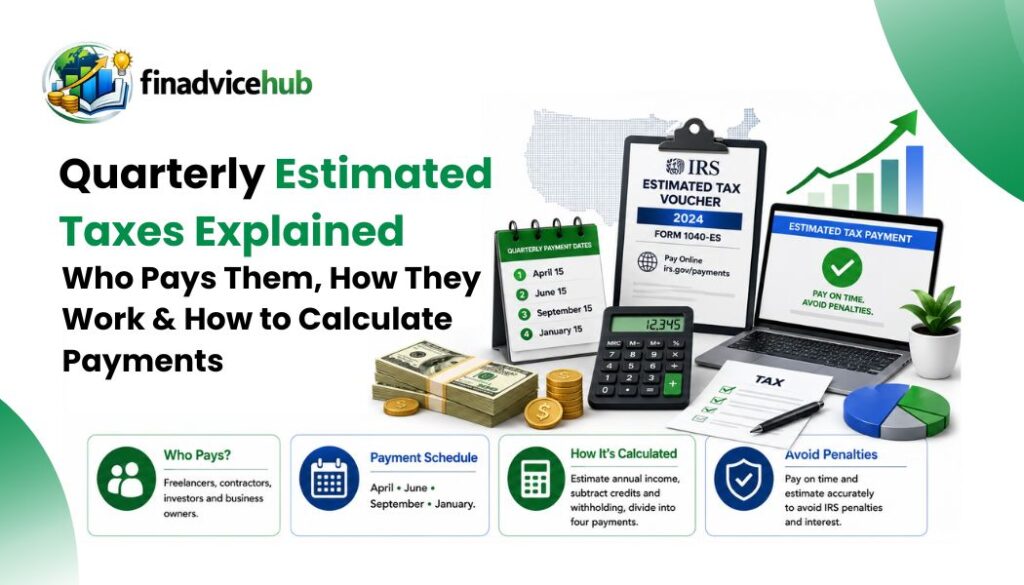
Who is required to pay
Not everyone needs to make quarterly payments. The requirement generally applies to individuals who expect to owe a certain amount of tax after considering withholding, deductions, and credits.
People who commonly need to make payments include:
- Freelancers working with multiple clients
- Independent contractors
- Small business owners
- Consultants and professionals working for themselves
- Investors with significant taxable income
- Individuals with rental or side business income
Understanding who needs to pay quarterly taxes in USA helps taxpayers determine whether they must follow this process.
For example, a full-time employee who receives a regular paycheck may not need quarterly payments because their employer already withholds taxes. However, if that same employee earns additional income from consulting work, they may need to make estimated payments on that extra income.
The IRS considers expected annual income, expected tax liability, and current withholding amounts when determining whether quarterly payments are necessary.
Income types covered
Quarterly estimated taxes can apply to many types of income that do not have automatic tax withholding. The most common sources include self-employment earnings, investment profits, and additional business income.
Common income types covered by estimated payments include:
- Freelance income from services or projects
- Business profits from sole proprietorships
- Rental property earnings
- Interest and dividend income
- Capital gains from investments
- Royalties and other independent income sources
For self-employed individuals, estimated payments usually include both income tax and self-employment tax. Self-employment tax covers Social Security and Medicare contributions that employees normally share with their employers.
For investors, income can be more difficult to predict because market activity changes throughout the year. A person who sells investments for a profit may need to adjust their estimated payments after a major financial event.
Accurate quarterly income reporting helps taxpayers create better estimates and avoid large differences between what they paid and what they actually owe.
Overview of IRS system
The IRS manages quarterly estimated taxes through a structured process designed to collect payments throughout the year. Taxpayers calculate their expected yearly tax obligation and divide payments according to IRS requirements.
The basic IRS process includes:
- Estimating annual income
- Calculating expected taxable income
- Applying deductions and credits
- Determining estimated tax liability
- Making payments according to IRS quarterly tax deadlines
The IRS payment schedule divides the year into four payment periods. Each payment covers income earned during a specific part of the year.
Taxpayers can make payments through several methods, including electronic payment systems, credit or debit options, or mailed checks. Many people prefer online payments because they receive confirmation and can track their records easily.
Following the IRS system correctly supports tax compliance and reduces the risk of penalties.
Who Needs to Pay Quarterly Taxes?
Freelancers and self-employed individuals
Freelancers and self-employed professionals are among the most common groups required to make quarterly payments. Since they do not receive traditional paychecks, they usually do not have an employer handling tax withholding.
Examples include writers, designers, developers, consultants, photographers, coaches, and online business owners.
For these workers, income can vary significantly from month to month. One month may bring several projects, while another month may produce less income. Because of this uncertainty, they must regularly review earnings and update their tax estimates.
Managing self-employed quarterly taxes requires a reliable system. Many freelancers separate business and personal accounts, track payments received, record expenses, and save a percentage of income for taxes.
A freelancer who earns $5,000 in one month should not assume all of that money is available for spending. Part of that income may need to cover future tax obligations.
Proper planning turns taxes into a predictable business expense rather than an unexpected financial burden.
Independent contractors
Independent contractors work independently but often provide services to businesses or individuals. Unlike employees, they usually receive payments without tax deductions.
Examples include delivery contractors, marketing specialists, IT professionals, construction workers, and virtual assistants.
Because contractors are responsible for their own taxes, they must understand their self-employment tax obligations. They need to calculate not only income tax but also additional taxes related to Social Security and Medicare.
A common mistake among new contractors is treating all received income as available spending money. Without planning, they may face a large tax bill later.
Successful contractors create a tax routine by tracking income, saving money regularly, and reviewing their estimated tax calculation method throughout the year.
Investors with income
Investors may also need quarterly payments when they earn income from investments. This can include dividends, interest, rental income, or profits from selling assets.
Investment income can be unpredictable because market conditions change. Someone who earns a large capital gain from selling stocks may suddenly have additional tax responsibilities.
Investors should review their portfolio activity regularly and consider how major transactions affect their annual tax estimate.
A person who ignores investment income until tax filing time may discover they owe more than expected. Quarterly planning helps spread out the financial impact.
Side income earners
Many people earn extra money outside their main job through side businesses, online platforms, consulting, or creative work.
Examples include:
- Selling products online
- Teaching courses
- Providing freelance services
- Creating digital content
- Renting property
Side income often starts small, but tax obligations can increase as earnings grow.
People with additional income should track earnings from the beginning. Waiting until tax season can make it difficult to calculate expenses, deductions, and payments accurately.
Income threshold rules
The IRS has specific rules for determining when estimated payments are required. Generally, taxpayers may need to make payments if they expect to owe enough tax after accounting for withholding and credits.
The exact amount depends on individual circumstances, including income level, filing status, deductions, and previous tax payments.
Taxpayers should review their situation each year because income changes can affect requirements. A person who did not need quarterly payments last year may need them after starting a business or earning additional income.
Understanding these rules helps taxpayers remain compliant and avoid unnecessary penalties.
IRS Quarterly Tax Deadlines
Understanding payment dates is one of the most important parts of managing quarterly estimated taxes. Unlike regular employees who have taxes withheld automatically, self-employed individuals and other taxpayers must remember when payments are due.
The IRS divides the tax year into four payment periods. Each deadline covers income earned during a specific period, which allows taxpayers to spread their tax obligations throughout the year.
Following the IRS quarterly tax deadlines explained rules helps taxpayers avoid late payments, improve financial planning, and reduce the chance of penalties.
First quarter deadline
The first quarterly payment covers income earned during the beginning of the tax year. This period usually includes income received during the first few months of the year.
This payment is important because it establishes a strong starting point for the year’s tax planning. Taxpayers should estimate their expected annual income, review previous earnings, and consider any changes that may affect their financial situation.
For example, a freelancer who expects more projects in the current year should not simply use last year’s payment amount. A higher income estimate may require larger payments to prevent underpayment issues.
The first payment is also a good time to create a complete tax organization system. Taxpayers can begin tracking income, saving receipts, and recording business expenses from the start of the year.
A strong beginning makes later payments easier because financial information is already organized.
Second quarter deadline
The second quarterly payment covers the next income period after the first payment. By this point, many taxpayers have better information about their actual earnings.
For business owners and freelancers, this is an opportunity to compare estimated income with real income. If earnings are higher or lower than expected, the taxpayer can adjust future payments.
For example, a consultant who expected moderate income but receives several large contracts during the second quarter may need to increase later estimated payments.
This adjustment process is an important part of tax planning. Quarterly payments are not fixed amounts that must remain identical every time. They can change as financial circumstances change.
Reviewing income regularly helps taxpayers create more accurate payments and avoid large tax balances at the end of the year.
Third quarter deadline
The third quarterly payment covers income earned during the middle part of the year. This period is often when taxpayers have enough financial information to make more accurate predictions.
Many freelancers and business owners experience seasonal changes in income. Some industries earn more during certain months, while others may slow down.
For example, an online retailer may earn significantly more during certain shopping seasons. A contractor may have more projects during specific months. These changes should be included when reviewing estimated payments.
The third payment period is also a good time to review deductions. Taxpayers may discover additional business expenses, retirement contributions, or other deductions that can affect their final tax obligation.
Regular updates make the estimated tax calculation method more accurate and reduce unexpected results.
Fourth quarter deadline
The fourth quarterly payment covers the final income period of the year. This payment gives taxpayers a final opportunity to meet their tax responsibilities before filing their annual return.
Before making the final payment, taxpayers should review their complete financial picture. This includes total income, expenses, deductions, credits, and previous payments.
Many taxpayers use this period to perform a final estimate. If income was significantly higher than expected, increasing the final payment may help reduce the amount owed later.
The fourth payment also prepares taxpayers for the upcoming tax filing season. Organized records make it easier to complete tax forms and confirm that payments match actual income.
Penalty for late payments
Failing to make required quarterly payments on time can result in penalties. The IRS may charge penalties when taxpayers do not pay enough tax during the year or miss payment deadlines.
The quarterly tax penalty rules depend on several factors, including:
- The amount of unpaid tax
- When the payment was due
- How much was paid during the year
- Total tax liability
A taxpayer who makes smaller payments throughout the year may still avoid penalties if they meet certain IRS requirements.
The best way to prevent problems is to estimate income carefully, make payments on time, and update calculations when financial situations change.
How to Calculate Quarterly Estimated Taxes
Learning how to calculate quarterly estimated taxes step by step helps taxpayers create accurate payments and avoid unexpected tax bills. The process involves estimating income, subtracting deductions, calculating taxes, and dividing the result into payment periods.
While every taxpayer’s situation is different, the basic calculation process follows a similar structure.
Estimating annual income
The first step is determining expected yearly income. This includes all taxable sources such as business revenue, freelance payments, investment earnings, rental income, and other sources.
For self-employed individuals, this requires looking at expected sales, contracts, and business activity.
For example, a freelance writer may estimate income by reviewing current clients, expected projects, and previous year performance. A business owner may examine sales trends and operating forecasts.
Income estimates should be realistic rather than overly optimistic or conservative. Underestimating income can lead to insufficient payments, while overestimating income may reduce available cash unnecessarily.
Many taxpayers review their estimates every quarter because income can change throughout the year.
Applying tax brackets
After estimating income, taxpayers calculate their expected taxable income and apply the appropriate tax rates.
Tax brackets determine how much tax applies to different portions of income. The amount depends on factors such as filing status and total taxable earnings.
A taxpayer should not assume that their entire income is taxed at one rate. The US tax system uses progressive rates, meaning different portions of income may fall into different brackets.
Understanding tax brackets helps create a more accurate tax liability estimation.
Calculating self-employment tax
Self-employed individuals must calculate more than regular income tax. They also need to consider self-employment taxes.
These taxes cover Social Security and Medicare contributions that employers and employees normally share.
For example, a freelancer earning business income must calculate both their income tax responsibility and their self-employment tax obligations.
This is one reason why self-employed workers often need careful planning. Ignoring self-employment tax can create a large difference between expected and actual tax amounts.
Learning how to calculate self-employment quarterly taxes helps independent workers create more realistic payment plans.
Subtracting deductions and credits
Deductions and credits can significantly affect quarterly payments.
Deductions reduce taxable income, while credits directly reduce the amount of tax owed.
Common examples may include:
- Business operating expenses
- Retirement contributions
- Health-related deductions
- Education-related credits
- Qualified business deductions
Accurate recordkeeping is important because taxpayers must support deductions with proper documentation.
Many people overpay taxes because they fail to track expenses throughout the year.
Dividing into quarterly payments
After calculating the expected yearly tax obligation, taxpayers divide the amount into four payments.
This creates a predictable system that spreads tax costs throughout the year.
For example, if a taxpayer estimates they will owe $12,000 in annual taxes, they may plan for four payments of approximately $3,000 each, depending on IRS rules and individual circumstances.
This approach makes taxes easier to manage because the taxpayer is not required to find a large amount of money at the end of the year.
Form 1040-ES Explained
Purpose of Form 1040-ES
Form 1040-ES is the IRS form used to help individuals calculate and pay estimated taxes. It provides worksheets that guide taxpayers through income estimates, deductions, tax calculations, and payment amounts.
A proper understanding of Form 1040-ES explained instructions can make the payment process easier for freelancers, business owners, and other taxpayers.
The form is especially useful for people who do not receive traditional paycheck withholding.
How to fill it out
Completing Form 1040-ES involves several steps:
- Estimate yearly income
- Calculate expected adjustments and deductions
- Determine taxable income
- Estimate total tax responsibility
- Divide the amount into payment periods
Following Form 1040-ES instructions step by step helps taxpayers avoid calculation mistakes.
Taxpayers should update the form during the year if their income changes significantly.
Payment voucher system
Form 1040-ES includes payment vouchers for individuals who choose to mail their estimated payments.
Each voucher corresponds to a specific payment period. Taxpayers include the voucher with their payment so the IRS can properly apply the amount.
Although paper payments are still available, many people prefer electronic options because they are faster and easier to track.
Online vs paper submission
Many taxpayers choose online payment methods because they provide immediate confirmation and reduce the chance of mailing errors.
Those learning how to pay estimated taxes online can use IRS-approved electronic payment systems.
Online payments also make recordkeeping easier because taxpayers can save confirmation details for future reference.
Example calculation sheet
A simple Form 1040-ES worksheet may look like this:
| Calculation Item | Example Amount |
| Estimated annual income | $90,000 |
| Estimated deductions | $15,000 |
| Estimated taxable income | $75,000 |
| Total estimated tax | Based on tax calculation |
| Quarterly payment amount | Total tax divided into four payments |
This worksheet provides a basic framework. Actual calculations depend on filing status, deductions, credits, and individual financial details.
Step-by-Step Quarterly Tax Calculation Example
Understanding the theory behind quarterly estimated taxes is helpful, but seeing a practical example makes the process easier to understand. A real calculation involves estimating income, considering deductions, calculating tax obligations, and creating a payment schedule.
The following example shows a simple quarterly tax calculation real example USA scenario for a freelancer. Actual tax results vary depending on income level, filing status, deductions, credits, and current IRS rules.
Estimate total yearly income
The first step is estimating how much income will be earned during the year. A taxpayer should consider all expected sources of taxable income.
For example, imagine a freelance marketing consultant expects to earn $100,000 from client projects during the year. They review current contracts, past earnings, and future opportunities to create a realistic estimate.
Income estimates should include all business earnings before expenses. A common mistake is calculating taxes based only on the money left after spending. Tax calculations usually begin with total income before deductions are applied.
Freelancers with changing income should review their estimates throughout the year. If the consultant earns more than expected, future quarterly payments should be adjusted.
Accurate income forecasting is the foundation of a reliable tax plan.
Subtract deductions
After estimating yearly income, the taxpayer identifies eligible deductions that can reduce taxable income.
In this example, the consultant has $20,000 in qualified business expenses. These may include software subscriptions, office costs, professional services, equipment, and other business-related expenses.
The calculation may look like this:
| Item | Amount |
| Estimated business income | $100,000 |
| Business deductions | $20,000 |
| Estimated taxable income | $80,000 |
Deductions are important because they reduce the amount of income subject to tax. However, taxpayers should only claim legitimate expenses that meet IRS requirements.
Keeping receipts, invoices, and financial records throughout the year makes this process easier.
Calculate total tax liability
After estimating taxable income, the taxpayer calculates expected tax liability.
This amount may include:
- Federal income tax
- Self-employment tax
- State income tax, if applicable
- Other required taxes
A self-employed person must remember that business income is not the same as take-home pay. Taxes must be reserved from earnings throughout the year.
For example, a freelancer earning $100,000 in revenue does not have $100,000 available for personal spending. Part of that amount must cover operating costs and future taxes.
Understanding total tax liability helps taxpayers create realistic financial expectations.
Divide into four payments
Once the yearly tax amount is estimated, the taxpayer divides the expected obligation into quarterly payments.
This creates a manageable system instead of requiring one large payment at the end of the year.
For example, if a taxpayer estimates a $16,000 yearly tax obligation, they may plan for approximately four payments of $4,000 each.
The actual payment schedule may vary depending on income timing and IRS rules, but the basic idea remains the same: spreading payments throughout the year.
This method improves cash flow management and makes tax responsibilities easier to handle.
Adjust for income changes
Income rarely stays exactly the same throughout the year. Businesses may gain new customers, lose contracts, or experience seasonal changes.
Because of this, taxpayers should not calculate quarterly estimated taxes once and ignore them. Regular reviews are necessary.
For example, if a freelancer expected $100,000 in income but later earns $140,000, the original payment plan may no longer be accurate.
Updating estimates during the year helps taxpayers avoid underpayment problems and keeps payments closer to actual tax responsibility.
How Freelancers Manage Quarterly Taxes
Freelancers face unique challenges because their income is often unpredictable. Unlike employees who receive fixed paychecks with automatic withholding, freelancers must create their own tax management system.
A strong approach includes tracking income, monitoring expenses, saving money for taxes, and reviewing payments regularly.
Understanding how freelancers manage taxes quarterly helps independent workers create better financial habits.
Income tracking methods
Accurate income tracking is one of the most important parts of managing quarterly taxes. Freelancers should maintain records of every payment received from clients, customers, or platforms.
Common tracking methods include:
- Accounting software
- Spreadsheets
- Banking records
- Invoice management systems
- Business finance applications
A clear freelancer quarterly tax workflow explained system usually begins with recording income immediately after receiving payment.
Waiting until tax season creates unnecessary stress and increases the chance of missing important information.
Freelancers should separate business income from personal funds whenever possible. A dedicated business account makes it easier to identify earnings and prepare accurate tax calculations.
Expense tracking
Business expenses reduce taxable income, making expense tracking a key part of tax planning.
Freelancers should record expenses related to their work, such as:
- Computer equipment
- Internet costs
- Business software
- Marketing expenses
- Professional services
- Office supplies
Every expense should have supporting documentation. Receipts, invoices, and transaction records help prove that expenses are legitimate.
Many freelancers lose valuable deductions because they fail to track small purchases throughout the year.
A monthly expense review can prevent this problem and provide a clearer picture of business performance.
Setting aside percentage of income
One of the simplest ways freelancers prepare for taxes is by saving part of every payment received.
Instead of waiting until a deadline approaches, they transfer a percentage of income into a separate tax savings account.
The exact percentage depends on income, location, deductions, and tax situation. However, the goal is creating a consistent habit.
For example, a freelancer receiving a $3,000 client payment may immediately move part of that amount into a tax account.
This approach prevents spending money that will later be needed for tax payments.
Avoiding cash flow issues
Poor cash flow management is one of the biggest challenges for independent workers.
A freelancer may have a profitable business but still struggle when quarterly payments are due because they did not plan ahead.
To avoid problems, freelancers should:
- Review income regularly
- Save for upcoming payments
- Maintain emergency funds
- Separate business and personal finances
Tax planning should be part of normal business operations rather than something handled only during tax season.
Planning tax payments
A successful freelancer treats taxes as a regular business expense. Instead of viewing payments as unexpected costs, they include them in financial planning.
Freelancers should review their income at least every quarter and compare actual earnings with previous estimates.
This allows them to increase or decrease payments when necessary.
A consistent planning system makes how freelancers pay estimated taxes USA requirements easier to manage and reduces financial uncertainty.
Penalties for Not Paying Estimated Taxes
Failing to properly manage quarterly payments can create additional costs. The IRS expects taxpayers to pay enough tax throughout the year, and those who do not may face penalties.
Understanding what happens if you don’t pay estimated taxes helps taxpayers avoid expensive mistakes.
Underpayment penalty rules
Underpayment occurs when a taxpayer pays less than the required amount during the year.
The IRS may apply penalties if estimated payments are too low compared with the taxpayer’s final tax obligation.
However, not every difference results in a penalty. Certain exceptions may apply depending on previous year payments, current withholding, and total tax responsibility.
Taxpayers should review their situation carefully and make adjustments when income changes.
Learning how to avoid penalty for underpayment taxes requires consistent monitoring and accurate estimates.
Interest charges
When taxpayers owe penalties, interest may also apply. These charges increase the cost of delaying payments.
Interest calculations depend on IRS rates and the amount of unpaid tax.
Because these costs can grow over time, making accurate payments throughout the year is usually better than waiting until filing season.
IRS enforcement methods
The IRS monitors compliance through tax returns, payment records, and reported income information.
If payments do not match reported income, taxpayers may receive notices requesting additional information or payment.
Maintaining organized records helps taxpayers respond properly if questions arise.
How penalties are calculated
Penalty calculation for missing payments depends on several factors:
| Factor | Impact |
| Amount underpaid | Larger shortages may create higher penalties |
| Payment timing | Late payments may increase charges |
| Tax liability | Higher tax obligations affect calculations |
| IRS rules | Rates and requirements may change |
The IRS calculates penalties based on specific formulas rather than a single fixed amount.
How to avoid penalties
The best way to prevent penalties is proactive planning.
Taxpayers can reduce risks by:
- Estimating income accurately
- Paying on schedule
- Reviewing finances quarterly
- Tracking deductions
- Adjusting payments when income changes
Following IRS requirements and maintaining accurate records creates a smoother tax experience.
How to Reduce or Optimize Quarterly Taxes
Managing quarterly estimated taxes is not only about making payments on time. It is also about creating a smart tax strategy that helps reduce unnecessary costs while following IRS rules.
Tax optimization means using available deductions, credits, retirement options, and proper financial planning methods to lower taxable income legally. The goal is not to avoid taxes but to make sure taxpayers are not paying more than required.
A good tax strategy starts with accurate records, regular reviews, and an understanding of available options.
Using deductions effectively
Deductions are one of the most useful tools for reducing taxable income. They lower the amount of income that is subject to tax, which can reduce the total amount owed.
For freelancers and business owners, deductions often include expenses directly related to earning income. These may include office supplies, professional software, advertising costs, equipment, education, and business services.
For example, a freelance graphic designer who purchases design software for client work may be able to include that expense as a business deduction if it meets IRS requirements.
However, deductions should always be supported by proper documentation. Taxpayers should keep receipts, invoices, contracts, and payment records throughout the year.
Many people make the mistake of searching for deductions only during tax season. A better approach is tracking expenses continuously. This makes quarterly tax calculation more accurate and prevents missed opportunities.
Retirement contributions
Retirement contributions can play an important role in tax planning, especially for self-employed individuals.
Certain retirement plans allow business owners and freelancers to save for retirement while potentially reducing taxable income. Examples may include individual retirement accounts and self-employed retirement plans.
For someone earning independent income, retirement planning provides two benefits:
- Building long-term financial security
- Creating possible tax advantages
For example, a freelancer who contributes eligible amounts to a retirement plan may reduce the income used for tax calculations.
Taxpayers should understand contribution limits and eligibility requirements because retirement rules can vary each year.
Including retirement planning in quarterly tax preparation creates a more complete financial strategy instead of focusing only on short-term payments.
Expense optimization
Expense optimization means reviewing business spending and ensuring money is being used effectively.
Many freelancers and business owners lose tax benefits because they do not organize expenses properly. Small purchases may seem unimportant individually, but they can add up throughout the year.
A strong expense system includes:
- Separating business and personal purchases
- Reviewing expenses monthly
- Keeping digital copies of receipts
- Categorizing spending correctly
- Removing unnecessary costs
Proper expense management improves both business performance and tax preparation.
For example, a consultant who reviews monthly software subscriptions may discover unused services that can be canceled while also maintaining better expense records.
Income timing strategies
Income timing involves planning when income is received and when certain expenses are paid. This strategy can help taxpayers manage their yearly tax situation.
For example, a business owner approaching the end of the year may review whether receiving additional income immediately or later will affect their tax planning.
However, income timing must follow tax rules and should not be used to improperly delay reporting income.
The purpose is better financial organization, not avoiding required taxes.
Taxpayers with irregular income can benefit from reviewing cash flow patterns and understanding how timing affects quarterly payments.
Legal tax reduction methods
Legal tax reduction focuses on using strategies allowed by tax laws. The most effective methods involve proper planning rather than last-minute decisions.
Common legal strategies include:
- Claiming eligible deductions
- Using available tax credits
- Planning retirement contributions
- Tracking business expenses
- Reviewing income changes regularly
Tax planning should always be based on accurate records and current IRS guidance.
A well-organized approach helps taxpayers reduce mistakes while improving financial control.
Common Mistakes in Estimated Taxes
Even taxpayers who understand estimated payments can run into problems when managing quarterly obligations. Most issues come from inaccurate income predictions, missed payment dates, weak recordkeeping, or failing to update calculations as financial situations change.
A clear understanding of the tax compliance system and how estimated payments work can help freelancers, business owners, investors, and other self-employed individuals avoid unnecessary problems.
Underestimating Income
One of the most common mistakes is using an income estimate that does not reflect actual earnings. This is especially common among freelancers and business owners because their income may increase or decrease throughout the year.
For example, a consultant may initially expect to earn $60,000 but later secure additional projects that increase annual income to $100,000. If quarterly payments are based only on the original estimate, the taxpayer may face a larger balance when filing the annual return.
Learning how to estimate income for quarterly taxes requires reviewing actual earnings, expected contracts, business performance, and possible changes in expenses. Regular reviews also help taxpayers understand how IRS calculates estimated tax requirements and adjust payments before a large shortfall develops.
Missing Quarterly Payment Deadlines
Unlike employees who usually have taxes withheld from each paycheck, self-employed taxpayers must actively manage their own payments. Forgetting due dates can result in underpayment issues even when the taxpayer plans to pay the full amount later.
Understanding IRS quarterly tax payment deadlines explained rules helps taxpayers organize payments around the IRS schedule instead of treating them as a once-a-year responsibility.
A practical system may include:
- Calendar reminders for payment dates
- Separate savings for tax obligations
- Automatic payment scheduling where available
- Regular reviews of income changes
Knowing how to avoid penalties for underpayment starts with making timely payments that reasonably match expected annual tax liability.
Not Updating Payments Throughout the Year
Some taxpayers calculate estimated taxes once and continue using the same amount for every quarter. This approach can create problems when income changes significantly.
A business owner who experiences rapid growth, receives a large contract, or loses a major client may need to recalculate future payments.
Understanding how to split tax payments yearly requires flexibility. Quarterly payments are designed around changing income patterns, so adjustments may be necessary when financial conditions change.
Ignoring Available Deductions
Some taxpayers calculate payments based only on income and forget that qualified expenses can affect their taxable amount.
Common deductible expenses may include:
- Business equipment
- Professional services
- Advertising and marketing costs
- Office-related expenses
- Software and tools used for work
Tracking these expenses throughout the year provides a clearer picture of actual taxable income and prevents taxpayers from overestimating what they owe.
Poor Income and Expense Tracking
Accurate records are essential for estimating payments and preparing annual returns. Without organized records, taxpayers may struggle to determine earnings, identify deductions, or confirm previous payments.
A basic tracking system should include:
| Record Type | Purpose |
| Income records | Shows money received from work or investments |
| Expense receipts | Supports deductible business costs |
| Bank statements | Confirms financial transactions |
| Payment history | Tracks estimated tax payments made |
Digital accounting tools can simplify tracking by categorizing transactions and creating financial reports throughout the year. Good records also provide documentation if the IRS requests additional information.
Understanding Estimated Tax Planning
Quarterly taxes are easier to manage when taxpayers understand the relationship between income, withholding, and estimated payments. The process is different from traditional employment taxes because there is no employer automatically sending tax payments on the taxpayer’s behalf.
The estimated taxes vs withholding comparison shows the difference clearly:
- Employees usually pay taxes gradually through paycheck withholding.
- Self-employed individuals and others with non-wage income often make their own estimated payments throughout the year.
For many taxpayers, the challenge is not making payments but determining the right amount.
A quarterly tax calculation real example USA scenario may involve a freelancer estimating yearly income, subtracting business expenses, calculating expected taxes, and dividing the amount across four payment periods.
The freelancer quarterly tax workflow explained typically follows this pattern:
- Estimate annual income
- Track deductible expenses
- Calculate expected tax liability
- Set aside funds for payments
- Submit quarterly payments
- Review and adjust future estimates
Taxpayers who need a structured approach can use a step-by-step Form 1040-ES breakdown to understand how estimated payments are calculated and submitted.
Final Thoughts
Quarterly estimated taxes are a year-round responsibility for freelancers, self-employed professionals, investors, and others who do not have enough taxes withheld from income sources.
The goal is not simply making four payments each year. It is maintaining a system that connects income tracking, expense management, payment planning, and tax compliance.
By reviewing earnings regularly, adjusting estimates when income changes, and maintaining accurate records, taxpayers can avoid unexpected balances and reduce the risk of payment issues. Understanding the rules behind estimated taxes allows individuals to manage tax obligations as part of their financial planning rather than as a last-minute filing task.
FAQs
Who needs to pay quarterly estimated taxes?
Quarterly estimated taxes may apply to freelancers, self-employed individuals, business owners, investors, and others who receive income without sufficient tax withholding.
How much should I pay in quarterly taxes?
The amount depends on estimated annual income, deductions, tax credits, and other factors. Taxpayers generally calculate expected yearly tax liability and make payments throughout the year based on that estimate.
How are quarterly taxes calculated?
The calculation usually involves estimating yearly income, subtracting eligible deductions, determining expected taxes, and dividing the amount into scheduled payments.
What happens if I do not pay enough estimated taxes?
If payments are too low throughout the year, the IRS may apply an underpayment penalty. Understanding penalty calculation for missing payments can help taxpayers recognize why accurate estimates and timely payments matter.
How do freelancers pay taxes quarterly?
Freelancers typically estimate their income, calculate expected taxes, reserve money for payments, and submit estimated payments during the IRS payment periods.
What is Form 1040-ES used for?
Form 1040-ES provides instructions and worksheets for individuals who need to calculate and submit estimated tax payments.
When are quarterly tax payments due?
Payment dates are generally spread across four periods during the year. Taxpayers should review current IRS deadlines because dates can change depending on weekends, holidays, and special circumstances.
Can I adjust my quarterly tax payments?
Yes. Estimated payments can be updated when income, deductions, or financial circumstances change during the year.
How can I avoid penalties on estimated taxes?
Accurate income estimates, timely payments, proper recordkeeping, and regular reviews of tax calculations can reduce the chance of underpayment penalties.