
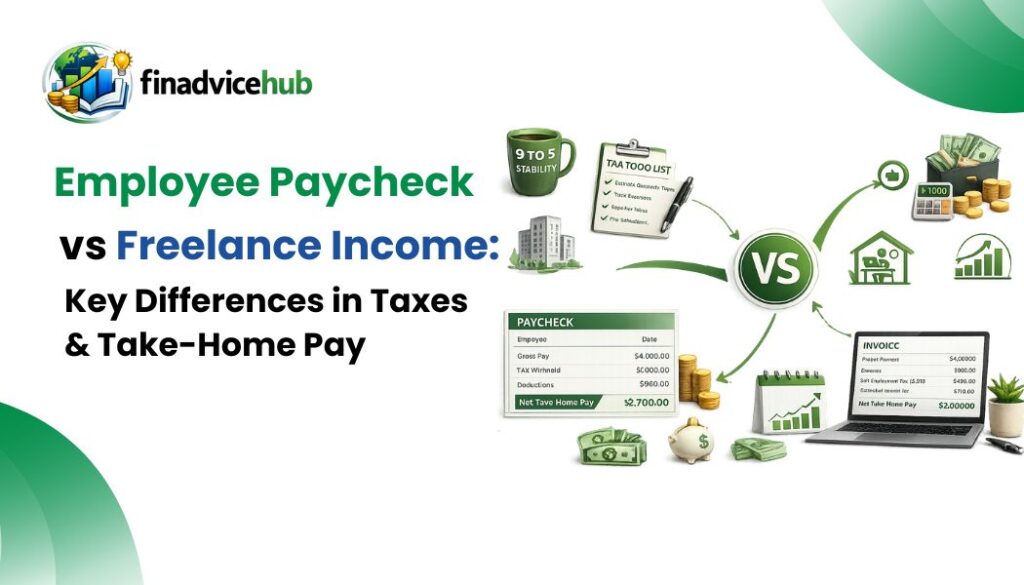
Choosing between a standard 9-to-5 job and working as an independent contractor changes far more than just your daily routine. It completely reshapes how you earn, budget, and pay taxes. Understanding employee vs freelance income taxes and paycheck structures is critical whether you’re negotiating a salary, considering going full-time freelance, or evaluating a remote job offer.
At first glance, a $100,000 freelance revenue stream might seem identical to a $100,000 employee salary. In reality, the 1099 vs W-2 take-home pay comparison reveals a very different financial picture. Employees benefit from employer-funded benefits and automatic tax withholdings, whereas freelancers must handle their own overhead, healthcare, and self-employment taxes.
Understanding Employee vs Freelance Income
What is employee income (W-2)
Employee income refers to compensation earned through traditional employment, typically reported on IRS Form W-2. As a W-2 worker, you operate under an employer’s direct supervision, follow set schedules, and use company-provided tools.
What is freelance income (1099)
Freelance income is earned by independent workers who provide services to clients rather than working as employees. Freelancers typically receive a 1099-NEC form when a client pays them above the reporting threshold.
Unlike employees, freelancers handle their own tax obligations, including estimated tax payments and self-employment tax. They are responsible for tracking revenue, expenses, and deductions.
Key structural differences
The main 1099 vs W2 income difference comes down to control and responsibility.
| Employee (W-2) | Freelancer (1099) |
| Employer controls payroll | Worker manages payments |
| Taxes withheld automatically | Taxes paid independently |
| May receive benefits | Pays for own benefits |
| More predictable income | Income may fluctuate |
| Limited business deductions | More expense deductions available |
Why this comparison matters
A paycheck vs freelance income comparison reveals that the highest gross income does not always mean the highest financial benefit. A freelancer earning more money may still have higher costs due to taxes, insurance, retirement savings, and unpaid time.
How Employees Get Paid (Paycheck System)
Payroll processing
Employees are paid through an employer’s payroll system. The company calculates wages, removes required deductions, and deposits the remaining amount into the employee’s account.
Payroll systems also handle income reporting, making tax filing easier at the end of the year.
Automatic tax withholding
When hired, employees fill out a Form W-4. The payroll system uses this information to automatically subtract federal income tax, state income tax, and local taxes directly from every paycheck.
Employer contributions
Employers often contribute additional value beyond salary. These contributions may include:
- A portion of Social Security and Medicare taxes
- Health insurance assistance
- Retirement plan matching
- Paid leave
These benefits are part of total compensation, even though they do not appear in every paycheck.
Net paycheck system
An employee’s take-home pay is the amount left after taxes and deductions. The difference between gross vs net income is important because salary offers are usually based on gross pay, while daily spending depends on net income.
How Freelancers Get Paid (Self-Employment Income)
No automatic withholding
Freelancers usually receive payments before taxes are removed. This creates more control over cash flow but also requires careful planning.
Many freelancers make quarterly estimated tax payments to avoid large tax bills.
Irregular income structure
Freelance income can change from month to month. Some periods may bring multiple projects, while others may have fewer opportunities.
This makes budgeting and emergency savings especially important.
Client payments
Freelancers are paid directly by clients based on contracts, hourly rates, retainers, or project fees. They must manage invoices, payment tracking, and income reporting.
Managing your own taxes
Freelancers are responsible for calculating taxes, keeping records, and identifying eligible deductions. This is one of the biggest differences in the self employed vs employee pay structure.
Tax Differences Between Employees and Freelancers
Federal income tax comparison
Federal income tax bracket rates (ranging from 10% to 37%) apply to both employees and freelancers alike. However, freelancers apply these tax brackets only to their net business profit rather than their total gross earnings.
Self-employment tax vs FICA
Employees pay FICA taxes (Federal Insurance Contributions Act), which cover Social Security and Medicare. Freelancers pay the self-employment tax under the Self-Employed Contributions Act (SECA).
Employer tax contributions
A traditional employer covers part of payroll taxes. Freelancers do not have an employer contribution, which is why people often ask, “Why do freelancers pay more taxes than employees?”
The answer is that freelancers generally pay both sides of Social Security and Medicare taxes, although deductions and business expenses can reduce taxable income.
Total tax burden comparison
The employee vs freelancer taxes difference depends on income, deductions, and benefits. A freelancer may pay more in certain taxes but may also access deductions unavailable to many employees.
Self-Employment Tax Explained
What self-employment tax includes
Self-employment tax covers Social Security and Medicare taxes for independent workers. It is separate from federal income tax.
Social Security and Medicare for freelancers
Employees split these taxes with employers. Freelancers pay the full self-employment tax rate because they operate as both the worker and business owner.
How it is calculated
Self-employment tax is generally calculated on a portion of net freelance earnings after eligible business expenses. The calculation is based on IRS rules and may change over time.
Example calculation
Suppose a freelancer earns $80,000 and has $10,000 in business expenses. The taxable business income starts with the $70,000 profit rather than the full revenue.
The freelancer may owe:
- Self-employment tax
- Federal income tax
- Possible state taxes
This self employment tax breakdown with examples shows why freelancers must separate business revenue from actual income.
Paycheck vs Freelance Income Calculation Example
Employee salary example
An employee earning a $75,000 salary may receive a lower amount after payroll taxes, income taxes, and benefit deductions. However, the employer may also provide health insurance or retirement contributions.
Freelancer income example
A freelancer earning $90,000 may appear to earn more, but they must subtract:
- Business expenses
- Self-employment taxes
- Insurance costs
- Retirement savings
- Unpaid vacation time
Step-by-step tax comparison
A freelance income vs salary example breakdown should include:
- Compare gross earnings.
- Subtract taxes.
- Add or subtract benefits value.
- Include business expenses.
- Compare final usable income.
Final take-home comparison
A higher freelance income does not automatically create higher take-home pay. A real comparison freelancer vs employee paycheck must include the full financial picture.
Deductions: Employees vs Freelancers
Standard deductions for employees
Employees can generally claim standard deductions or itemized deductions when filing taxes. Their ability to deduct work-related expenses is more limited.
Business expense deductions for freelancers
Freelancers may deduct legitimate business expenses such as:
- Software subscriptions
- Equipment
- Professional services
- Business mileage
- Home office expenses when eligible
Tax-saving opportunities
Tax deductions for freelancers can reduce taxable income, but expenses must be ordinary and necessary for business purposes.
Deduction impact comparison
A freelancer with significant business expenses may reduce taxable income more effectively than an employee, while an employee benefits from simpler tax management.
Benefits and Hidden Value Differences
When comparing employee income with freelance earnings, looking only at the amount of money received can lead to an incomplete picture. Compensation includes more than a paycheck or client payment. Benefits, financial security, and additional costs all play an important role in determining the real value of each income structure.
Employer-provided benefits
For employees, benefits can make up a significant portion of total compensation. Health insurance contributions, retirement plan matching, paid holidays, sick leave, and other workplace benefits provide financial value beyond the listed salary.
For example, two jobs with similar salaries may offer very different overall value if one employer provides stronger health coverage or a higher retirement contribution. These benefits reduce personal expenses and can improve long-term financial security.
Freelancers pay their own benefits
Freelancers usually do not receive employer-sponsored benefits, which means they must manage these costs independently. This may include purchasing private health insurance, contributing to retirement accounts, paying for professional services, and planning for unpaid vacation or time between projects.
These expenses reduce the amount of freelance income available for personal use and should be included when comparing freelance earnings with a traditional salary.
Insurance and retirement costs
Healthcare and retirement planning are two major factors that can affect the difference between freelance and job income. Employees may receive partial employer support for these expenses, while freelancers must include them in their own financial planning.
When performing an income difference freelance vs job calculation, accounting for these costs provides a more accurate view of actual earnings.
Total compensation comparison
A fair comparison should focus on total compensation rather than income alone. A salaried position with benefits may provide similar or greater financial value than a higher freelance income after taxes, insurance, retirement savings, and business expenses are considered.
For example, a $70,000 employee position with strong benefits may compete financially with a much higher freelance income once all costs are included.
Pros and Cons of Employee vs Freelance Income
Both employment and freelancing offer different advantages and challenges. The better choice depends on your priorities, financial goals, and preferred work style.
Stability vs flexibility
Traditional employment generally provides greater stability through regular paychecks, employer benefits, and predictable work arrangements. Freelancing offers more flexibility, allowing individuals to choose projects, set schedules, and work with different clients.
Tax simplicity vs complexity
Employees usually have a simpler tax process because employers handle payroll deductions and tax withholding. Freelancers have more responsibility for tracking income, expenses, and tax payments, but they may also have more opportunities to use business deductions and manage their finances strategically.
Income predictability
A salary provides consistent income that makes budgeting and financial planning easier. Freelance income can vary depending on client demand, project availability, and market conditions. Successful freelancers often need strong budgeting habits and savings plans to manage income fluctuations.
Financial risk
Freelancers generally take on more financial responsibility because they must find clients, manage business costs, and prepare for slower periods. However, freelancing may also provide greater earning potential for individuals who can build a reliable client base and manage their business effectively.
Employees benefit from more stability but may have fewer opportunities to directly increase income outside of promotions, raises, or career changes.
Which One Gives Higher Take-Home Pay
High-income scenarios
High-earning freelancers may achieve greater take-home pay if they manage expenses, taxes, and client relationships effectively.
Low-income scenarios
Employees may benefit from predictable income and employer support, especially when freelance work is inconsistent.
Tax optimization factors
Factors affecting take-home pay include:
- Tax deductions
- Benefits value
- Business expenses
- Retirement planning
- Income stability
Decision framework
When deciding which is better freelance or salaried job financially, consider your income goals, lifestyle needs, and comfort with managing uncertainty.
How to Calculate Your Real Income in Both Cases
Employee paycheck estimation
Estimate gross salary, subtract taxes and deductions, then add employer benefits to understand total compensation.
Freelancer net income calculation
To calculate freelance income after taxes:
- Add total client payments.
- Subtract business expenses.
- Estimate self-employment and income taxes.
- Include insurance and retirement costs.
Accounting for taxes
Understanding how self employment tax affects income prevents freelancers from spending money that should be reserved for taxes.
Tools and methods
Useful tools include budgeting software, accounting platforms, tax calculators, and professional tax advice when needed.
Common Mistakes When Comparing Freelance and Salary Income
Choosing between freelance work and traditional employment requires looking beyond the amount of money shown on an offer letter or client contract. Many people make comparisons based only on gross income and overlook important factors that can significantly affect their actual earnings.
Ignoring self-employment tax
One of the biggest mistakes is comparing freelance revenue directly with an employee salary without considering additional tax responsibilities. Employees usually have payroll taxes automatically withheld, and their employer covers a portion of Social Security and Medicare taxes. Freelancers, however, are responsible for managing these payments themselves, including the self-employment tax on their business income.
Overestimating freelance income
Freelance earnings can appear higher because contractors often see the full amount paid by clients before expenses are deducted. However, freelancers must account for costs that employees may not have, such as business software, equipment, accounting services, marketing, client management, and unpaid time spent searching for projects or handling administrative tasks.
A freelancer earning a higher gross income may not always have a higher amount available for personal spending after all costs are considered.
Forgetting the value of employee benefits
Another common mistake is ignoring the financial value of employee benefits when comparing income options. Health insurance contributions, retirement matching, paid vacation, sick leave, and other workplace benefits can add thousands of dollars to an employee’s total compensation.
Freelancers must usually pay for these benefits themselves, which means their income comparison should include these additional costs before deciding which option provides better value.
Miscalculating take-home pay
Looking only at salary or freelance revenue can create an inaccurate picture of financial results. A proper 1099 vs W2 take home pay comparison should consider taxes, deductions, business expenses, insurance costs, retirement savings, and employer benefits.
The amount that actually remains after all financial obligations is the figure that matters most when comparing employment and freelance opportunities.
How to Choose Between Freelance and Employment
The better choice between freelancing and traditional employment depends on your financial situation, career goals, and preferred way of working. There is no single option that works best for everyone.
Based on financial goals
Consider which option better supports your income targets, savings plans, and long-term financial goals. A stable salary may provide predictable earnings and easier financial planning, while freelancing may offer higher earning potential for those who can build a strong client base.
Based on lifestyle preferences
Your preferred work style also plays an important role. Freelancing can provide more control over projects, schedules, and work location, making it attractive for people who value independence. Employment may be a better fit for those who prefer a structured routine, team environment, and employer-supported benefits.
Based on risk tolerance
Freelancers need to be comfortable managing changing income, finding clients, handling taxes, and planning for slower periods. Employees generally experience more income stability but may have less flexibility and control over their work.
Understanding your comfort level with financial uncertainty can help determine which path is more suitable.
Considering a hybrid approach
Many professionals choose a combination of both options by keeping a full-time job while building freelance income on the side. This approach can provide the stability of employment while allowing individuals to explore freelance opportunities, develop additional skills, and create another source of income before making a full transition.
Conclusion
The employee vs freelance income taxes paycheck comparison is not simply about choosing between a salary and a higher invoice amount. It requires understanding how each income structure affects taxes, benefits, expenses, and overall financial security. Employees often benefit from payroll withholding, employer contributions, and predictable compensation, while freelancers take on more responsibility but gain greater flexibility and control over their earnings.
Many people wonder why freelancers pay more taxes than employees, and the answer comes down to how payroll taxes are structured. Freelancers generally cover both the employee and employer portions of Social Security and Medicare through self-employment tax, which makes understanding how self-employment tax works essential when estimating actual earnings.
A realistic financial decision should focus on a real income comparison after taxes rather than comparing gross salary with freelance revenue alone. By accounting for taxes, deductions, healthcare costs, retirement savings, and business expenses, individuals can better understand which option provides the greatest long-term value.
Whether choosing traditional employment, freelancing, or a combination of both, the best path depends on personal financial goals, lifestyle preferences, and the level of stability or independence someone wants in their career.
FAQs
Do freelancers pay more taxes than employees?
Freelancers can pay more in payroll-related taxes because they are responsible for the full Social Security and Medicare contribution through self-employment tax. Employees split these costs with their employers. However, freelancers may reduce taxable income through eligible business deductions, so the final tax difference depends on earnings, expenses, and deductions.
What is the difference between W-2 and 1099 income?
The difference between W2 and 1099 income comes down to the working relationship and tax responsibility. A W-2 employee receives wages through an employer’s payroll system, where taxes are withheld from each paycheck. A 1099 contractor is paid by clients and must manage tax payments, business records, and deductions independently.
How is freelance income taxed compared to a salary?
Freelance income is taxed differently because contractors do not have an employer withholding taxes from each payment. They typically pay income tax and self-employment tax on their business profit after eligible expenses. A freelancer tax vs employee tax comparison should consider both tax obligations and available deductions.
How does self-employment tax work for freelancers?
Self-employment tax covers the Social Security and Medicare taxes that employees normally share with their employers. Freelancers calculate this tax based on their net business income rather than total client payments. A self employment tax breakdown with examples helps show how revenue, expenses, and taxable profit affect the final amount owed.
Which usually has higher take-home pay: an employee or a freelancer?
There is no single answer because take-home pay depends on more than gross income. A freelancer earning more revenue may have higher expenses for insurance, software, retirement savings, and unpaid time off. A freelancer vs employee take home analysis should include taxes, benefits, and operating costs before comparing results.
How do you compare a freelance contract with a full-time salary offer?
A freelance vs salary income comparison should look at total compensation instead of just the payment amount. For example, a $90,000 contract may not equal a $90,000 salary after accounting for self-employment taxes, healthcare costs, and lost employee benefits.
How can I calculate my actual freelance income after taxes?
To calculate freelance income after tax, start with total client payments, subtract business expenses, estimate self-employment and income taxes, and account for personal costs such as insurance and retirement savings. This gives a clearer picture of your usable income.
Why does employee vs contractor take-home pay look different even at the same income level?
Employee vs contractor take home pay differs because employees often receive employer-paid benefits, payroll tax contributions, and paid time off. Contractors receive payments before taxes and must cover these costs themselves.
What is the difference between payroll income and self-employment income?
Payroll vs self employment income differs in how money is received and managed. Employees receive regular paychecks with automatic deductions, while freelancers receive client payments and are responsible for setting aside money for taxes and business expenses.
How should I compare a W-2 job with a 1099 contract?
A W2 vs 1099 paycheck comparison model should include salary or contract revenue, tax differences, employer benefits, insurance costs, retirement contributions, and unpaid time. Comparing only the amount on the offer can give a misleading view of actual earnings.
Are employee benefits really valuable when comparing compensation?
Yes. Benefits such as employer health insurance contributions, retirement matching, paid holidays, and paid leave can significantly increase the value of a job offer. These benefits should be included when evaluating the overall compensation structure.
How can an employee vs contractor income calculation example help with a career decision?
An employee vs contractor income calculation example shows how two similar-looking offers can produce different financial results. By comparing taxes, expenses, benefits, and net income, workers can decide whether a freelance opportunity or traditional job better matches their financial goals.