
Every employee in the United States interacts with tax withholding through their paycheck, but many people do not fully understand how the process works. Knowing how to fill out W-4 correctly helps employees control how much federal income tax is taken from each paycheck throughout the year.
Form W-4 is more than a simple payroll document. It affects your monthly cash flow, your tax refund, and whether you owe money when filing your annual tax return. A small mistake in your employee tax setup can lead to too little withholding and an unexpected tax bill, or too much withholding and smaller paychecks during the year.
Many employees struggle with the W-4 because tax rules change, personal situations change, and the IRS withholding system uses several factors to estimate tax payments. Marriage, a new job, a raise, a second income source, or having children can all affect the right withholding amount.
This guide provides a clear explanation of how to fill out W-4 using practical steps. It explains payroll withholding, IRS requirements, common mistakes, and strategies to help you estimate withholding correctly. You can also review the official IRS Form W-4 instructions for detailed guidance directly from the Internal Revenue Service. You will also learn how W-4 decisions affect refunds, tax liability, and paycheck management.
What Is Form W-4 and Why It Matters
Form W-4, officially called the Employee’s Withholding Certificate, tells your employer how much federal income tax to withhold from your paycheck. Employers use this information with payroll systems to calculate tax deductions based on your earnings and the information you provide.
The goal is not to take the most tax possible from each paycheck. The goal is to create a withholding amount that is close to your actual yearly tax liability.
Purpose of W-4 in payroll taxes
The main purpose of the W-4 is to guide employer payroll systems when calculating federal income tax withholding. When you start a new job, your employer usually asks you to complete a W-4 before your first paycheck.
Your answers help determine the amount removed from each payment. This process is separate from Social Security and Medicare taxes, which are generally calculated using different rules.
A correct W-4 helps create a balanced payroll withholding plan. It reduces the chance of receiving a large unexpected bill or giving the government an interest-free loan through excessive withholding.
How withholding works in the US tax system
The US tax system requires most employees to pay income taxes throughout the year instead of waiting until the tax deadline. Employers send part of each paycheck to the government based on your W-4 information.
Your withholding amount depends on factors such as:
- Your wages and pay frequency.
- Filing status.
- Dependents and tax credits.
- Additional income.
- Extra withholding requests.
The IRS uses tax brackets to determine how income is taxed. Payroll systems use IRS tables and your W-4 information to estimate the correct amount for each paycheck.
Why W-4 affects your tax refund or balance due
Your refund or tax balance depends on the difference between your actual tax liability and the amount already paid through withholding.
If you pay more than you owe, you may receive a refund. If you pay less, you may need to pay the remaining balance when filing your tax return.
Many taxpayers search for how to fill out W-4 correctly for maximum refund, but a large refund is not always the best financial outcome. It means more money was withheld during the year instead of being available in each paycheck.
| Withholding Result | Possible Outcome |
| Too much withholding | Larger refund, smaller paychecks |
| Accurate withholding | Smaller refund, balanced cash flow |
| Too little withholding | Larger paychecks, possible tax bill |
Understanding this balance is important for effective tax planning.
Who needs to fill out a W-4
Most employees complete a W-4 when they begin a new job. Workers may also submit a new form whenever their financial situation changes.
Common situations that require a review include:
- Starting a new job.
- Getting married or divorced.
- Having a child.
- Receiving a major raise.
- Adding a second income source.
Independent contractors usually do not complete a W-4 because they are not employees. However, freelancers with a job may need to consider how their employee withholding works with their self-employment income.
When to update your W-4
Knowing when to change W-4 information can help prevent tax problems. Employees should review their withholding after major financial events or whenever income changes.
A person who receives a large bonus, changes jobs, or adds freelance income may need a tax withholding adjustment. Updating your W-4 after these events can help keep withholding closer to your expected tax liability.
Overview of the W-4 Form Sections
The current W-4 form is designed to collect information needed for accurate withholding. Unlike older versions, the modern form does not use traditional withholding allowances.
Many taxpayers still search for W4 allowances vs new form rules, but the current process focuses on income, deductions, credits, and additional withholding instead of claiming a specific number of allowances.
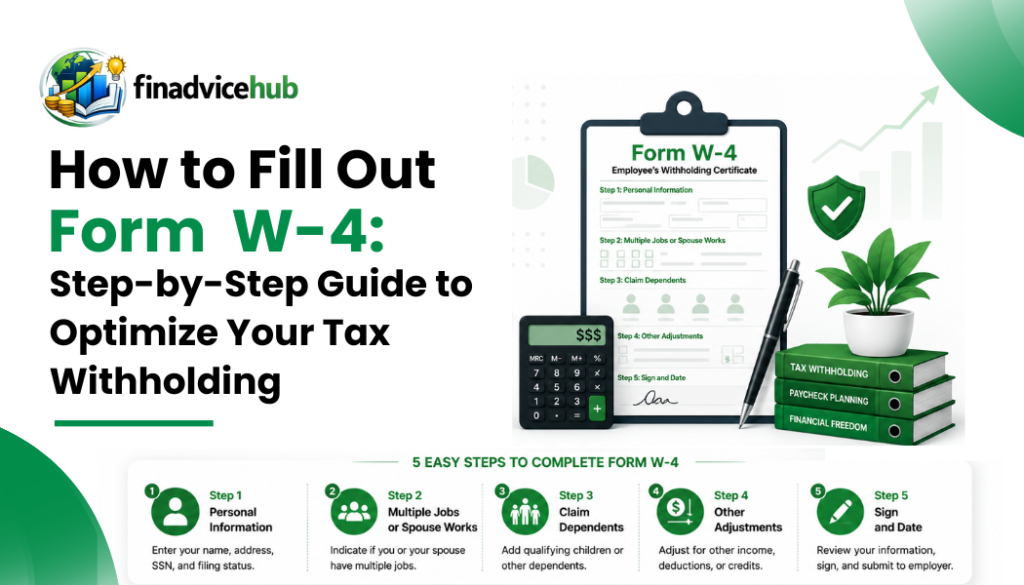
Step 1: Personal information
Step 1 requires basic personal details, including your name, address, Social Security number, and filing status.
Your filing status affects how payroll systems estimate withholding. The main options are single or married filing separately, married filing jointly, and head of household.
Choosing the correct status is important because it influences the amount of tax withheld from each paycheck.
Step 2: Multiple jobs or spouse works
Step 2 applies when you have more than one job or when your spouse also earns income. This section helps account for combined household earnings.
The W-4 multiple jobs worksheet provides guidance for employees who need to adjust withholding because multiple incomes can place a household into higher tax brackets.
A common mistake is completing only one spouse’s W-4 while ignoring the other income source. This can lead to under-withholding and an unexpected tax bill.
The IRS W-4 form instructions explain several methods for handling multiple jobs, including using the IRS withholding estimator for better accuracy.
Step 3: Claiming dependents
Step 3 allows eligible employees to include qualifying children and other dependents when estimating tax credits. This section can reduce the amount of federal income tax withheld because certain credits lower your expected tax bill.
For example, a parent with qualifying children may enter the applicable credit amount based on IRS rules. However, employees should avoid entering dependents incorrectly just to increase their paycheck. Incorrect information can result in too little withholding.
Understanding how dependents affect taxes is important when learning how to fill out W-4 accurately. Dependents can change your withholding, but they do not work the same way as the old withholding allowances system.
Step 4: Other adjustments (income, deductions)
Step 4 includes additional adjustments that may affect withholding. This section is useful for employees with income sources beyond regular wages or those who expect certain deductions.
Common reasons to use Step 4 include:
- Having other taxable income without withholding.
- Expecting deductions beyond the standard deduction.
- Wanting additional tax withheld from each paycheck.
For example, someone with freelance income and a full-time job may request extra withholding from their paycheck to cover taxes related to their side work.
This section helps employees improve withholding accuracy when their financial situation is more complex.
Step 5: Signature and submission
The final step is signing and submitting the completed W-4 to your employer. An unsigned form is generally not considered valid.
After submission, your employer updates your payroll system. The change usually appears in future paychecks after payroll processing is complete.
Employees should keep a copy of their completed form for personal records. This makes future reviews easier and helps track changes in tax planning decisions.
Step-by-Step Guide to Filling Out W-4
Learning how to fill out W-4 is easier when each section is completed carefully. The goal is to provide accurate information that helps payroll systems calculate appropriate withholding.
Filling personal details correctly
Start by entering your legal name, address, Social Security number, and correct filing status. These details must match your tax records.
Incorrect personal information can create payroll issues and may delay proper withholding calculations.
Employees should avoid guessing their filing status. For example, someone who qualifies for head of household status may have different withholding needs than a single employee.
Handling multiple jobs worksheet
Employees with multiple jobs or households with two earners often need additional calculations. A second job can increase total household income, which may change the applicable tax bracket.
The W-4 multiple jobs and spouse working example is common among married couples. For example, one spouse may work a full-time job while the other works part-time. If both employers withhold taxes separately without considering combined income, the household may not withhold enough.
The IRS provides methods to estimate the correct amount, including the IRS estimator and worksheet options.
Entering dependents and credits
Employees should enter dependent information only when they qualify under current tax rules. Tax credits can reduce tax liability, but incorrect entries may create problems later.
Parents should review eligibility requirements each year because family situations can change. A child may no longer qualify for certain credits, or a new dependent may become eligible.
Adjusting extra withholding
Some employees choose additional withholding from each paycheck. This can be helpful when income changes during the year or when other taxes are expected.
For example, an employee who receives investment income or freelance earnings may request extra withholding to reduce the chance of owing taxes.
Understanding how to calculate withholding on W-4 helps employees choose an appropriate additional amount instead of guessing.
Final review before submission
Before submitting your form, review every section carefully. Check that your filing status, income details, dependents, and extra withholding amounts are correct.
A short review can prevent months of incorrect paycheck deductions.
How Withholding Is Calculated from W-4
The withholding process combines employee information, wage details, and IRS calculation methods. Employers do not decide your personal tax amount. They follow IRS rules based on the information provided.
IRS withholding formula basics
Payroll systems use IRS withholding tables and formulas to estimate federal income tax deductions. The system considers your paycheck amount, pay frequency, and W-4 information.
For example, an employee paid weekly may have a different withholding calculation than someone paid monthly because the annual income estimate is built differently.
The goal is to collect a reasonable amount throughout the year.
Role of tax brackets in withholding
Tax brackets determine how different portions of income are taxed. They are progressive, meaning higher portions of income may be taxed at higher rates.
Your W-4 does not directly choose your tax bracket. Instead, it helps payroll systems estimate the withholding needed based on expected income.
This is why a raise can change withholding needs. Employees asking how to adjust W-4 after getting a raise should review whether their increased income affects their overall tax situation.
Paycheck frequency impact
Pay frequency affects how withholding is calculated. Weekly, biweekly, semimonthly, and monthly payroll schedules each use different calculations.
A person receiving a larger paycheck less often may see different withholding patterns compared with someone paid smaller amounts more frequently.
Payroll systems account for these differences automatically.
Example of withholding calculation
Consider an employee earning $60,000 per year who is paid every two weeks. The payroll system estimates annual income, applies W-4 information, and calculates federal withholding for each paycheck.
If the employee requests an additional $50 per paycheck, that amount is added to the standard withholding calculation.
| Situation | Withholding Impact |
| More extra withholding | Lower chance of tax bill |
| Fewer deductions entered | Higher withholding |
| More eligible credits | Lower withholding |
This example shows why small W-4 changes can affect yearly tax results.
Employer’s role in tax deduction
Employers are responsible for correctly applying payroll rules, withholding required taxes, and sending payments to tax agencies.
However, employers do not know every detail about an employee’s personal tax situation. Employees must provide accurate W-4 information to support proper withholding.
A well-managed employee tax setup helps both workers and employers maintain accurate payroll records.
Real-Life W-4 Examples for Different Situations
Every taxpayer has a different financial situation, so there is no single perfect W-4 setting for everyone. The best approach depends on income, filing status, dependents, deductions, and other sources of money.
These W-4 real-life examples USA scenarios show how different employees may approach withholding decisions.
Single employee with one job
A single employee with one employer and no dependents usually has a simpler W-4 setup. The employee enters personal information, selects the correct filing status, and reviews whether any additional adjustments are needed.
For example, a full-time worker earning a regular salary may only need standard withholding based on their expected income. If their tax situation is simple, they may not need extra adjustments.
However, employees should still review their W-4 after receiving a large raise or changing jobs because income changes can affect tax liability.
Married couple with dual income
Married couples who both work often need more careful planning. Each spouse’s paycheck withholding may look correct separately, but the combined household income determines the final tax result.
A common W-4 multiple jobs and spouse working example involves two spouses earning similar salaries. If both employees complete their W-4 forms as if they are the only household earner, total withholding may be too low.
Couples should consider combined income when deciding how much tax to withhold from paychecks.
Employee with side income
Employees with freelance work, consulting income, or small business earnings may need additional withholding. Side income often does not have automatic payroll withholding, which can create a tax gap.
Someone with a regular job and freelance income may adjust their W-4 by requesting additional withholding from their paycheck.
This approach can help reduce the need for separate estimated tax payments, although taxpayers with complex situations should review options with a qualified tax professional.
High-income earner scenario
Higher-income employees often face more complicated tax planning decisions. Large bonuses, investment income, stock compensation, and additional earnings can change withholding needs.
People searching for the best W-4 settings for high income earners should focus on accurate estimates instead of simply increasing or reducing withholding without analysis.
High earners may need to review deductions, credits, and other income sources when deciding how much tax to withhold.
Parent claiming dependents
Parents with qualifying children may adjust withholding based on expected tax credits. This can increase take-home pay during the year.
However, parents should update their W-4 when children no longer qualify for certain credits or when family situations change.
Accurate information helps prevent tax withholding mistakes and unexpected balances.
How to Adjust W-4 to Avoid Owing Taxes
Many employees want to know how to fill out W-4 to avoid owing taxes. The key is matching withholding as closely as possible to expected tax liability throughout the year.
Increasing withholding strategy
Employees can request additional withholding by entering an extra amount in the appropriate W-4 section. This may help people with additional income sources or changing financial situations.
For example, someone who receives a yearly bonus may increase withholding because bonuses can affect total taxable income.
Additional withholding can be useful when regular payroll deductions are not enough to cover expected taxes.
Reducing withholding strategy
Some employees have too much tax removed from their paychecks. Reducing withholding may increase monthly cash flow and allow individuals to use money earlier for savings, investments, or expenses.
However, reducing withholding should be done carefully. Lower withholding can increase the chance of owing taxes later.
Avoiding underpayment penalties
The IRS may charge penalties when taxpayers do not pay enough tax during the year. Employees can reduce this risk by reviewing their withholding regularly.
Learning how to avoid underpayment penalty situations requires understanding estimated tax payments, income changes, and withholding requirements.
Employees should review their situation after major events such as job changes, bonuses, or new income sources.
Matching withholding to tax liability
A good W-4 strategy aims for balance. The goal is not always the largest refund. The goal is paying the correct amount during the year.
This is the foundation of a W-4 strategy for no refund no balance due approach. Some taxpayers prefer having their withholding closely match their final tax bill.
Year-round adjustment tips
Tax planning should happen throughout the year, not only before filing season. Employees can review paychecks, compare expected income, and update their W-4 when needed.
Useful times for a review include:
- After starting a new job.
- After receiving a large raise.
- After marriage or divorce.
- After adding freelance income.
Regular reviews help maintain accurate withholding.
How W-4 Impacts Your Tax Refund
Many taxpayers focus on refunds, but understanding the relationship between withholding and refunds provides better financial control.
Over-withholding and large refunds
A large refund usually means more tax was withheld than necessary during the year. While receiving a refund can feel positive, it also means the taxpayer had less money available throughout the year.
Some people intentionally choose higher withholding because they prefer receiving a large refund as a form of forced savings.
Under-withholding and tax bills
Under-withholding occurs when too little tax is paid during the year. This can happen after a raise, additional income, or incorrect W-4 information.
Employees should review their withholding when their financial situation changes to reduce unexpected bills.
Finding the break-even point
The ideal withholding amount depends on personal goals. Some taxpayers want a small refund, while others prefer more money in each paycheck.
A balanced approach considers cash flow needs, savings goals, and comfort with tax payments.
Refund vs cash flow tradeoff
Withholding creates a tradeoff between receiving money now and receiving money later.
| Choice | Benefit | Possible Concern |
| Higher withholding | Larger refund | Smaller paychecks |
| Lower withholding | More monthly cash | Possible tax balance |
| Balanced withholding | Better cash control | Requires review |
Understanding this tradeoff helps employees make smarter payroll decisions.
Strategic refund planning
A refund can support financial goals such as paying debt, building savings, or investing. However, relying on a refund for major expenses may not always be the most efficient strategy.
Proper withholding allows taxpayers to manage money throughout the year instead of waiting until tax filing season.
Common Mistakes When Filling Out W-4
Many tax problems happen because employees complete their W-4 quickly without reviewing how their choices affect payroll withholding. Understanding common mistakes can help workers avoid incorrect deductions and unexpected tax results.
Leaving sections blank incorrectly
Some employees leave parts of the W-4 empty because they are unsure what information belongs there. While some sections may not apply, skipping important areas can create inaccurate withholding.
For example, an employee with additional income may need to complete adjustment sections instead of leaving them blank. Reviewing the IRS W-4 form instructions can help employees understand which sections apply to their situation.
Ignoring multiple jobs adjustment
Multiple income sources are one of the most common causes of withholding problems. Employees may complete their own W-4 correctly but forget that another job or a spouse’s income affects total household taxes.
The W-4 multiple jobs worksheet helps taxpayers estimate the correct withholding when more than one income source exists.
Miscalculating dependents
Claiming incorrect dependents or entering inaccurate credit amounts can reduce withholding too much. Employees should confirm eligibility before including dependents on their W-4.
Family situations can change, so dependent information should be reviewed regularly.
Not updating after income change
A common mistake is keeping the same W-4 after major financial changes. A raise, bonus, new job, or side business can change tax liability.
Employees should know when to change W-4 information and update it when their expected annual income changes.
Confusing old vs new W-4 rules
Many taxpayers still think about the old system of withholding allowances. The current W-4 uses a different approach based on income, deductions, credits, and additional withholding.
Understanding W4 allowances vs new form rules helps employees avoid outdated methods and make better withholding decisions.
Tools and Calculators to Optimize W-4
Taxpayers do not need to estimate withholding completely on their own. Several tools can help employees make more informed decisions.
IRS withholding estimator
The IRS withholding calculator is one of the most useful resources for employees who want to review their W-4 settings. It considers income, filing status, deductions, credits, and current withholding.
The tool can help employees determine whether they should increase or decrease withholding.
Payroll software tools
Many employers use payroll systems that automatically apply IRS withholding rules. Some payroll platforms also allow employees to preview how W-4 changes may affect future paychecks.
These tools can make tax planning easier by showing possible paycheck impacts before changes are submitted.
Manual calculation methods
Some taxpayers prefer to understand the math behind withholding. Manual estimates involve reviewing expected annual income, tax brackets, deductions, credits, and current withholding.
Learning how to calculate withholding on W-4 can help employees understand why certain adjustments affect their paychecks.
Using past tax returns for estimation
Previous tax returns can provide useful information when planning future withholding. They show taxable income, deductions, credits, and the final tax amount.
However, taxpayers should adjust past information when their current situation is different.
For example, a person who received a promotion or started a side business should not rely only on last year’s numbers.
When to seek professional help
Simple W-4 updates can often be completed by employees themselves. However, complex situations may require guidance from a qualified tax professional.
Professional help may be useful for taxpayers with business income, significant investments, retirement changes, or complicated family situations.
Best Practices for Long-Term Withholding Optimization
Effective withholding management is an ongoing process. Employees who regularly review their W-4 can improve financial planning and reduce surprises during tax season.
Reviewing W-4 annually
A yearly review helps employees confirm that their information still matches their financial situation. Even small changes can affect withholding.
An annual review is especially helpful before the start of a new tax year when income or family circumstances may change.
Adjusting after major life events
Life events often affect tax needs. Employees should consider updating their W-4 after:
- Marriage or divorce.
- Birth or adoption of a child.
- New employment.
- Significant income changes.
- Starting freelance work.
These changes can influence tax brackets, credits, and overall withholding.
Planning around bonuses and raises
Bonuses and raises can create unexpected withholding issues. A higher salary may increase annual income enough to change the appropriate withholding amount.
Employees wondering how to adjust W-4 after getting a raise should review their updated income estimate instead of assuming the current W-4 will remain accurate.
Coordinating with spouse’s W-4
Married couples should consider their combined household income when reviewing withholding. Separate W-4 decisions can create an inaccurate overall result if spouses do not coordinate.
A shared approach helps couples estimate total tax liability more effectively.
Aligning withholding with tax goals
Every taxpayer has different goals. Some prefer a larger refund, while others prefer keeping more money during the year.
A strong W-4 optimization based on income level approach considers personal cash flow, savings plans, and expected tax obligations.
Conclusion
Understanding how to fill out W-4 correctly helps employees manage tax withholding, plan income, and avoid unexpected tax bills. This W-4 explained tax guide shows how a properly completed form balances paycheck amounts with future tax responsibilities rather than focusing only on refunds.
Employees should review their W-4 after major life changes, such as marriage, having children, changing jobs, or earning additional income. Understanding how W-4 works with tax brackets, deductions, and withholding calculators can help create a more accurate payment strategy.
For freelancers or employees with complex income situations, adjusting W-4 details correctly may require guidance from a tax professional to understand deductions, withholding strategies, and IRS requirements.
FAQs
How do I fill out a W-4 correctly?
To understand how to fill out W-4 correctly, provide accurate personal information, select the correct filing status, include eligible dependents, report additional income or deductions when needed, and request extra withholding if appropriate. Following a W-4 form step by step example for a single filer can help first-time filers understand each section and avoid mistakes.
How many allowances should I claim on W-4?
The current W-4 does not use the old allowance system. Instead, it considers income, deductions, credits, and adjustments to determine withholding. This is why employees should focus on W-4 dependents and credits explained guidelines rather than choosing a specific allowance number.
How do I avoid owing taxes with W-4?
To avoid owing taxes, estimate your annual income accurately and make sure enough tax is withheld throughout the year. Understanding how to estimate withholding correctly is especially helpful if you have multiple jobs, freelance income, investment income, or major changes in earnings. Additional withholding may be needed to prevent an unexpected tax bill.
Does W-4 affect tax refund?
Yes. Your W-4 directly affects how much tax is withheld from each paycheck. Understanding how W-4 affects tax refund outcomes can help you decide whether you prefer larger paychecks throughout the year or a larger refund after filing. A withholding vs refund deep explanation shows that a refund is often the result of overpaying taxes during the year.
How does withholding impact tax liability?
Your withholding determines how much tax you pay throughout the year compared with your final tax liability. If too little is withheld, you may owe money when filing. If too much is withheld, you may receive a refund. Understanding how withholding impacts tax liability helps you make better W-4 decisions.
When should I update my W-4?
You should know how to update W-4 after life changes because certain events can significantly affect your tax situation. Update your form after marriage, divorce, a new child, a job change, a raise, starting freelance work, or changes in deductions. Reviewing your W-4 regularly helps keep withholding accuracy.
What happens if I fill out W-4 incorrectly?
An incorrect W-4 can cause too much or too little tax withholding. This may result in smaller paychecks, a reduced refund, or an unexpected tax payment. Learning about common tax withholding mistakes and fixes can help you correct errors before they create larger problems.
How does W-4 work with multiple jobs?
When you have multiple jobs, your combined income affects your overall tax situation. The W-4 provides options to adjust withholding so your total earnings are considered. Employees should review their settings carefully to ensure accurate withholding across all jobs.
Can I claim dependents on W-4?
Yes, eligible employees can include qualifying dependents and related credits on their W-4. Understanding W-4 dependents and credits explained rules helps ensure that credits are entered correctly and that withholding reflects your household situation.
How can I reduce taxes from my paycheck?
If too much tax is being withheld, you may be able to adjust your W-4 information. Learning how to reduce taxes from paycheck amounts involves reviewing your filing status, eligible credits, deductions, and additional withholding choices carefully.
What is the best way to calculate W-4 withholding?
The best approach is to review your income, deductions, credits, and expected tax situation before making changes. A W-4 withholding calculator can provide an estimate, but you should also consider your personal circumstances and update your information when needed.