
If you’ve ever stepped outside a traditional 9-to-5 job and earned money on your own terms, freelancing, consulting, or running a side hustle, you’ve probably realized something quickly: taxes get a lot more complicated.
There’s no employer automatically withholding taxes. No paycheck stub showing deductions. No HR rep explaining what’s going on.
Instead, you’re responsible for understanding and paying something called the self-employment tax in the USA, and for many people, that’s where confusion begins.
But here’s the truth: once you understand how self-employment tax works, it stops being intimidating and starts becoming manageable. In fact, with the right knowledge, you can even plan around it, reduce it legally, and avoid costly mistakes.
This guide walks you through everything in depth, from basic definitions to advanced strategies, so you can confidently handle your taxes as a self-employed individual.
What is Self-Employment Tax?
Definition and Purpose of Self-Employment Tax
Self-employment tax is a federal tax that covers Social Security and Medicare contributions for individuals who work for themselves.
If you’ve ever worked a traditional job, you’ve already paid these taxes, but you probably didn’t notice them much. That’s because your employer split the cost with you.
When you’re self-employed, there is no employer to share that responsibility. So you pay the full amount yourself.
This is why self-employment tax is often referred to as a FICA equivalent tax; it mirrors the same structure but shifts the full burden to the individual.
Here’s what your self-employment tax funds:
- Social Security: Retirement income, disability benefits, and survivor benefits
- Medicare: Health insurance for people aged 65 and older
In other words, while it may feel like a heavy obligation today, it directly contributes to your long-term financial and healthcare safety net.
Difference Between Payroll Tax and Self-Employment Tax
To really understand self-employment tax, it helps to compare it to traditional payroll taxes.
| Feature | Payroll Tax (Employee) | Self-Employment Tax |
| Who pays | Employee + Employer | Self-employed individual only |
| Total rate | 15.3% (split 7.65% each) | 15.3% (full amount paid by you) |
| Withholding | Automatic from paycheck | You calculate and pay manually |
| Reporting | Form W-2 | Schedule SE + Form 1040 |
| Responsibility | Shared | Fully yours |
In a regular job, you only “feel” half the tax burden. But in self-employment, you’re responsible for both portions, which is why the tax feels significantly higher.
Who Must Pay Self-Employment Tax?
You are required to pay self-employment tax in the USA if:
- You earn $400 or more in net earnings from self-employment
- You operate as:
- A freelancer (writer, designer, developer, etc.)
- An independent contractor (1099 worker)
- A sole proprietor (small business owner)
- A partner in a partnership
This rule applies whether your self-employment income is your primary source of income or just a side hustle.
For example:
- A graphic designer earning $5,000 from freelance work → must pay
- A full-time employee earning $1,000 from a side gig → must still pay
The IRS doesn’t differentiate between “main income” and “side income” here.
Income Threshold Rules
The income threshold for self-employment tax is surprisingly low.
| Net Earnings | Requirement |
| Below $400 | No self-employment tax required |
| $400 or more | Must file and pay |
| High income | May trigger additional Medicare tax |
This low threshold catches many beginners off guard, especially those who casually freelance or run small online businesses.
How It Funds Social Security and Medicare
Your social security tax, self-employed, and medicare tax, self-employed, contributions are not just abstract taxes; they directly impact your future benefits.
For example:
- Your Social Security benefits are calculated based on your lifetime earnings
- If you underreport income, you may receive lower retirement benefits later
- Medicare eligibility also depends on your contribution history
So while it may be tempting to minimize reported income, doing so can affect your long-term financial security.
Self-Employment Tax Rate Explained
Current Self-Employment Tax Rate Breakdown
The total self-employed tax rate is 15.3%, and it’s split into two parts:
| Tax Component | Rate | Purpose |
| Social Security | 12.4% | Retirement & disability benefits |
| Medicare | 2.9% | Healthcare coverage |
| Total | 15.3% | Combined tax |
This rate applies to your net earnings, not your total revenue.
Social Security Portion Explained
The 12.4% Social Security tax is applied only up to a certain income limit, known as the Social Security wage base.
| Year | Wage Base Limit |
| 2024 | $168,600 |
| 2025 (estimated) | ~$175,000 |
What this means:
- If you earn $50,000 → you pay Social Security tax on all of it
- If you earn $200,000 → you only pay Social Security tax up to the limit
This creates a cap on the Social Security portion of your tax.
Medicare Portion Explained
The Medicare tax works differently:
- Flat rate of 2.9%
- No income cap
- Applies to all net earnings
So whether you earn $10,000 or $500,000, the Medicare portion continues to apply.
Additional Medicare Tax Scenarios
High earners may be subject to an additional Medicare tax:
| Filing Status | Threshold | Extra Tax |
| Single | $200,000 | +0.9% |
| Married (joint) | $250,000 | +0.9% |
This additional tax only applies to income above the threshold, not your entire income.
How to Calculate Self-Employment Tax
Understanding self-employment tax calculation is one of the most important skills for freelancers and independent contractors.
Determining Net Earnings from Self-Employment
Before calculating tax, you must determine your net earnings from self-employment.
The formula is simple:
Net Earnings = Total Income – Business Expenses
Examples of deductible expenses include:
- Software tools and subscriptions
- Advertising and marketing costs
- Office supplies and equipment
- Internet and phone usage
- Business-related travel
For example:
| Item | Amount |
| Total income | $80,000 |
| Expenses | $20,000 |
| Net earnings | $60,000 |
Step-by-Step Schedule SE Calculation
The schedule SE tax form is used to calculate your self-employment tax.
Here’s how the process works:
| Step | Action | Explanation |
| 1 | Calculate net income | From Schedule C |
| 2 | Multiply by 92.35% | Adjusted taxable amount |
| 3 | Apply 15.3% tax rate | Determines SE tax |
| 4 | Enter on Schedule SE | Official IRS calculation |
| 5 | Transfer to Form 1040 | Final tax return |
The 92.35% adjustment exists to simulate the employer portion of payroll taxes.
Example Calculation for Freelancers
Let’s walk through a realistic schedule SE example calculation:
Scenario:
A freelance developer earns $75,000 and has $15,000 in expenses.
| Step | Calculation |
| Net income | $60,000 |
| Adjusted (× 92.35%) | $55,410 |
| SE tax (× 15.3%) | $8,478 |
So, the total self-employment tax IRS liability is about $8,478.
Deductible Portion of Self-Employment Tax
One important benefit is the self-employment tax deduction.
You can deduct 50% of your self-employment tax when calculating your income tax.
| Item | Amount |
| Total SE tax | $8,478 |
| Deductible | $4,239 |
This doesn’t reduce your SE tax, but it lowers your overall taxable income.
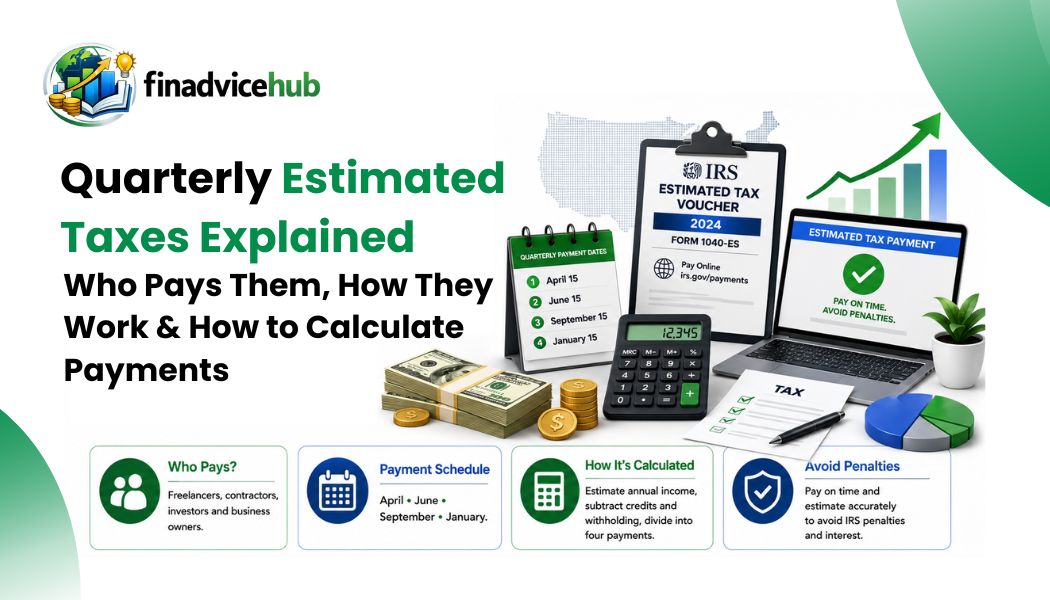
Estimated Quarterly Payment Calculation
Since no taxes are withheld automatically, you must pay estimated tax payments throughout the year.
| Quarter | Due Date |
| Q1 | April 15 |
| Q2 | June 15 |
| Q3 | September 15 |
| Q4 | January 15 |
Example:
If your total tax liability is $12,000:
| Quarter | Payment |
| Each quarter | $3,000 |
This helps avoid penalties and keeps your finances predictable.
Filing Self-Employment Tax
IRS Forms Used
To complete your self-employment tax filing, you’ll use:
| Form | Purpose |
| Schedule C | Reports income and expenses |
| Schedule SE | Calculates SE tax |
| Form 1040 | Final tax filing |
Each form builds on the previous one.
Quarterly Estimated Tax Requirements
If you expect to owe $1,000 or more, the IRS requires quarterly payments.
Failing to do this can lead to:
- Underpayment penalties
- Interest charges
Filing Deadlines for Self-Employed Individuals
| Filing Type | Deadline |
| Annual return | April 15 |
| Q1 payment | April 15 |
| Q2 payment | June 15 |
| Q3 payment | September 15 |
| Q4 payment | January 15 |
Record Keeping Requirements
Accurate records make everything easier.
You should track:
- All sources of income
- Every business expense
- Receipts and invoices
- Bank and payment processor statements
Good records reduce audit risk and ensure accurate tax calculations.
Common Filing Mistakes
| Mistake | Why It Happens | Result |
| Not filing Schedule SE | Lack of awareness | Underreported tax |
| Skipping quarterly payments | Cash flow issues | Penalties |
| Missing deductions | Poor tracking | Higher taxes |
| Mixing personal/business finances | Lack of separation | Confusion |
Strategies to Reduce Self-Employment Tax
Claiming Business Deductions
Reducing taxable income is your strongest tool.
Examples:
- Home office deduction
- Equipment purchases
- Professional services
Retirement Contributions
Retirement accounts offer powerful tax advantages.
| Account | Benefit |
| SEP-IRA | High contribution limits |
| Solo 401(k) | Flexible and scalable |
Choosing an S-Corp Election
An S-Corp structure allows you to:
- Pay yourself a salary (subject to SE tax)
- Take additional profits as distributions (not subject to SE tax)
This can significantly reduce taxes, but requires compliance and proper setup.
Health Insurance Deduction
You can deduct:
- Health insurance premiums
- Dental and vision coverage
This lowers your taxable income.
Income Timing Strategies
Strategically timing income and expenses can reduce tax liability.
Examples:
- Delay invoices to next year
- Prepay expenses before year-end
Common Self-Employment Tax Challenges
Underpayment Penalties
If you don’t pay enough throughout the year, the IRS may charge penalties, even if you pay everything later.
Irregular Income Management
Freelancers often experience inconsistent income.
Solution:
| Strategy | Benefit |
| Save 25–30% of income | Covers taxes |
| Use a separate tax account | Better control |
| Monthly estimates | Avoid surprises |
Tracking Deductible Expenses
Missing deductions is one of the most common financial leaks.
Managing Quarterly Payments
| Problem | Solution |
| Forgetting deadlines | Calendar reminders |
| Cash shortages | Monthly saving habit |
| Wrong estimates | Use tax calculators |
Compliance Risks
Failing to comply with tax rules can lead to:
- Audits
- Penalties
- Legal issues
Staying organized and informed is your best defense.
Real Self-Employment Tax Examples
Example 1: Beginner Freelancer
| Income | $15,000 |
| Expenses | $3,000 |
| SE Tax | ~$1,694 |
Example 2: Growing Consultant
| Income | $80,000 |
| Expenses | $20,000 |
| SE Tax | ~$8,478 |
Example 3: High Earner
| Income | $250,000 |
| SE Tax | Social Security capped + Medicare applies fully |
Self-Employment Tax vs Income Tax Difference
| Feature | Self-Employment Tax | Income Tax |
| Purpose | Social Security & Medicare | Government funding |
| Rate | 15.3% | 10%–37% |
| Based On | Net business income | Total taxable income |
Both taxes apply; you don’t choose one over the other.
AI and Modern Tax Tools for Freelancers
Technology is changing how freelancers manage taxes.
Modern tools now offer:
- AI bookkeeping for freelancers
- Automated quarterly tax tracking
- AI tax estimation tools
These tools help you:
- Track expenses automatically
- Estimate taxes in real time
- Avoid calculation errors
Final Thoughts
Understanding self-employment tax in the USA isn’t just about following rules; it’s about feeling in control of your money. Once you get a clear idea of how the self-employed tax rate works and how your self employment tax calculation is based on your net earnings from self employment, things start to make sense. Instead of being surprised by a big tax bill, you can estimate what you owe using a simple self-employment tax calculator and plan with confidence.
It also becomes much easier when you know what to expect throughout the year. Keeping up with estimated tax payments and making regular quarterly tax payments for self-employed work helps you avoid stress and penalties. On top of that, learning the self-employment tax deduction explained in simple terms, like deducting expenses and part of your tax, can actually lower what you pay. Understanding the self-employment tax vs income tax difference also helps you see where your money is going, including contributions to social security tax, self-employed, and medicare tax.
At the end of the day, small habits make a big difference. When you stay organized, follow basic schedule SE form instructions, and maybe even use tools like AI tax estimation tools or automated quarterly tax tracking, taxes stop feeling overwhelming. You go from reacting at the last minute to planning ahead, and that’s what really makes managing self-employment income easier and less stressful.
FAQs
What is the self-employment tax rate in the USA?
It is 15.3%, covering Social Security and Medicare.
Who must pay self-employment tax?
Anyone earning $400+ in net self-employment income.
How is self-employment tax calculated?
Multiply 92.35% of net earnings by 15.3%.
Is self-employment tax separate from income tax?
Yes, both must be paid.
Can self-employed individuals deduct self-employment tax?
Yes, 50% is deductible.
Do freelancers have to pay quarterly taxes?
Yes, if they expect to owe $1,000 or more.
What happens if the self-employment tax is not paid?
You may face penalties, interest, and enforcement actions.
How much income triggers self-employment tax?
Just $400 in net earnings.