
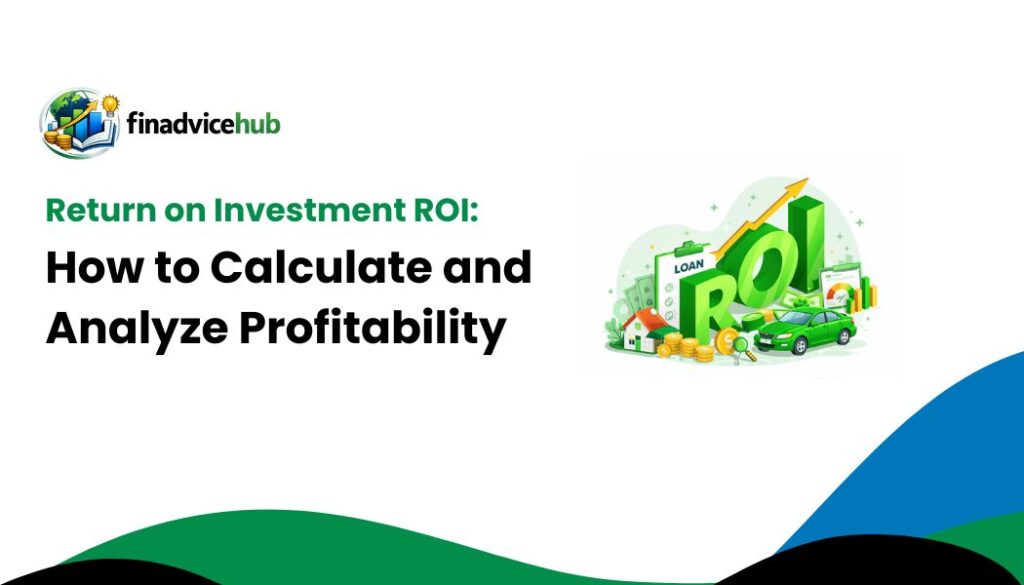
Return on Investment (ROI) is one of the most essential metrics for assessing the profitability of any financial decision. Whether you are investing in stocks, real estate, or a small business, ROI provides a clear snapshot of how effectively your capital is generating returns. By comparing the gains to the initial investment cost, ROI offers a straightforward way to evaluate financial performance.
Understanding ROI empowers investors and business owners to make informed decisions. It allows for benchmarking against other opportunities, identifying high-performing investments, and reallocating resources to maximize profitability. With a proper ROI analysis, you can prioritize projects that deliver the best return rate while minimizing risk.
ROI is also crucial for tracking long-term growth. Monitoring ROI over time helps investors understand trends, measure the impact of strategic changes, and optimize investment strategies. Accurate ROI calculation ensures that financial decisions are both data-driven and profitable.
Understanding ROI
Definition of ROI
Return on investment (ROI) is a financial metric that measures the profitability of an investment relative to its cost. It helps quantify the efficiency of a capital investment and provides a clear view of the gain versus cost. Essentially, ROI answers the question: “How much profit did I make from this investment?”
Importance in Investment Decisions
ROI is a vital tool for investors, business owners, and financial analysts because it allows for easy comparisons between different investments, projects, or strategies. By analyzing ROI, you can determine which investments maximize profitability, minimize risk, and provide the best return rate.
ROI Formula Explained
The standard ROI formula is:
Where:
- Net Profit = Total returns − Total costs
- Investment Cost = Initial capital outlay
Example Table: ROI Calculation
| Investment Type | Initial Investment | Returns | ROI (%) |
| Stock Purchase | $10,000 | $12,500 | 25% |
| Rental Property | $50,000 | $60,000 | 20% |
| Small Business Project | $15,000 | $18,000 | 20% |
How ROI Differs from Other Metrics
While ROI focuses on profitability, other metrics like profit margin or internal rate of return (IRR) provide additional insights:
- Profit Margin measures profitability relative to revenue, not investment cost.
- IRR considers time value of money, making it ideal for multi-year projects.
ROI is simple and intuitive but should be used alongside other financial metrics for comprehensive investment analysis.
Common ROI Misconceptions
- High ROI always equals low risk → False, high returns often come with higher risk.
- ROI ignores time factor → Traditional ROI does not account for duration, which is why short-term vs long-term ROI must be considered.
- ROI is universal → Adjustments are needed for taxes, fees, or inflation to get a true profitability picture.
Step-by-Step ROI Calculation
Calculating ROI for Stocks
- Identify the purchase price of the stock.
- Determine the selling price or current market value.
- Account for dividends received.
- Apply the ROI formula:
ROI for Real Estate Investments
Factors to include: purchase price, closing costs, rental income, maintenance, property taxes, and resale value.
ROI Example Table: Rental Property Investment
| Metric | Value ($) |
| Purchase Price | 200,000 |
| Annual Rental Income | 24,000 |
| Annual Expenses | 6,000 |
| Net Profit | 18,000 |
| ROI (%) | 9% |
ROI for Small Businesses
Consider total capital invested, operational expenses, and net revenue generated over a set period. ROI helps startups benchmark financial performance.
Adjusting for Fees and Taxes
Fees, commissions, and taxes significantly impact ROI. Adjust your ROI calculation to reflect net returns rather than gross returns.
Impact of Fees on ROI Table
| Scenario | ROI Before Fees | Fees & Taxes | ROI After Fees |
| Stock Investment | 15% | 2% | 13% |
| Mutual Fund Investment | 10% | 1.5% | 8.5% |
Using Online ROI Calculators
AI ROI calculators and predictive analytics tools simplify calculations for multiple asset classes and forecast potential investment returns.
ROI Examples and Scenarios
Short-term vs Long-term ROI Examples
- Short-term ROI: 3-month stock trades, seasonal business campaigns.
- Long-term ROI: Real estate, retirement funds, or multi-year business projects.
ROI for Mutual Funds
Calculate ROI by considering fund NAV changes, dividends, and fees.
ROI on Rental Properties
Use net rental income minus expenses relative to total property investment.
ROI Comparison Across Industries
| Industry | Average ROI (%) |
| Technology Stocks | 12-18 |
| Real Estate | 6-10 |
| Retail Businesses | 8-15 |
| Manufacturing | 10-12 |
Real-life Case Studies
- Example 1: A tech startup invested $50,000 and earned $85,000 in three years → ROI 70%.
- Example 2: Rental property purchase $200,000, net annual profit $18,000 → ROI 9%.
Challenges and Pitfalls
Common Calculation Errors
- Forgetting to include all costs
- Ignoring tax implications
- Misinterpreting percentages
Ignoring Hidden Costs
Maintenance, insurance, and unexpected fees can reduce actual ROI significantly.
Misinterpreting ROI Percentage
A 50% ROI on a small investment is not necessarily better than a 20% ROI on a large, stable investment.
Overestimating Future Returns
Projections must consider market volatility, inflation, and business cycles.
Best Practices to Avoid Mistakes
- Include all costs, fees, and taxes
- Compare across similar investments
- Use predictive ROI analytics for forecasting
Optimizing ROI
How to Improve Investment Returns
- Reduce costs and fees
- Increase revenue streams
- Reinvest profits strategically
Diversification Strategies
Spreading investments across asset classes (stocks, real estate, startups) reduces risk and stabilizes ROI.
Tracking ROI Over Time
Consistently measure ROI to identify trends, evaluate strategies, and optimize capital allocation.
Using Analytics Tools
Automated ROI calculators and AI-driven analytics enable more accurate, real-time profitability analysis.
Comparing ROI Across Assets
Regular benchmarking across investments allows for smart allocation decisions and maximizes overall return on investment.
Conclusion
Return on investment (ROI) is a vital tool for anyone looking to measure and optimize profitability. Whether analyzing ROI in stocks, real estate, or small businesses, understanding this metric helps investors make informed decisions and evaluate the effectiveness of their capital allocation. Proper ROI calculation considers all costs, fees, and expected returns, providing a realistic view of investment performance.
By regularly tracking and comparing ROI across different assets, investors can identify high-performing opportunities, minimize risks, and improve overall financial outcomes. Incorporating ROI analysis into decision-making ensures more strategic, data-driven, and profitable investments.
FAQs
What is ROI and why is it important?
ROI is a metric for measuring investment profitability. It helps investors compare options and make data-driven decisions.
How do I calculate ROI for stocks?
Use the formula:
What is a good ROI percentage?
A “good” ROI depends on investment type, risk tolerance, and market conditions, but 8-15% is generally considered healthy for long-term investments.
How does ROI differ from profit margin?
Profit margin measures profit relative to revenue, while ROI measures profit relative to investment cost.
Can ROI be negative?
Yes, if the investment results in a net loss.
How do fees affect ROI calculation?
Fees reduce net returns; always subtract fees to get an accurate ROI.
Are there online ROI calculators?
Yes, many AI ROI calculators and predictive analytics tools help estimate ROI for stocks, real estate, businesses, and other assets.