
Taxes can feel complicated, but understanding income tax deductions in the USA can save you money. If you work for yourself, whether as an employee, freelancer, or business owner, deductions can help you pay less in taxes. The challenge? Know which deductions apply to you, how to claim them, and whether you should take the standard deduction or the itemized deduction.
This helpful guide breaks it all down with examples, strategies, and tables so you can see the numbers clearly.
What Are Income Tax Deductions?
Definition of Tax Deductions
Income tax deductions in the USA are specific expenses that the IRS allows you to subtract from your gross income before calculating your taxable income. These deductible expenses IRS recognizes can range from personal tax deductions, such as mortgage interest or charitable donations, to business tax deductions for self-employed individuals. By lowering your taxable income, deductions directly reduce the amount of income that is subject to taxation.
How Deductions Reduce Taxable Income?
Understanding how deductions work is easier with an example:
| Scenario | Gross Income | Deductions | Taxable Income |
| Without deductions | $60,000 | $0 | $60,000 |
| With deductions | $60,000 | $12,000 | $48,000 |
In this scenario, a $12,000 deduction reduces taxable income by $12,000. Depending on your tax bracket, this could translate to significant tax savings. For instance, if you are in the 22% bracket, this deduction could reduce your tax liability by roughly $2,640.
Difference Between Deductions and Tax Credits
| Feature | Tax Deduction | Tax Credit |
| Effect | Reduces taxable income | Directly reduces tax owed |
| Example | $2,000 deduction saves ~$400 (if 20% bracket) | $2,000 credit reduces tax owed by the full $2,000 |
While tax deductions lower the income on which taxes are calculated, tax credits provide a dollar-for-dollar reduction in the actual tax you owe. Knowing the difference is key to maximizing your tax savings estimator or using tools like an itemized deduction calculator.
IRS Deduction Eligibility Rules
To claim a deduction legally, the IRS requires that:
- The expense is ordinary and necessary: This is especially important for business tax deductions.
- The deduction is properly documented: Keep receipts, statements, and other proof of the expense.
- The deduction meets IRS limits: For example, certain medical expenses are only deductible if they exceed 7.5% of your adjusted gross income (AGI).
Following these deduction rules for employees and freelancers ensures that your personal or business tax deductions are fully allowable under IRS guidelines. Using an AI tax deduction finder or automated deduction tracking tool can help identify all deductions you may qualify for and reduce the risk of missing key tax write-offs.
Standard Deduction Explained
What does the Standard Deduction mean?
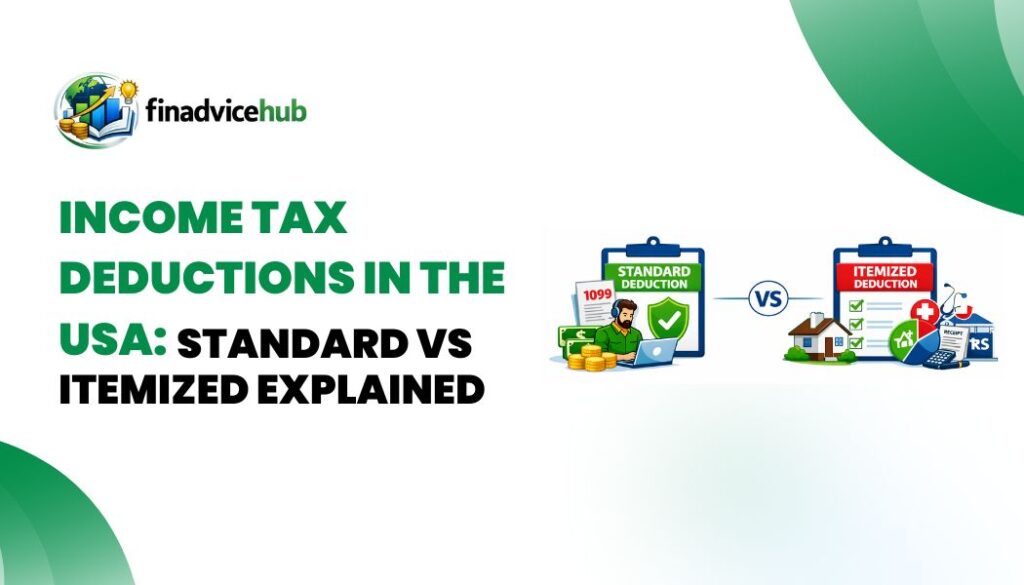
The standard deduction is a fixed amount that the IRS allows taxpayers to subtract from their income to reduce taxable income, no receipts or documentation required. This is different from itemized deductions, which require tracking deductible expenses IRS recognizes, such as mortgage interest, medical expenses, or charitable contributions. For many taxpayers, the standard deduction provides a simple way to reduce taxable income without navigating complex tax deduction rules.
Current Standard Deduction Amounts (2025 Tax Year)
| Filing Status | Standard Deduction |
| Single | $14,600 |
| Married Filing Jointly | $29,200 |
| Head of Household | $21,900 |
Note: These amounts are adjusted annually for inflation, so they may change each tax year.
Who Should Claim the Standard Deduction?
- Taxpayers without significant deductible expenses: If your deductible expenses are lower than the standard deduction, itemizing won’t save you more.
- Those who prefer simplicity: No need to keep receipts or calculate tax deductions, for example, calculations.
- The majority of filers: Roughly 90% of Americans claim the standard deduction, as it often offers the most straightforward tax savings.
Benefits of the Standard Deduction
- Ease of use: Simply subtract the fixed amount from your gross income—no detailed expense tracking needed.
- Lower audit risk: Fewer documentation requirements reduce the likelihood of IRS scrutiny.
- Potentially higher than itemized deductions: For average taxpayers, the standard deduction may provide more tax savings than itemizing personal or business deductions.
For individuals seeking to optimize deductions, understanding the difference between the standard deduction and the itemized deduction is crucial. Tools like a standard deduction calculator or tax savings estimator can help determine which option maximizes your allowable deductions IRS permits.
Itemized Deductions Explained
What Does Itemizing Deductions Mean?
Itemizing deductions allows taxpayers to list specific deductible expenses instead of taking the flat standard deduction. By claiming itemized deductions, you can reduce your taxable income more effectively if your deductible expenses exceed the standard deduction. This approach is particularly useful for those with high mortgage interest, high medical costs, or large charitable contributions. Understanding the difference between standard deduction and itemized deductions can help maximize your tax savings.
Common Itemized Deductions
| Category | Examples |
| Mortgage Interest | Interest paid on a home loan |
| Charitable Donations | Cash or property gifts to qualified charities |
| Medical Expenses | Costs exceeding 7.5% of adjusted gross income (AGI) |
| State & Local Taxes | Property taxes, state income taxes |
| Casualty/Theft Losses | Losses from natural disasters or theft |
Eligibility Rules for Itemizing
- Exceed the standard deduction: You should only itemize if your total deductions are higher than the standard deduction for your filing status.
- Proper documentation required: Keep receipts, mortgage statements, donation letters, and medical bills. The IRS requires proof for every itemized expense claimed.
Documentation Requirements
Every item you plan to deduct must have supporting evidence:
- Mortgage statements for home interest
- Receipts or acknowledgment letters from charities
- Medical bills or insurance statements
- Tax statements for state and local taxes
Example Calculation
Suppose you are single with a gross income of $60,000:
- Mortgage interest: $8,000
- Charitable donations: $2,000
- Medical expenses: $3,000 (only $500 deductible after AGI threshold)
- State taxes: $5,000
Total itemized deductions = $15,500
Since $15,500 exceeds the $14,600 standard deduction for a single filer in 2025, itemizing would save more on taxes. This demonstrates how deductions reduce taxable income and why strategic tax deduction planning is important. Using an itemized deduction calculator can help determine whether itemizing or taking the standard deduction maximizes your tax savings.
Common Tax Deductions Individuals Can Claim
Tax deductions can significantly lower your taxable income, making a big difference in your overall tax liability. Understanding which deductions you are eligible for—and how they work—can help you implement effective tax deduction strategies for individuals.
1. Mortgage Interest Deduction
Homeowners can deduct interest paid on mortgages, subject to IRS limits. This is one of the most common personal tax deductions, especially for those who itemize rather than take the standard deduction. Mortgage interest deduction can reduce your adjusted gross income and, in turn, your taxable income.
2. Charitable Donations
Donations of cash, property, or even mileage incurred for charitable activities are deductible if made to IRS-recognized organizations. Keeping proper documentation, such as receipts or acknowledgment letters, ensures your deductions comply with IRS rules. Charitable contributions are a key part of allowable deductions IRS permits.
3. Medical Expenses
Medical and dental expenses are deductible, but only the portion exceeding 7.5% of your AGI. This includes out-of-pocket costs for prescriptions, treatments, and insurance premiums. Proper documentation is crucial to avoid audit issues and to maximize the deductible expenses IRS allows.
4. Student Loan Interest
You can deduct up to $2,500 per year in student loan interest, even if you choose the standard deduction instead of itemizing. This deduction is a great example of personal tax deductions that directly reduce taxable income.
5. Retirement Contributions
Contributions to traditional IRAs and 401(k)s reduce taxable income for the year they are made. These contributions not only lower your current tax bill but also help in long-term retirement planning. Using an AI tax optimization tool or tax deduction calculator can help you plan contributions strategically to maximize tax savings.
Business and Self-Employed Deductions
Self-employed individuals and business owners have access to a wide range of business tax deductions that can significantly reduce taxable income. Understanding deduction rules for employees and freelancers is essential to maximizing savings while staying compliant with IRS guidelines.
1. Home Office Deduction
If you use part of your home exclusively and regularly for business, you can deduct related expenses such as a portion of rent or mortgage interest, utilities, and insurance. The home office deduction is a common allowable deduction IRS permits for freelancers and remote workers.
2. Equipment and Supplies
Purchases for business operations, computers, software, office furniture, and other supplies, are deductible. Proper documentation and receipts are necessary to ensure these expenses qualify under IRS deduction rules.
3. Professional Services
Fees paid to attorneys, accountants, consultants, or other professionals are deductible as ordinary and necessary business expenses. Leveraging these deductions can reduce taxable income while supporting essential business operations.
4. Travel Expenses
Business-related travel, including flights, hotels, meals, and transportation, is deductible. Keeping detailed records of business purposes and receipts ensures compliance with IRS deduction rules. Many self-employed taxpayers overlook these deductions, making them part of the biggest tax deductions taxpayers miss.
5. Health Insurance Deductions
Self-employed individuals can deduct premiums for health insurance for themselves, their spouse, and dependents. This deduction directly lowers taxable income and can be particularly valuable for freelancers managing their own benefits.
Using tools like AI expense categorization or an automated deduction tracking system can help freelancers and business owners capture every eligible expense and optimize deductions legally.
Maximizing Tax Deductions Legally
Maximizing your tax deductions legally requires careful planning, accurate record-keeping, and strategic use of available IRS rules. Whether you are an individual taxpayer or self-employed, understanding these strategies can help reduce taxable income and avoid unnecessary errors.
1. Proper Expense Documentation
Maintain thorough records of all deductible expenses. Keep receipts, invoices, mileage logs, and statements to substantiate claims. Proper documentation is critical for both personal tax deductions and business tax deductions to comply with IRS deduction rules.
2. Deduction Planning Strategies
Strategic planning can increase your total deductions:
- Bunch charitable donations into a single tax year to exceed the standard deduction and maximize itemized deductions.
- Prepay medical expenses or property taxes if you are close to IRS thresholds.
- Track deductible expenses throughout the year to leverage all allowable deductions the IRS permits.
3. Avoiding Deduction Errors
- Never claim personal expenses as business-related.
- Double-check IRS limits for specific deductions like mortgage interest, medical expenses, and retirement contributions.
- Review your deductions carefully to avoid common mistakes that could trigger an audit.
4. Audit Risk Considerations
Itemizing deductions may increase audit risk, so meticulous record-keeping is essential. Ensure all tax write-offs explained are supported with proper proof, especially for large deductions or unusual claims.
5. Long-Term Tax Planning
- Contribute to retirement accounts like traditional IRAs and 401(k)s annually to reduce taxable income.
- Track all deductible expenses consistently throughout the year to avoid last-minute scrambling and missed opportunities.
6. Emerging Trends: AI and Tax Deductions
Technology is transforming how taxpayers optimize deductions:
- AI tax deduction finder: Automatically scans receipts and identifies deductible expenses.
- Automated deduction tracking: Syncs with bank and credit card accounts to ensure nothing is overlooked.
- AI expense categorization: Flags deductible versus non-deductible expenses for accurate reporting.
- AI tax optimization tools: Suggest whether taking the standard deduction or itemizing will yield the most savings.
Leveraging these AI-powered solutions can help individuals and business owners maximize deductions legally while minimizing the risk of errors or audits.
Final Thoughts
Income tax deductions are effective ways to lower taxable income and reduce tax liability. Maximize savings by understanding when to take the standard deduction or itemized deductions, understanding which expenses are deductible, and maintaining documentation.
Deduction planning strategies, personal and business tax deductions, and IRS rules help you claim allowable deductions. Emerging tools such as AI tax deduction finders, automated tracking, and AI optimization help you categorize and monitor expenses for an optimal tax strategy.
Maximize deductions by planning, keeping records, and using AI tools. This reduces taxable income and avoids errors or audits. Understand and leverage all available deductions for efficiency and savings.
FAQs
1. What are income tax deductions?
Income tax deductions in the USA are expenses that the IRS allows you to subtract from your gross income to reduce taxable income. These include personal tax deductions like charitable contributions and medical expenses, as well as business tax deductions for self-employed individuals.
2. How do deductions reduce taxable income?
Deductions lower the income that is subject to taxation, potentially reducing your tax bracket. For example, if your gross income is $60,000 and you claim $12,000 in deductions, your taxable income drops to $48,000, saving you money based on your tax rate.
3. What is the difference between standard and itemized deductions?
The standard deduction is a fixed amount determined by the IRS that doesn’t require documentation. Itemized deductions involve listing specific deductible expenses IRS allows, such as mortgage interest or state taxes. Choosing the higher of the two maximizes your taxable income reduction.
4. What deductions can individuals claim on taxes?
Common deductions for individuals include:
- Mortgage interest
- Charitable donations
- Medical expenses above 7.5% of AGI
- Student loan interest (up to $2,500 annually)
- Retirement contributions (traditional IRA or 401(k))
5. Can freelancers claim tax deductions?
Yes. Self-employed individuals and freelancers can claim business tax deductions such as:
- Home office expenses
- Equipment and supplies
- Professional services (legal, accounting, consulting)
- Travel for business
- Health insurance premiums
6. What documentation is needed for deductions?
The IRS requires proof for all deductions. Keep:
- Receipts and invoices
- Bank or credit card statements
- Mileage logs for business travel
- Mortgage and medical statements
7. Are deductions different from tax credits?
Yes. Deductions reduce taxable income, while tax credits directly reduce the amount of tax owed. For instance, a $2,000 deduction in the 20% tax bracket saves ~$400, whereas a $2,000 tax credit reduces taxes owed by the full $2,000.
8. What happens if deductions are claimed incorrectly?
Incorrect deductions can trigger penalties, interest, or an IRS audit. Maintaining accurate records and following IRS deduction rules ensures deductions are claimed legally and safely.