
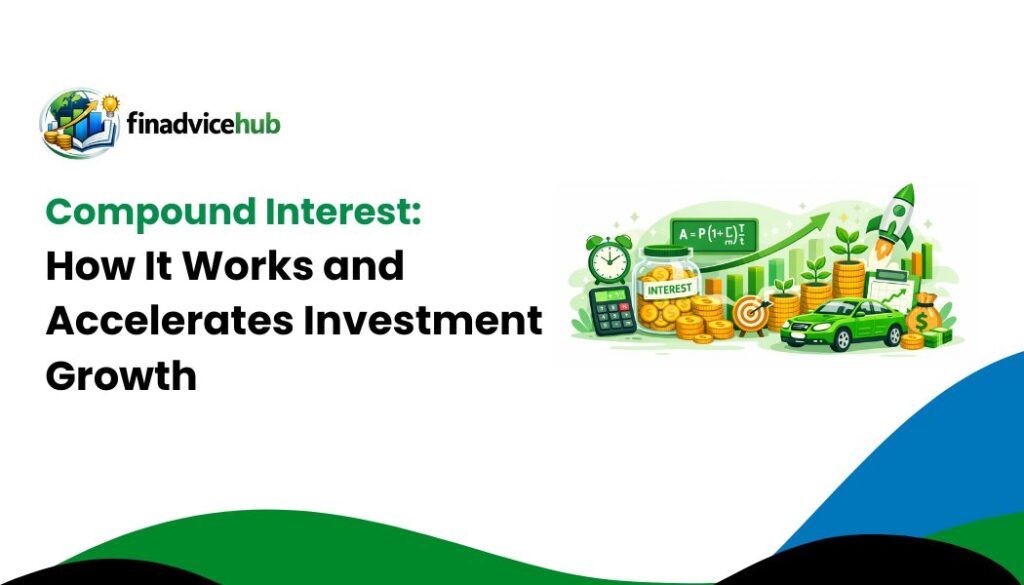
Compound interest is a cornerstone of personal finance and long-term investment growth. Unlike simple interest, which is calculated solely on the principal amount, compound interest allows your earnings to grow exponentially over time. This effect, often called interest on interest, means that both the original investment and the accumulated interest generate returns, accelerating overall wealth creation.
Understanding how compound interest works is essential for anyone planning for retirement, savings goals, or long-term investments. By learning how to calculate compound interest and considering factors such as interest rate, compounding frequency, and contribution schedule, investors can make informed decisions that maximize financial growth.
Starting early and making consistent contributions significantly increase the benefits of compound interest. Even modest investments can grow substantially over decades. Using tools like online compound interest calculators further simplifies planning, helping investors visualize potential returns and track progress toward financial goals with accuracy.
Understanding Compound Interest
Definition and Concept
Compound interest is the process of earning interest on both the initial principal and accumulated interest from previous periods. This interest on interest effect accelerates investment growth with interest over time, creating exponential financial compounding.
Difference Between Simple and Compound Interest
While simple interest is based solely on the principal, compound interest adds accumulated interest to the principal at each compounding period. This difference significantly impacts long-term savings and investment returns.
How Interest Is Calculated
Interest calculation depends on the principal, interest rate, and compounding frequency. The higher the interest rate and the more frequent the compounding, the faster your investment grows.
Compounding Frequency Explained
Interest can be compounded annually, monthly, quarterly, or even daily. More frequent compounding periods increase total returns due to faster interest accumulation.
Real-Life Significance
Compound interest powers long-term wealth growth, from savings accounts to retirement funds. Even modest contributions early in life can grow substantially over decades thanks to compounding effects.
Compound Interest Calculation
Step-by-Step Formula
The compound interest formula is:
Where:
- A = future value
- P = principal
- r = annual interest rate
- n = number of compounding periods per year
- t = time in years
Annual vs Monthly Compounding
- Annual compounding: Interest added once per year
- Monthly compounding: Interest added 12 times per year, resulting in higher effective interest rate
Adjusting for Deposits and Withdrawals
Adding periodic contributions or making withdrawals affects compound interest growth. Calculations must account for each cash flow for accurate investment returns.
Using Online Calculators
AI compound interest calculators and digital forecasting tools simplify calculations for beginners and experienced investors alike.
Examples with Real Numbers
Example Table: Monthly vs Annual Compounding
| Principal ($) | Rate (%) | Years | Annual Compounding ($) | Monthly Compounding ($) |
| 10,000 | 5 | 10 | 16,288 | 16,470 |
| 5,000 | 7 | 15 | 14,104 | 14,546 |
Examples and Scenarios
Compound Interest for Savings Accounts
Even standard savings accounts benefit from interest compounding, especially with higher interest rates and monthly compounding.
Compound Interest for Investments
Stocks, bonds, and mutual funds can leverage compound interest to grow investment returns significantly over decades.
Retirement Savings Example
A $200 monthly contribution into a retirement account at 6% interest compounded monthly can grow to over $150,000 in 30 years.
Long-Term Wealth Growth Illustration
Consistent contributions plus compound interest demonstrate the power of time. Starting early drastically increases total wealth accumulation.
Real-Life Case Studies
Real-life compound interest scenarios show how small, disciplined investments can outperform large, sporadic contributions due to compounding effects.
Challenges and Misconceptions
Overestimating Returns
Many investors assume returns grow linearly, ignoring the exponential nature of compound interest. This misconception can lead to unrealistic financial projections and poor planning. Understanding that early growth is slower and accelerates over time helps set realistic expectations.
Table: Effect of Time on Compound Interest Growth
| Principal ($) | Interest Rate (%) | 5 Years ($) | 10 Years ($) | 20 Years ($) |
| 10,000 | 6 | 13,382 | 17,908 | 32,071 |
| 5,000 | 7 | 7,025 | 9,835 | 19,325 |
Ignoring Compounding Frequency
The frequency of compounding (annual, monthly, daily) significantly impacts total returns. More frequent compounding increases the effective interest earned.
Table: Annual vs Monthly Compounding
| Principal ($) | Rate (%) | Years | Annual Compounding ($) | Monthly Compounding ($) |
| 10,000 | 5 | 10 | 16,288 | 16,470 |
| 5,000 | 7 | 15 | 14,104 | 14,546 |
Tax Implications
Taxes reduce effective growth by lowering net returns. Accounting for tax impact is critical for accurate forecasting.
Table: Tax Impact on Interest Growth
| Principal ($) | Rate (%) | Years | Pre-Tax ($) | Tax (20%) ($) | Net Growth ($) |
| 10,000 | 6 | 10 | 17,908 | 3,582 | 14,326 |
| 5,000 | 7 | 15 | 13,835 | 2,767 | 11,068 |
Early Withdrawal Effects
Withdrawing funds interrupts compounding, decreasing long-term wealth accumulation.
Table: Impact of Early Withdrawals
| Principal ($) | Interest Rate (%) | Years | Withdrawn After 5 Years ($) | Final Value ($) | Value if No Withdrawal ($) |
| 10,000 | 6 | 10 | 2,000 | 14,418 | 17,908 |
| 5,000 | 7 | 15 | 1,000 | 10,850 | 13,835 |
Best Practices to Maximize Benefits
- Start Early: Time magnifies returns exponentially.
- Contribute Consistently: Regular deposits increase principal and accelerate compounding.
- Reinvest Interest: Keep earnings in the investment to benefit from “interest on interest.”
- Choose Higher-Yield Accounts or Investments: Even small increases in interest rates can significantly boost growth.
Optimizing Compound Interest
Starting Early for Higher Growth
Even small contributions started early grow dramatically over decades due to compound interest.
Table: Early vs Late Investment Start
| Monthly Contribution ($) | Rate (%) | Years | Final Value ($) |
| 200 | 6 | 30 | 151,000 |
| 200 | 6 | 20 | 65,000 |
Consistent Contributions
Regular deposits ensure each compounding period builds on a larger base, boosting long-term investment growth.
Table: Effect of Regular Contributions
| Principal ($) | Monthly Contribution ($) | Rate (%) | Years | Final Value ($) |
| 5,000 | 100 | 5 | 10 | 20,300 |
| 5,000 | 200 | 5 | 10 | 32,600 |
Choosing Higher Interest Investments
Table: Interest Rate Impact on Growth
| Principal ($) | Rate (%) | Years | Final Value ($) |
| 10,000 | 4 | 15 | 18,000 |
| 10,000 | 6 | 15 | 23,920 |
| 10,000 | 8 | 15 | 31,720 |
Reinvesting Interest
Reinvested interest compounds faster, maximizing wealth accumulation over time.
Table: Withdraw vs Reinvest Interest
| Principal ($) | Rate (%) | Years | Withdraw Interest ($) | Reinvest Interest ($) |
| 10,000 | 6 | 10 | 14,000 | 17,908 |
| 5,000 | 7 | 15 | 11,000 | 13,835 |
Tracking Growth Over Time
Using AI compound interest calculators and predictive models helps monitor investment returns, forecast growth, and optimize contribution strategies effectively.
Table: Tracking Investment Growth Over Time
| Year | Principal ($) | Interest Earned ($) | Total ($) |
| 1 | 10,000 | 600 | 10,600 |
| 5 | 10,000 | 3,191 | 13,191 |
| 10 | 10,000 | 7,908 | 17,908 |
Conclusion
Compound interest is a powerful wealth-building tool. By understanding its mechanics, applying consistent contributions, and leveraging compounding frequency, investors can achieve long-term investment growth with interest. Even small investments can grow substantially when compounded over years, making early financial planning critical.
Maximizing compound interest requires informed decisions about interest rates, contribution frequency, and reinvestment. Using compound interest calculators online and tracking growth over time ensures disciplined, data-driven financial planning. Whether for savings accounts, investments, or retirement funds, harnessing the power of compound interest enables exponential wealth accumulation and smarter financial decision-making.
FAQs
What is compound interest?
Compound interest is interest earned on both the principal and accumulated interest.
How does it differ from simple interest?
Simple interest applies only to the principal, whereas compound interest grows on both principal and prior interest.
How often is interest compounded?
Interest can be compounded annually, monthly, quarterly, or daily.
How does compounding affect long-term savings?
It accelerates growth, turning small, consistent contributions into substantial wealth over time.
Can compound interest be applied to loans?
Yes, loans can also accumulate compound interest, increasing the total owed.
Are there online calculators for compound interest?
Yes, AI compound interest calculators and digital forecasting tools are widely available.
How can I maximize compound interest growth?
Start early, contribute consistently, choose higher interest investments, and reinvest earnings.