
An offer of $60K/year seems clear enough. But when you finally get paid, the check may be a lot less than you expect because of what is known as the paycheck illusion.
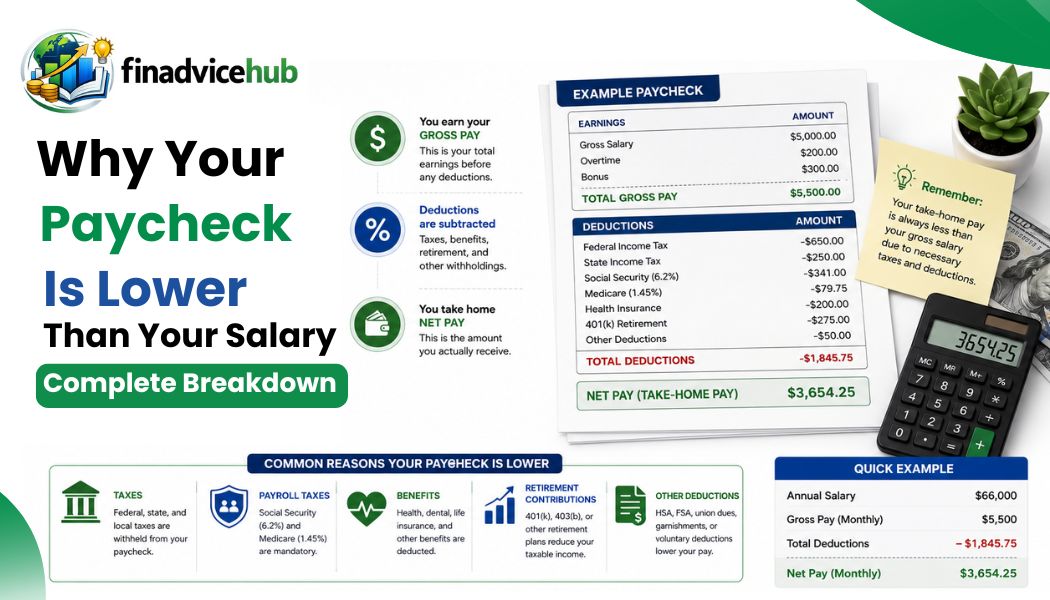
Your salary is the total annual amount that you earn before any deductions. However, the amount of your pay period paycheck is the amount you actually receive (i.e., your net pay) after federal taxes, social security, medicare, health insurance premiums, etc., have been subtracted from your gross annual earnings.
Most people’s thought process tends to think in terms of a year. On the other hand, wages are paid out in smaller increments and encumbered with many deductions on a regular basis.
Before you receive your paycheck at the end of the pay period, your total earnings were reduced by federal income taxes, social security, medicare, and your benefits each period.
If we take $60,000 for a biweekly pay period, it gets turned into a paycheck of about $2,307 gross before any deductions. After deductions for things like taxes and benefits, the take home amount will typically range between $1,700–$1,850 depending on taxes, state, and benefits.
Difference per paycheck ≈ $507
Biweekly (26 paychecks): $507 × 26 = $13,182/year
Using an average difference of ~$500 per paycheck, this adds up to over $13,000 annually.
The best way to make smarter financial decisions and to manage realistic expectations is to develop a sense of the differences between your gross and net incomes.
What is a Salary and Paycheck?
It is vital to know the salary vs. paycheck difference. Employees receive a salary, or fixed amount per year, as agreed to by both the employer and employee in an employment contract. Salaries do not vary based on hours worked, which is a benefit for both parties.
Paychecks provide employees with actual cash payments during each pay period, after all adjustments for deductions and taxes have been taken into account. All paychecks contain a payroll detail statement listing how the employees’ salary is allocated.
The difference between salary and paycheck is important to know. A salary is an employee’s anticipated total earning potential. However, the employee’s actual available income is represented by their paycheck.
Salaries are commonly quoted gross of deductions. However, paychecks reflect net income, after all mandatory deductions. It is useful to learn how to estimate real income after taxes for better financial planning.
As an example, an employee with a salary of $80,000 per year would typically expect to receive large monthly paychecks. However, benefit and tax deductions will make the monthly pay actually lower than those estimates.
By understanding the difference between these two concepts, you will be better positioned to create a budget or identify expenses.
Tip: Learn how to estimate paycheck after taxes to plan your real disposable income.
How the Payroll System Works in the USA?
In the United States, the payroll system is organized and regulated so that the employee’s paycheck is calculated accurately and that the taxes paid by the employer are correct.
Employers use payroll systems to manage employee compensation, deductions, and requirements regarding compliance.
The first step in the payroll process involves collecting data from employees. This includes their salary, number of hours worked, the benefits they receive, and various forms they complete for tax purposes (like the W-4). The W-4 determines withholding based on filing status, dependents, and extra withholding choices.
All of this data is then used to calculate an employee’s gross earnings. Deductions such as retirement contributions or health insurance premiums are then subtracted from an employee’s gross earnings to produce their net earnings.
The next step in the payroll process is calculating taxes from each employee’s gross pay. An employer must calculate income tax withholding, as well as Social Security and Medicare contributions based on federal, state, and local tax laws.
After deducting all applicable payroll taxes, employees receive their net paycheck.
Pay periods define how often employees get paid in any given year. If employees get paid weekly, they will receive 52 paychecks in one year.
If employees receive bi-weekly paychecks, they will receive 26 per year and if they are paid monthly, they will receive 12 paychecks.
While gross wage payments and employee net pay are simple concepts, the payroll process involves many complex issues.
The Hidden Payroll Engine: What Happens Behind the Scenes?
What happens behind the scenes for people receiving salaries is a great financial operation that most employees will never know about.
Businesses use payroll programs to perform the payroll function, including calculating employees’ salaries, ensuring compliance with laws/regulations, and making timely payments.
Payroll systems also provide for the calculation of taxes at both federal and state level, and the calculation of various deductions (e.g. pension contributions, health insurance premiums, etc.).
After making the necessary calculations, the payroll program then generates the employee’s pay stub and pays the employee.
Despite the use of payroll systems, payroll errors can and do happen for various reasons, including the employee entering data incorrectly into the payroll system or entering too old of a federal tax form.
The employer is responsible for compliance with tax regulations and making sure employees have the correct taxes withheld.
Components of a Paycheck Breakdown
Understanding what is included in a paycheck ensures you know every component of your earnings. Each paycheck is composed of numerous elements that establish how your income is-calculated and paid out. Being mindful of these elements allows you to easily track exactly where your money is going.
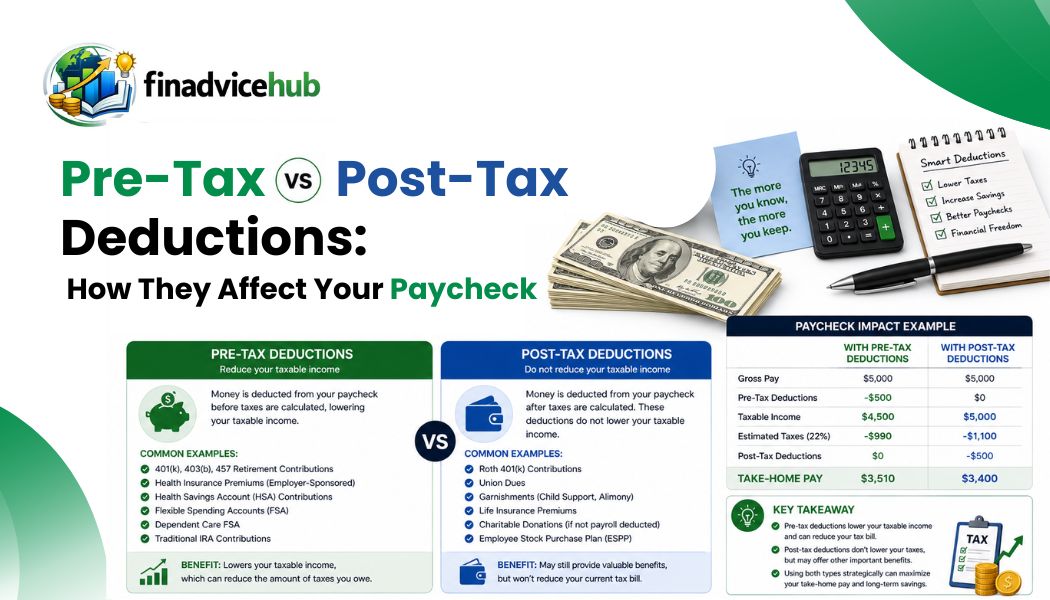
Pre-tax deductions can include retirement savings such as 401(k) contributions or how much is paid for health insurance premiums (all three types of deductions reduce the amount of taxable income you will report on your annual tax return).
Taxable income is defined as the total earned income remaining after all pre-tax deductions are subtracted from gross pay. Therefore, taxable income is the amount upon which taxes will be calculated.
Taxes that are deducted from your pay and withheld on your behalf are federal income tax, any state income tax that may apply, Social Security, and Medicare; each of which is a required deduction, and represents the largest part of your paycheck’s deductions.
Post-tax deductions are amounts that are deducted from your paycheck after tax has been withheld. Examples of post-tax deductions include certain voluntary deduction and wage garnishments.
The final piece of each paycheck is Net Pay, which is the amount of money deposited into your checking account and represents the amount of money you actually bring home from your paycheck or from working.
| Component | Amount | Impact |
| Gross Pay | $2500 | Starting earnings |
| Pre-Tax | -$300 | Lower taxes |
| Taxes | -$500 | Mandatory deductions |
| Post-Tax | -$100 | Additional reductions |
| Net Pay | $1600 | Final amount |
Step-by-Step Paycheck Calculation Framework
Learn how to calculate paycheck step by step USA to understand your earnings and deductions clearly.
Knowing how to calculate a paycheck step by step helps to clarify the pay system and make sure it is easy to manage. There is a simple formula applied to both salary and hourly workers.
The formula is:
Gross Pay – Pre-tax Deductions = Taxable Income – Taxes = After Tax Income – Post Tax Deductions = Net Pay
A clear gross vs. net pay example USA helps you see the difference between total income and take-home pay.
If a salaried worker makes $60,000 a year, he or she will receive roughly $2,307 every two weeks before taxes. If the worker has $300 in benefits taken out before calculating taxes, then the taxable amount will be $2,007.
For $2,007 taxable income:
- Social Security (6.2%) ≈ $124
- Medicare (1.45%) ≈ $29
- Remaining ≈ federal/state tax
Once the worker pays approximately $450 in taxes as per the estimation, the worker would have about $1,557 left. Any post-tax deductions (e.g., garnishments or additional benefits) would further reduce the final take-home pay.
If the hourly worker earns $25 per hour and meets the 80-hour requirement for the pay period, the gross pay before deductions will be approximately $2,000. After taxes and deductions, take-home pay would typically be around $1,600, depending on individual tax and benefit selections
Understanding how deductions reduce your paycheck helps you see exactly where your money goes and how to estimate your take-home pay. Moreover, you can calculate your take-home pay manually by following the steps on how to calculate net pay manually.
While calculating overtime, the hourly worker will receive time and a half (1.5 times the normal hourly rate) for overtime hours worked. Knowing how overtime affects paycheck allows you to calculate extra earnings correctly.
Thus, by taking the overtime hours (10), multiplying them by the pay ($25 x 1.5 = $37.50 per hour), and adding $375 to the gross pay, the worker’s gross pay for that pay period would be increased.
Understanding the entire process via step-by-step calculation will make it easier for you to estimate your pay and realize if your paycheck reflects those calculations correctly.
Note: Under FLSA rules, overtime is typically 1.5× after 40 hours/week
Payroll Taxes Explained
Payroll taxes are among some of the largest factors contributing to your paycheck being considerably less than your gross pay. These taxes are required by law and will be removed from your paycheck by your employer before you receive any payment for your work.
The first of the payroll taxes is the federal withholding tax. Your withholding amount is based on the amount of income you earn, your filing status, and what you indicate on your W4 form. Federal withholding taxes vary due to the federal tax brackets that apply to you depending on your personal situation.
Next is the Social Security tax, which is a fixed 6.2% rate applied to wages up until an income cap defined by the federal government. Social Security taxes are allocated to support the Social Security system, which pays for retirement and disability benefits.
For most workers, the Medicare tax is set at a rate of 1.45% on their income with an extra penalty for those with higher earnings than average.
In addition to federal withholding taxes and the two payroll taxes mentioned above, your employer also has to withhold state taxes based on your residency state. Some states impose no income tax while others have different rates based on your income.
| Tax Type | Typical Rate | Purpose |
| Federal Income Tax | Varies | Govt funding |
| Social Security | 6.2% | Retirement benefits |
| Medicare | 1.45% | Healthcare funding |
| State Tax (depending on the state you live and work in) | Varies | State services |
The combination of these two taxes makes up a good portion of deductions from your paycheck. They are also necessary for the provision of public services as well as providing for long-term benefits.
Understanding Paycheck Deductions
Paycheck deductions are very important in determining your final net pay (take-home pay). There are two primary types of paycheck deductions; pre-tax and post-tax deductions. It is important to understand why paycheck deductions are high to know where your money is going.
Pre-tax deductions will be deducted from your pay before taxes are calculated. Typical examples of pre-tax deductions include retirement plan contributions (401k), health insurance premiums, and money deposited into health savings accounts. Because pre-tax deductions reduce your taxable income, they can reduce the total tax amount you will owe.
Post-tax deductions are deducted from your paycheck after the taxes are deducted from gross pay & typically include wage garnishments, union dues, and some voluntary benefits. Since post-tax deductions are made after tax is determined, they do not reduce your tax liability.
The impact of deductions can also be quite large. For example, if you increase the amount of money you are contributing into your retirement plan, it may adversely impact the amount of take-home pay you receive now, but it will positively impact your financial future as well as reduce your overall tax burden.
Being aware of how the deductions are calculated will assist you in making better informed financial decisions. If you look at the deductions as a loss, you will be disappointed with how much money you have after the deductions have been removed.
Learning how to understand paycheck deductions helps you track pre-tax and post-tax items accurately. However, if you look at the deductions as a strategic way to allocate funds towards savings, protection, and future stability, you would see the deductions as a good thing.
The “Invisible Deductions” Most Employees Ignore
You may see changes in your paycheck even if your salary does not change. These changes are typically due to what can be described as invisible deductions, which are small or minor adjustments that may occur in the background of your paychecks.
For example, your health insurance premiums may increase every year due to plan changes and/or increasing costs of medical care. Your future contributions to retirement plans, such as your 401(k) plan, may also increase if you have automatically escalated contributions enabled.
Some employers also make adjustments to the benefits they offer employees, which may lead to different amounts deducted from employees’ paychecks for those benefits.
Often, you may not notice the changes to your paychecks because most of them involve small amounts. However, once you add up all the changes, they can add up to a large amount over time.
For instance, an increase in your health insurance premium of $50 per paycheck means that you would have $1,300 less in take-home income throughout the year.
Pay Frequency and Its Impact on Paychecks
Use a biweekly paycheck calculation example to estimate earnings over a two-week period. The frequency with which you are paid will affect the way you manage your money.
The three most common methods of paying in the United States are weekly, biweekly or semi-monthly, and monthly. Each of these payment schedules has benefits and disadvantages.
| Pay Frequency | Paychecks/Year | Key Benefits |
| Weekly | 52 | Steady income flow |
| Biweekly | 26 | Balanced budgeting |
| Monthly | 12 | Larger payments |
One good thing about bi-weekly pay methods is that there are some months in which there are 2 “extra” paychecks that can be accumulated and used for savings or paying down debt.
While your total income remains constant regardless of your payment frequency, the timing of the payments can affect how easily you pay your expenses and save for the future.
How to Read a Paycheck Stub?
A Pay Stub gives a breakdown of your pay; know how to read it so you can make sure it’s accurate and avoid making an error financially. Make it a habit to check your pay stub regularly to know how to check paycheck accuracy.
- The Earnings Section – gross pay, including regular time, overtime, and commission.
- Deductions Section – shows deductions before taxes & after taxes; Examples of pre-tax deductions include 401(k) contributions, insurance premiums, etc. Post-tax deductions include after-tax base, etc.
- Tax Section – shows amounts taken out for Federal Income Tax, Social Security, Medicare taxes, and State taxes. This section gives you the amount of Federal Income Tax, Social Security Tax, Medicare Tax, and State Tax withheld.
- Net Pay Section – the dollar amount that is deposited in your bank account.
| Section | What To Check |
| Earnings | Correct salary/hours |
| Taxes | Accurate withholding |
| Deductions | Expected benefits |
| Net Pay | Final amount |
To make sure your paycheck is accurate, you should compare it to your previous paychecks, check your W2s, and verify that all of your deductions are what you would expect them to be.
Real-Life Paycheck Scenarios
When you learn about how real-life scenarios work, it can help you to better understand payroll concepts.
For employees making a salary of $50,000 per year, they will gross approximately $4,167 a month before taxes and other deductions.
You can learn how to increase take home pay legally by adjusting your withholding and maximizing pre-tax benefits.
The average take home pay for an employee making that salary would be approximately $3,200 after taxes and deductions depending on their benefit selections and how they filed their taxes.
Freelancers are also in a different boat because they receive all their earnings without any automatic deductions taken from their paychecks.
They are responsible for paying their own taxes including self-employment taxes. Self-employment taxes combine Social Security and Medicare contributions.
Total self-employment tax = 15.3%
- 12.4% Social Security
- 2.9% Medicare
Because freelancers do not have taxes automatically deducted from their paychecks, they must set aside funds for their taxes and also must make estimated quarterly tax payments to avoid incurring tax penalties.
The above examples clearly show that there is a difference in the structure of a paycheck based on employment classification and income level, so it is important that each person understands how payroll will affect their specific situation.
The Paycheck Control Layer: Why Systems Matter More Than Salary?
A lot of individuals believe that their salary controls their paycheck; the truth is that their paycheck is actually controlled by systems. There are many different kinds of systems: payroll systems, tax rules and deduction structures.
Let’s explore how payroll works and what it is actually. A well-structured payroll system provides accuracy, consistency and compliance for all calculations made. This means that every calculation made for payroll is automatically completed using the applicable tax rules, deductions and payments as opposed to having to be manually entered.
For example, not withholding enough taxes or deducting the wrong amount can cause significant financial issues; however, automating payroll eliminates the possibility of those types of errors.
Organizations that have well-structured payroll systems benefit from decreased compliance risks and improved reporting to tax authorities.
To sum it up, your salary is merely a number. Therefore, how it is determined and what part of that number you ultimately receive in your bank account is all based on the systems that are in place.
Keeping this in mind allows you to worry about making more money as opposed to simply making more money through your pay system.
Common Paycheck Mistakes and Misunderstandings
An employee’s lack of understanding regarding how a Paycheck is calculated is a common source of confusion for employees in the form of many errors.
Net pay is the final amount of money an employee receives after all deductions have been taken out. This leads to a common error in the form of unrealistic expectations on an employee’s income.
Another common issue with Paychecks is that employees frequently do not review their Paychecks for deductions. This leads to many employees not noticing a change in their insurance premiums, 401(k) contributions, or any other benefit they may have.
Another common issue employees face with Paychecks is the improper withholding of taxes. If too much tax is withheld, then the employee will receive a smaller Paycheck throughout the year; if too little tax is withheld, the employee could end up owing money when they file their taxes.
Some employees will also typically not consider overtime pay or the taxation of bonuses, which can lead to discrepancies between how the employee is paid on a Paycheck versus their normal wages. Bonuses are often taxed at a flat 22% federal withholding rate, which can reduce immediate take-home pay.
Understanding how bonuses are taxed in paycheck helps you anticipate net bonus income. By being proactive, the employee will help ensure the accuracy of their pay and avoid any unnecessary surprises caused by finances.
How to Optimize Your Take-Home Pay?
You do not have to avoid taxes in order to maximize your paycheck. You can do this by making better financial decisions within the current tax system.
The first step in improving your take-home pay is by adjusting your tax withholding. When you fill out the W-4 form to update your tax withholding, you can control the amount of tax that is withheld from each paycheck.
By adjusting your tax withholding, you avoid the possibility of over paying taxes and/or having a large tax bill at the end of the year.
In addition to adjusting tax withholding, managing deductions is also important to take home more money.
By increasing your pre-tax contributions (i.e. retirement savings, health accounts), you will lower your taxable income and lower your overall taxes.
Tax efficient benefits will also help you take home more money. The benefits that can reduce your taxable income and provide you with useful coverage are employer-sponsored health insurance, flexible spending accounts (FSA), and commuter benefits.
The timing of your income and contributions is also important to maximize your take-home pay.
For example, if you can spread out your bonuses from work or adjust your contributions to your benefit programs throughout the year, you can reduce your overall tax burden for the year.
In addition, regularly reviewing your paycheck will help you to ensure that your strategy continues to meet its objectives. Pay changes, your benefit programs, and changes in tax laws will all affect your net pay calculation.
By understanding the different parts of your paycheck, you can reduce your expenses and increase your take-home pay without having to change your pay rate.
Moreover, you should be aware of what affects your take home pay, including taxes, deductions, and benefits.
The Psychology of Take-Home Pay: Why More Salary Doesn’t Always Mean More Money?
If you get a raise, you are likely to be placed in a higher tax bracket than you were previously. Even though only a portion of your earnings will be taxed at the higher rate due to progressive taxation, the overall tax burden that you owe the government will still be more than what you owed in the previous year.
It’s also possible that you will experience lifestyle inflation associated with raising your income. Many people will spend more on housing and transportation as they earn more and as a result the increase in your income will be less meaningful.
There can be trade-offs when it comes to your benefits as well; someone with a higher salary may be contributing more to their retirement or life insurance and although these are considered benefits, they represent a reduced take-home pay.
For example, when you receive a $20,000 salary increase, you will most likely not see the full amount increase to your net ($20,000) after all taxes have been deducted; your net would be approximately $12,000 after taxes (assuming that your tax rate remains the same).
Understanding this will help someone set realistic expectations and allow them to plan their finances better. The bottom line is that if you want your take-home pay to actually increase with an increase in income, you must have smart financial decisions.
The Paycheck Audit Framework: How to Check If You’re Losing Money?
Conducting a paycheck audit is a simple process used to find mistakes and determine how much money you should be receiving.
To begin your audit, examine your gross pay and verify that everything from your salary rate, hourly rate, overtime, and bonuses is correct. Learn how to calculate hourly to salary paycheck to see how your hourly rate converts to net pay.
The next step is to verify all the deductions that show up on your paycheck; review all of your pre-tax and post-tax deductions to be sure that they match the benefit arrangements you selected.
Next, examine your payroll tax withholding amounts on your paycheck and compare them to the amounts on your tax form to make sure that they are accurate. There are some strategies on how to reduce payroll taxes legally through retirement and health contributions.
During your audit, check for any discrepancies on your paycheck. Even minor discrepancies may signal that mistakes were made in the payment of your wages and/or that changes have occurred that need to be corrected.
If you find any discrepancies during your audit, contact your payroll office as soon as possible to correct the errors upon discovery because resolving issues earlier will reduce the potential for larger problems later.
How Salary, Taxes, and Paychecks Connect Together?
The payroll systems of today are undergoing fast transformations because upcoming payroll methods will use modern technological advancements.
Artificial intelligence is being used to automate tax calculations and adjust withholding in real time. This reduces errors and improves accuracy.
Employees can access their earned wages at any time through real-time payroll systems instead of waiting for their scheduled pay periods.
Payroll systems now include financial planning tools which enable employees to handle their savings and investments and expenses from their paycheck.
The new developments empower workers to manage their financial matters with better control and clearer understanding of their money situation.
The evolution of technology requires people to learn about system operations because this knowledge will enable them to handle their income better.
Advanced Insight: Paycheck Planning for 2026 and Beyond
Within the financial system, your salary, taxes and paycheck are all intertwined with one another.
Knowing how each element works together will allow you to effectively make informed decisions about your money.
The process begins with your salary. This is your total earnings. You will then have pre-tax deductions taken from your gross pay to determine tax-able income.
Then, based upon your tax-able income, determines what federal, state, and payroll taxes will be taken from your paycheck.
Lastly, after taxes are assessed, you will have post-tax deductions taken from your check, which will then be your final net paycheck amount.
The flow of this process shows that your paycheck is not solely a reflection of your salary but rather is a culmination of a series of computations and deductions during the course of that process.
By understanding this relationship, you will discover ways to better manage your finances such as increasing your pre-tax contributions, which will lower your tax-able income.
Additionally, it is important to routinely monitor the accuracy and efficiency of each piece throughout the entire pay system process.
Final Insight: Your Paycheck Is a Financial System, Not Just Income
A paycheck isn’t just the cash you receive. It’s a reflection of your wages, taxes, withholdings, and financial choices. Knowing how to optimize paycheck withholding ensures you pay the right amount of taxes throughout the year.
By learning how this paycheck system works, you’ll have greater control over your finances by being able to identify ways to increase your take-home pay, as well as to avoid routine errors.
Rather than solely thinking about your base pay, consider how the entire paycheck system operates. This way of thinking gets you making better decisions, planning better, and developing measurable long-term financial stability.
Don’t let your paycheck confuse you. Take a few minutes today to review your recent pay check, and find at least one potential change to increase your take-home pay.
Whether it means changing your withholding, deducting specific items, or learning where your pay really goes, you’ll be surprised at how much control you have.
Start now, because smarter paychecks equal smarter financial development!
FAQs
1. What is the difference between salary and paycheck?
Salary is the projected amount you are paid yearly (monthly) prior to the application of taxes and withholdings, while your paycheck (also referred to as “net income” or “net pay”) reflects the deduction of taxes (gross income is reduced) from total salary plus other withholdings (e.g., withholding tax, medical and dental insurance, retirement contributions) of an employee’s total gross salary.
2. How is a paycheck calculated step by step?
Here’s a simple salary to paycheck calculation example to see the full deduction process in action. The following steps occur:
- Calculate gross pay.
- Deduct Pre-tax deductions from gross pay to arrive at taxable income (Many employees wonder how much tax is deducted from paycheck to estimate their take-home income).
- Calculate taxable and non-taxable amounts using current tax laws.
- Don’t forget to subtract all remaining deductions after taxes are withheld to get the net pay.
3. Why is my paycheck lower than my salary?
Federal taxes, Social Security taxes, and Medicare taxes will all implement deductions from your gross salary to arrive at your net salary on each paycheck. Adding or reducing your healthcare premiums/rates to your paycheck will change how many hours you work during the week.
4. What taxes are deducted from a paycheck?
Let’s focus on payroll deductions explained. The payroll process deducts four mandatory taxes from employee salaries which include Federal income tax, Social Security tax and Medicare tax and depending on the state Federal tax requirements. The Social Security tax rate stands at 6.2% while the Medicare tax rate remains set at 1.45% for most workers according to established rules.
5. How do pre-tax deductions affect take-home pay?
Pre-tax deductions decrease your taxable income which results in lower tax payments for you. The deductions from your salary for 401(k) contributions and health insurance expenses take place before tax calculations. It will enable you to decrease your tax payments while experiencing a minor decrease in present salary.
6. How often should I get paid?
Employees receive their payments through weekly or biweekly or monthly salary schedules. The most frequent payment schedule used by businesses pays employees every two weeks. Your payment schedule determines when you receive your wages but it does not affect your yearly salary.
7. What is net pay vs gross pay?
Gross pay is total earnings; net pay is what you take home. Gross pay is before deductions, while net pay is the final amount after taxes and other deductions are subtracted.
8. How can I increase my take-home pay legally?
Being able to increase your take home pay can be as easy as adjusting your withholding, maximizing deductions you are entitled to take, and utilizing tax savings through benefits. Making changes to your W-4, contributing to pre-tax accounts, and making overall choices that reduce your taxable income will allow you to increase your net pay.
9. What happens if my paycheck is incorrect?
If you receive a paycheck that has any discrepancies, it’s best to notify your employer or payroll department right away. Paycheck errors can occur with regard to the number of hours worked, the amount of taxes owed, or any deductions from your paycheck. By reporting an error right away, your employer or your payroll department can correct it as soon as possible, which also helps prevent any future financial issues.
10. How to read a paycheck stub correctly?
It is crucial to know how to read a paycheck stub to verify your pay and deductions. Ensure that you verify your pay, deductions, tax amount and your net amount before leaving the office. Review all areas of the paycheck stub closely. Check that your gross pay is correct, confirm deductions with their pay, and check the tax amounts to help ensure you do not make any errors on your next paycheck.