
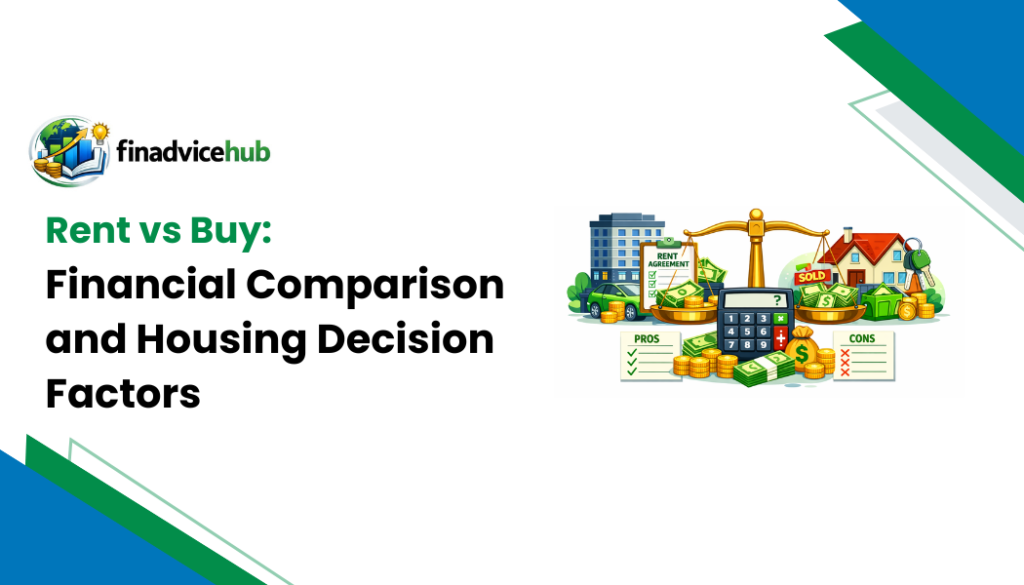
Choosing between renting and buying a home is one of the biggest financial decisions most Americans make.
The debate around rent vs buy is no longer just about monthly payments. Rising mortgage rates, changing housing market trends, property taxes, insurance costs, and remote work flexibility have transformed the housing decision entirely.
For some households, homeownership builds long-term wealth through equity and appreciation. For others, renting provides flexibility, lower upfront costs, and reduced financial risk.
The right answer depends on:
- income stability
- local housing affordability
- expected time in the property
- interest rates
- maintenance costs
- long-term financial planning goals
This guide breaks down the true financial comparison of rent vs buy, including hidden costs, calculators, real-life examples, and strategic decision frameworks designed for the U.S. housing market.
Understanding Rent vs Buy
Definition and Overview
The rent vs buy decision compares two ways of securing housing:
Renting
You pay a landlord monthly for the right to occupy a property without ownership responsibility.
Buying
You purchase property through cash or mortgage financing and build ownership equity over time.
The core financial question is:
Does buying create more long-term value than renting after accounting for all ownership costs?
That answer varies significantly by:
- city
- market conditions
- interest rates
- lifestyle goals
- expected length of stay
Key Differences Between Renting and Buying
| Factor | Renting | Buying |
| Ownership | No equity | Builds equity |
| Upfront Costs | Lower | Higher down payment and closing costs |
| Monthly Payments | Rent | Mortgage + taxes + insurance |
| Flexibility | High | Lower |
| Maintenance Responsibility | Usually landlord | Homeowner |
| Wealth Building | Limited | Potential appreciation |
| Risk Exposure | Lower | Market and maintenance risks |
Quick Summary
Renting prioritizes flexibility.
Buying prioritizes long-term asset ownership.
Pros and Cons of Each
Pros of Renting
- Lower upfront costs
- Easier relocation
- Reduced maintenance obligations
- Lower exposure to housing market downturns
- Predictable short-term monthly housing expenses
Cons of Renting
- No equity accumulation
- Potential annual rent increases
- Less customization freedom
- Limited long-term wealth building
Pros of Buying
- Builds home equity
- Fixed mortgage payments may stabilize costs
- Potential tax deductions
- Long-term real estate investment benefits
- Potential home value appreciation
Cons of Buying
- High upfront costs
- Property taxes and insurance
- Maintenance expenses
- Reduced mobility
- Risk of market depreciation
Understanding these pros and cons of renting versus buying is critical before making a housing commitment.
Financial Implications
Many people compare:
- rent vs mortgage payment
but overlook:
- maintenance
- HOA fees
- closing costs
- insurance
- opportunity cost of down payments
- property taxes
Example
A renter paying:
- $2,000 monthly rent
may actually spend less overall than a buyer paying:
- $1,800 mortgage
- $600 taxes and insurance
- $400 maintenance reserve
The true homeownership cost is often much higher than the advertised mortgage payment.
Lifestyle Considerations
Financial calculations matter, but lifestyle alignment matters too.
Buying may make sense if you:
- plan to stay 7+ years
- want stability
- value customization
- prioritize long-term wealth building with homeownership
Renting may fit better if you:
- relocate frequently
- expect career changes
- prefer flexibility
- want lower financial responsibility
The best housing decision balances finances with lifestyle realities.
Financial Comparison
Monthly Cost Analysis
A proper cost comparison rent vs buy should include all monthly ownership costs.
Monthly Housing Expense Comparison
| Expense | Renting | Buying |
| Base Payment | Rent | Mortgage |
| Property Taxes | No | Yes |
| Home Insurance | Minimal | Yes |
| Maintenance | Rare | Significant |
| HOA Fees | Sometimes | Possible |
| Utilities | Shared sometimes | Full responsibility |
Important Insight
Many first-time buyers underestimate property expenses by focusing only on principal and interest payments.
Long-Term Affordability
The long-term cost of renting vs buying depends heavily on:
- home appreciation
- inflation
- rent growth
- mortgage rates
- investment returns
Renting Scenario
Rent may rise:
- 3%–7% annually in high-demand cities.
Buying Scenario
A fixed-rate mortgage can stabilize housing payments over decades while building equity.
However:
- maintenance
- taxes
- repairs
continue indefinitely.
Impact of Interest Rates and Taxes
The impact of interest rates on rent vs buy decisions is enormous.
Example
| Mortgage Rate | Monthly Payment on $400K Loan |
| 4% | Lower |
| 7% | Significantly higher |
Even small rate increases can dramatically affect housing affordability comparison calculations.
Tax Considerations
Homeowners may benefit from:
- mortgage interest deductions
- property tax deductions
But these advantages vary depending on:
- income
- state taxes
- deduction eligibility
Renters generally avoid these complexities.
Cost of Maintenance and Utilities
Hidden costs in rent vs buy decisions often surprise new homeowners.
Common Property Expenses
| Expense Type | Typical Annual Cost |
| Roof Repairs | [Insert Estimate] |
| HVAC Replacement | [Insert Estimate] |
| Property Maintenance | 1–3% of home value |
| Home Insurance | Variable |
| Utilities | Often higher than rentals |
Maintenance unpredictability is one of the largest ownership risks.
Real-Life Examples
Example 1: Renting Wins
A software engineer relocates every 2–3 years for career advancement.
Renting avoids:
- transaction costs
- realtor commissions
- market timing risks
This flexibility may produce stronger net financial outcomes.
Example 2: Buying Wins
A family purchases a home in a stable suburban market and remains for 15 years.
Benefits may include:
- appreciation
- fixed mortgage costs
- equity accumulation
- inflation protection
This demonstrates how home value appreciation affects buy decisions over time.
Decision-Making Factors
Credit Score and Mortgage Eligibility
Mortgage lenders evaluate:
- credit score
- debt-to-income ratio
- employment history
- down payment size
Higher credit scores generally reduce:
- interest rates
- monthly mortgage costs
General Mortgage Score Ranges
| Credit Score | Mortgage Impact |
| 760+ | Best rates |
| 700–759 | Competitive rates |
| 620–699 | Higher rates |
| Below 620 | Limited eligibility |
Improving credit before purchasing can significantly lower long-term costs.
Job Stability and Mobility
Job uncertainty affects housing risk.
Buying may become risky if:
- Relocation is likely
- Income is unstable
- Career flexibility is needed
Selling property too early can create losses due to:
- closing costs
- market timing
- agent commissions
This is especially important for first-time buyers.
Local Real Estate Market
The impact of location on rent vs buy decisions is massive.
Markets Favoring Renting
- Very high home prices
- Rapid interest rate increases
- Slow appreciation forecasts
Markets Favoring Buying
- Strong population growth
- Stable job markets
- Limited housing inventory
Housing market trends affecting rent vs buy vary dramatically between cities.
Future Home Value Appreciation
Real estate appreciation is not guaranteed.
Appreciation Drivers
- Population growth
- School quality
- Economic development
- Infrastructure investment
- Supply shortages
Depreciation Risks
- Economic decline
- Oversupply
- Rising crime
- Climate risks
A home should first satisfy housing needs before being viewed as an investment.
Personal Financial Goals
Your financial decision, rent or buy should align with:
- savings goals
- retirement planning
- lifestyle priorities
- emergency reserves
- investment preferences
Some households prioritize:
- liquidity and investing flexibility
Others prioritize:
- ownership stability and forced savings
Both strategies can work financially.
Tools and Calculators
Online Rent vs Buy Calculators
A quality rent vs buy calculator helps compare:
- ownership costs
- future equity
- rent increases
- opportunity costs
- tax impacts
`The best rent vs buy calculator online tools include:
- inflation assumptions
- appreciation estimates
- investment return comparisons
Scenario Planning
Good housing analysis considers multiple future scenarios.
Scenario Variables
| Variable | Effect |
| Interest Rates | Changes affordability |
| Rent Inflation | Impacts long-term rental cost |
| Appreciation | Impacts equity growth |
| Time Horizon | Affects transaction cost recovery |
Scenario planning reduces emotional decision-making.
Comparing Multiple Properties
Not all homes create equal financial outcomes.
Compare:
- taxes
- HOA fees
- commute costs
- maintenance age
- utility efficiency
- appreciation potential
A cheaper mortgage does not always mean lower ownership costs.
Sensitivity Analysis with Interest Rates
Even a 1% mortgage rate change can alter affordability substantially.
Example
| Home Price | Rate | Payment Difference |
| $500,000 | 6% vs 7% | Significant monthly increase |
This is why predictive real estate analytics and AI affordability tools are becoming more popular.
Interactive Examples
Modern digital housing affordability tools now provide:
- AI rent vs buy calculators
- predictive equity growth
- personalized affordability estimates
- regional housing analysis
These tools help buyers model:
- best-case scenarios
- worst-case outcomes
- breakeven timelines
Challenges and Solutions
Risk of Property Depreciation
Home prices can decline.
This becomes especially problematic if:
- highly leveraged
- forced to sell quickly
- buying during overheated markets
Risk Reduction Strategies
- Buy below maximum affordability
- Maintain emergency reserves
- Avoid speculative purchases
- Focus on long-term ownership horizons
Rising Rents vs Fixed Mortgage
Renters face:
- annual increases
- lease uncertainty
- relocation risk
Buyers with fixed-rate mortgages gain:
- payment predictability
- inflation protection
However, taxes and insurance may still rise.
Early Selling Challenges
Buying becomes less favorable when ownership periods are short.
Major Selling Costs
| Expense | Estimated Cost |
| Realtor Fees | 5–6% |
| Closing Costs | Variable |
| Moving Costs | Variable |
| Repairs/Staging | Variable |
This is why many experts recommend owning at least 5–7 years before selling.
Tax and Insurance Considerations
Homeownership costs extend beyond mortgages.
Key Ownership Expenses
- property taxes
- homeowners insurance
- private mortgage insurance (PMI)
- flood insurance in some regions
Renters typically avoid these high variable costs.
Best Practices for Decision-Making
Rent vs Buy Framework
| Situation | Usually Better Option |
| Frequent relocation | Rent |
| Long-term stability | Buy |
| Limited savings | Rent |
| Strong emergency fund | Buy |
| High local appreciation | Buy |
| Uncertain income | Rent |
Expert Recommendation
The smartest housing decisions combine:
- affordability
- flexibility
- long-term planning
- realistic lifestyle expectations
Expert Insights
What Housing Analysts Commonly Recommend
- Keep housing costs below 28%–30% of gross income
- Maintain emergency reserves before buying
- Avoid stretching for “dream homes”
- Consider total ownership costs, not just mortgage payments
- Stay conservative with interest-rate assumptions
Industry Observation
Many financially successful households rent strategically while investing aggressively elsewhere.
Homeownership is not the only path to wealth creation.
Conclusion
The rent vs buy decision is ultimately personal, financial, and market-dependent.
Buying can create:
- long-term equity
- payment stability
- appreciation potential
Renting can provide:
- flexibility
- lower risk
- improved liquidity
The smartest approach is not choosing the option society expects — it is choosing the option that best aligns with your:
- income
- mobility
- financial goals
- local housing market
- long-term plans
Careful analysis, realistic budgeting, and disciplined planning matter far more than emotional pressure to buy or rent.
FAQs
Should I rent or buy a house in the USA?
It depends on:
- how long you plan to stay
- local housing costs
- interest rates
- financial stability
- savings levels
Buying often benefits long-term residents, while renting may suit those prioritizing flexibility.
How do I compare rent vs mortgage payments?
Compare:
- monthly rent
- mortgage principal
- taxes
- insurance
- maintenance
- HOA fees
- opportunity cost of down payments
A full housing affordability comparison provides more accurate results than comparing payments alone.
What are the long-term costs of renting?
Long-term rental costs may include:
- annual rent increases
- moving expenses
- lack of equity growth
However, renters often avoid major repair and maintenance costs.
How does location affect rent vs buy decisions?
Local:
- property prices
- rent growth
- taxes
- insurance costs
- appreciation trends
can significantly change financial outcomes.
Are there online calculators for rent vs buy?
Yes. Many online rent vs buy calculators estimate:
- breakeven timelines
- ownership costs
- equity growth
- tax impacts
- investment opportunity costs
Advanced tools now include AI-driven forecasting models.
How do interest rates impact buy decisions?
Higher mortgage rates increase:
- monthly payments
- total borrowing costs
- affordability challenges
Even small rate increases can substantially change buying power.
What financial factors should I consider before buying a home?
Key considerations include:
- emergency savings
- debt levels
- job stability
- credit score
- down payment
- maintenance reserves
- long-term affordability
- future financial goals