
Your paycheck tells you how much money you received, but your pay stub explains the story behind that number. It shows where your earnings came from, why certain amounts were deducted, how much tax was withheld, and how your final payment was calculated.
Many employees look at their paycheck and only focus on the amount deposited into their bank account. However, understanding how to read a pay stub gives you a clearer picture of your income, benefits, and payroll deductions. It also helps you catch mistakes such as missing overtime, incorrect tax withholding, or unexpected deductions.
A pay stub may seem complicated because it contains unfamiliar terms like gross pay, YTD earnings, tax withholding fields, and deduction codes. Once you understand what each section means, reading your payroll statement becomes much easier.
This complete guide provides a detailed paycheck stub breakdown, explaining every important field from top to bottom. You will learn how to read a pay stub step by step, understand what each line on a pay stub means, and review a realistic pay stub example explained USA employees can use as a reference.
Whether you receive a paper paycheck, digital payslip, or payroll portal statement, this paycheck breakdown guide will help you understand your compensation record with confidence.
What Is a Pay Stub and Why It Matters
A pay stub is a detailed record that explains how an employee’s paycheck was calculated. It shows earnings, taxes, deductions, and the final amount paid to the employee.
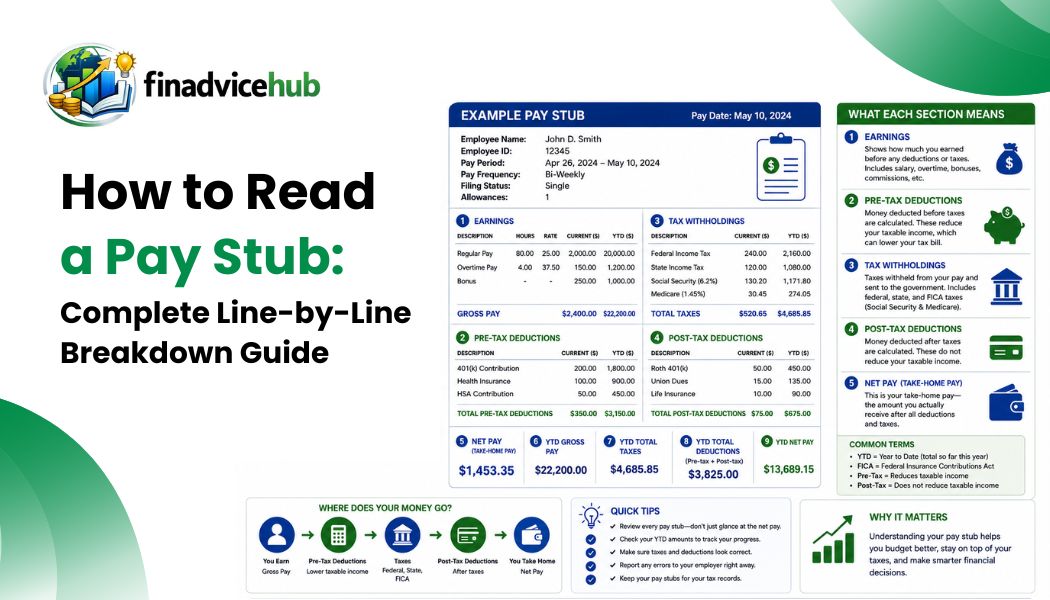
A simple pay stub explained example would look like this:
Gross Pay → Taxes and Deductions → Net Pay
Your gross pay represents everything you earned before deductions. Your net pay represents what you actually receive after deductions are removed.
A payroll statement provides the information behind your paycheck and acts as an official compensation record. Instead of only showing the final payment amount, it provides a complete payroll statement explanation of how your employer calculated your wages.
Definition of Pay Stub
A pay stub is a document provided by an employer that lists important payroll details for a specific pay period. It may also be called a paycheck stub, payslip, earnings statement, or salary slip.
In the United States, employees commonly use pay stubs to verify income, prepare taxes, apply for loans, and confirm that payroll calculations are correct.
For anyone learning how to read payslip USA payroll records, the most important sections to understand are:
- Employee information
- Earnings
- Taxes
- Deductions
- Net pay
- Year-to-date totals
Each section answers a different question about your paycheck.
Why Employers Provide It
Employers provide pay stubs to create transparency and maintain accurate payroll records.
A paycheck alone does not explain why the payment amount is what it is. A pay stub shows the calculation behind your wages.
For example, an employee may expect a $3,000 paycheck but receive $2,350 in their bank account. The pay stub explains that difference by showing:
- Federal income tax withholding
- Social Security and Medicare taxes
- Health insurance premiums
- Retirement contributions
- Other deductions
This information allows employees to understand their paycheck instead of simply accepting the final amount.
Importance for Employees
Knowing how to understand paycheck stub details helps employees manage their money and identify payroll problems.
A pay stub can help answer questions such as:
- Was my overtime included?
- Did my employer use the correct pay rate?
- Why did my paycheck amount change?
- Are my benefit deductions correct?
- How much have I earned this year?
Regularly reading payroll details can prevent small payroll issues from becoming larger problems.
Why Pay Stub Matters for Financial Records
A pay stub is often required when proving income. Banks, landlords, lenders, and government agencies may request payroll documentation.
Your pay stub provides evidence of:
- Current income
- Employment status
- Tax payments
- Benefit contributions
This is why maintaining accurate pay records is important.
Legal Requirements
Pay stub laws vary by state in the United States. Some states require employers to provide detailed wage statements, while others have different requirements regarding payroll information.
Regardless of local requirements, employers generally must maintain accurate payroll records showing wages paid and deductions taken.
Employees should review their pay statements regularly because payroll mistakes are easier to correct when discovered quickly.
Overview of a Typical Pay Stub Layout
A standard paycheck stub breakdown usually follows a predictable structure. Although payroll systems use different designs, most pay stubs contain similar information.
A typical layout looks like this:
| Section | Purpose |
| Employee Information | Identifies the employee and pay period |
| Earnings Section | Shows wages and additional compensation |
| Tax Section | Shows required tax withholding |
| Deductions Section | Shows benefits and other deductions |
| Net Pay Summary | Shows final amount received |
Understanding this layout is the first step in learning how to read a pay stub.
Earnings Section
The earnings section shows all money earned before deductions.
This section may include:
- Regular wages
- Overtime pay
- Bonuses
- Commissions
- Holiday pay
- Other compensation
The total from this section creates your gross pay.
Deductions Section
The deductions section shows amounts removed from your paycheck.
Some deductions are required, such as payroll taxes. Others are voluntary, such as retirement contributions or insurance premiums.
A complete pay stub deduction explanation requires looking at each deduction individually because every item affects your final payment differently.
Tax Section
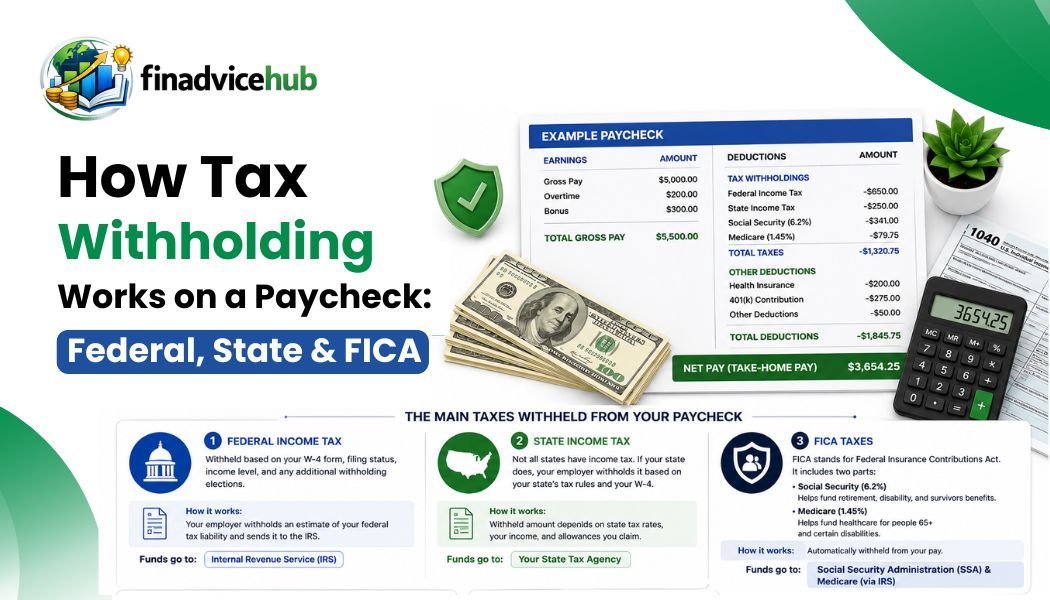
The tax section includes tax withholding fields that show amounts sent to federal, state, and government programs.
Common tax fields include:
- Federal income tax
- State income tax
- Social Security
- Medicare
Tax amounts may change based on your income, tax elections, and location.
Net Pay Summary
The net pay section shows the amount you actually receive.
This is sometimes called take-home pay.
The basic calculation is:
Gross Pay – Taxes – Deductions = Net Pay
The net pay line should match the amount deposited into your bank account.
Employee Information Section
Before reviewing earnings and deductions, start with the employee information section. These details identify who the paycheck belongs to, which work period it covers, and how payment was processed.
Understanding these fields is an important part of learning how to read a pay stub because even small errors in employee details can create payroll problems.
Name and ID
Most pay stubs include the employee’s name, employee ID number, department, or payroll identification number.
These details confirm that the payroll statement belongs to the correct person. If you notice an incorrect name, employee number, or personal detail, report it to your payroll department because incorrect records can affect future payments and tax documents.
The employee ID is especially useful in larger companies where many employees may have similar names.
Pay Period Dates
The pay period shows the exact dates included in your paycheck calculation.
For example:
Pay Period: April 1 – April 15
Pay Date: April 20
This means the paycheck covers work completed between April 1 and April 15, but the actual payment was issued on April 20.
Understanding pay period dates helps employees verify:
- Hours worked
- Overtime eligibility
- Missing shifts
- Payroll adjustments
Hourly employees should always compare their recorded work hours with the pay period shown on their pay stub.
Employer Details
The employer section usually includes the company name, address, and payroll information.
This information confirms the organization responsible for issuing the payment. It can also be useful when submitting income documents for loans, housing applications, or financial verification.
A payroll statement is more than a payment record; it is an official document connecting your earnings to your employer.
Payment Method
The payment method section explains how you received your wages.
Common payment methods include:
- Direct deposit
- Paper check
- Payroll card
For direct deposit payments, some pay stubs show the amount sent to each bank account if an employee splits payments between multiple accounts.
Checking this section is part of a complete paycheck verification guide because incorrect deposit information can delay payment.
Earnings Section Explained
The earnings section is where employees find the details behind their gross pay. This is one of the most important parts of a paycheck breakdown guide because it explains exactly how income was generated.
A complete pay stub earnings and deductions explained review always starts with understanding earnings.
Your earnings may include regular wages, overtime, bonuses, commissions, and other forms of compensation.
Regular Pay
Regular pay is the standard amount earned during the pay period.
For hourly employees, regular pay is calculated using:
Hourly Rate × Hours Worked = Regular Earnings
Example:
Hourly rate: $22
Hours worked: 80
$22 × 80 = $1,760 regular pay
For salaried employees, regular earnings are usually calculated by dividing annual salary across the number of pay periods.
Example:
Annual salary: $72,000
Pay periods: 24
$72,000 ÷ 24 = $3,000 gross salary per paycheck
The regular pay line helps employees confirm that their base compensation is correct.
Overtime Pay
Overtime pay represents additional wages earned beyond normal working hours.
Many employers calculate overtime at 1.5 times the regular hourly rate, although specific rules depend on employment laws and company policies.
Example:
Regular rate: $22/hour
Overtime rate: $33/hour
10 overtime hours:
10 × $33 = $330 overtime pay
Employees should carefully review overtime entries because missing overtime is one of the most common payroll issues.
A proper line-by-line paystub breakdown should always include overtime verification.
Bonuses and Commissions
Additional compensation may appear as separate earnings lines.
Examples include:
- Performance bonuses
- Sales commissions
- Referral incentives
- Holiday bonuses
- Project payments
These payments increase gross earnings but may also affect tax withholding.
For example, an employee receiving a $1,000 bonus may notice that the final increase in take-home pay is lower because taxes are withheld from the additional compensation.
Other Earnings
Some pay stubs include additional earning categories such as:
- Sick pay
- Vacation pay
- Holiday pay
- Shift differentials
- Allowances
These fields help employees understand exactly where their total earnings came from.
Year-to-Date Earnings
The YTD earnings field shows how much an employee has earned since the beginning of the year.
For example:
Current paycheck earnings: $3,200
YTD earnings: $19,500
This means the employee has earned $19,500 so far during the calendar year.
YTD earnings are useful for:
- Tax planning
- Income verification
- Budgeting
- Comparing annual compensation
Tax Deductions Section
Taxes are often the most confusing part of a paycheck. Understanding tax withholding fields makes it easier to see why your gross pay and take-home pay are different.
The tax section explains amounts withheld from your earnings and sent to government programs.
Federal Income Tax
Federal income tax is money withheld from your paycheck and paid toward your federal tax obligation.
The amount depends on factors such as:
- Income level
- Filing status
- Tax form information
- Pay frequency
Two employees with the same salary may have different federal withholding amounts because their tax situations may differ.
State Tax
State tax depends on the state where you work and live.
Some states have income taxes, while others do not.
Changes that may affect state withholding include:
- Moving to another state
- Updating tax forms
- Changes in income
Employees should review this field after major life events.
Social Security
Social Security tax is a payroll tax that helps fund Social Security benefits. Employees contribute a percentage of their wages, and employers also contribute separately.
This deduction is usually automatic and appears on every paycheck.
Medicare
Medicare tax helps fund the federal Medicare healthcare program. Like Social Security, Medicare withholding is automatically calculated from employee wages.
Higher-income employees may also see additional Medicare withholding depending on their earnings.
Other Deductions Section
After reviewing taxes, the next step in understanding how to read a pay stub is reviewing voluntary and mandatory deductions.
The deductions section explains money removed from your paycheck for benefits, savings programs, or legal requirements.
Health Insurance
Health insurance premiums are among the most common employee deductions.
The amount depends on:
- Coverage level
- Employer contribution
- Employee-selected plan
For example, an employee who chooses family coverage may have higher deductions than someone enrolled in individual coverage.
Retirement Contributions
Many employees contribute to retirement accounts such as a 401(k).
A retirement deduction reduces current take-home pay but helps build long-term savings.
Example:
Gross pay: $3,000
401(k) contribution: $150
The pay stub records this contribution as a deduction.
Other Benefits
Additional benefit deductions may include:
- Dental insurance
- Vision insurance
- Life insurance
- Flexible spending accounts
- Health savings accounts
Each benefit has its own deduction line so employees can see exactly what they are paying for.
Garnishments
A garnishment is a legally required deduction taken from wages.
Examples may include:
- Court-ordered child support
- Certain debt collections
- Legal obligations
Unlike voluntary benefits, employees usually cannot choose whether to participate in garnishments.
Earnings vs. Deductions
| Earnings | Deductions |
| Increase gross pay | Reduce take-home pay |
| Include wages and bonuses | Include taxes and benefits |
| Appear before deductions | Removed from gross earnings |
| Create total compensation | Determine final payment |
Net Pay Section
The net pay section is usually the first place employees look, but understanding how this number is calculated is essential.
Definition of Net Pay
Net pay is the amount an employee receives after all taxes and deductions have been removed.
It is commonly called:
- Take-home pay
- Final paycheck amount
- Direct deposit amount
The net pay line represents the money available for personal expenses.
How It Is Calculated
The calculation is:
Gross Pay – Taxes – Deductions = Net Pay
Example:
Gross pay: $3,000
Taxes:
- Federal tax: $400
- State tax: $150
- Social Security: $186
- Medicare: $43.50
Other deductions:
- Insurance: $150
- Retirement: $150
Total deductions: $1,079.50
Net pay:
$3,000 – $1,079.50 = $1,920.50
Direct Deposit Amount
The direct deposit amount should match the net pay shown on the payroll statement.
If the amounts do not match, employees should investigate possible issues such as:
- Bank account changes
- Payroll processing errors
- Multiple deposits
Final Paycheck Value
The final paycheck value represents the actual money received for that pay period.
Understanding how to read net pay on payslip information allows employees to confidently verify their payments.
Year-to-Date (YTD) Information
One of the most valuable sections of a pay stub is the Year-to-Date (YTD) section. Many employees overlook these numbers because they focus only on the current paycheck amount. However, YTD information provides a complete picture of your earnings, taxes, and deductions throughout the year.
Understanding YTD figures is an important part of learning how to read a pay stub because it allows you to track your annual compensation and verify that payroll records remain accurate.
What YTD Means
YTD stands for “year to date.” It represents the total amount accumulated from January 1 of the current year through the date of your latest paycheck.
For example:
Current Pay Period Earnings: $2,800
YTD Earnings: $16,800
This means the employee earned $16,800 so far during the year.
YTD information appears beside many pay stub fields, including:
- Gross earnings
- Federal taxes
- State taxes
- Social Security
- Medicare
- Retirement contributions
- Insurance deductions
Tracking Total Earnings
YTD earnings help employees monitor their total income over time.
This information is useful when:
- Preparing tax returns
- Applying for loans
- Reviewing salary increases
- Comparing compensation records
- Planning personal finances
For example, if your annual salary is $60,000 and your YTD earnings are much lower than expected halfway through the year, reviewing your pay stub can help identify missing payments or unpaid time.
Tracking Total Taxes
The YTD tax section shows how much has already been withheld for the year.
Employees can use this information to compare their payroll withholding with their expected tax obligations.
Common YTD tax fields include:
- Federal income tax withheld
- State income tax withheld
- Social Security taxes
- Medicare taxes
These totals are also useful when reviewing annual tax documents such as W-2 forms.
Why YTD Matters
YTD figures provide a long-term view of your payroll activity.
A single paycheck only shows one payment period. YTD information shows the bigger financial picture.
Regularly reviewing YTD totals can help employees:
- Confirm accurate salary payments
- Detect payroll inconsistencies
- Monitor retirement savings
- Prepare for tax season
Current Pay vs. Year-to-Date (YTD)
| Category | Current Pay | Year-to-Date |
| Time Period | One paycheck period | Entire year so far |
| Purpose | Shows current payment | Tracks annual totals |
| Example | $3,000 earned this paycheck | $18,000 earned this year |
| Used For | Checking current wages | Tax and income tracking |
Real Pay Stub Example Explained USA: Complete Paycheck Stub Breakdown With Example
A real pay stub example explained USA employees can follow makes payroll concepts much easier to understand. The following sample shows a realistic employee paycheck with earnings, deductions, taxes, and YTD totals.
This example provides a complete paycheck stub breakdown with example calculations.
Sample Pay Stub
Employee Name: Michael Anderson
Employee ID: 45821
Pay Period: May 1 – May 15
Pay Date: May 20
Employee Details
| Field | Information |
| Employee | Michael Anderson |
| Pay Period | May 1 – May 15 |
| Pay Frequency | Biweekly |
| Payment Method | Direct Deposit |
Earnings Section
| Earnings Type | Current Amount | YTD Amount |
| Regular Pay | $2,800 | $16,800 |
| Overtime Pay | $350 | $1,050 |
| Bonus | $500 | $500 |
| Gross Pay | $3,650 | $18,350 |
Earnings Explanation
Michael’s regular pay is $2,800 for the current pay period. This represents his normal wages based on his salary or approved working hours.
The overtime line shows $350 in additional earnings. This indicates Michael worked extra hours that qualified for overtime compensation.
The bonus line shows an additional $500 payment. Bonuses are included in gross earnings but may have different withholding calculations.
Adding all earnings:
Regular Pay: $2,800
Overtime: $350
Bonus: $500
Gross Pay = $3,650
This is the amount Michael earned before any taxes or deductions.
Tax Withholding Fields Explanation
| Tax Field | Current Amount | YTD Amount |
| Federal Income Tax | $500 | $2,500 |
| State Income Tax | $180 | $900 |
| Social Security | $226.30 | $1,136.70 |
| Medicare | $52.93 | $265.08 |
Federal Income Tax
Michael’s federal tax withholding is $500 for this paycheck. This amount is based on his earnings and tax information provided to his employer.
State Income Tax
The $180 state tax deduction depends on Michael’s state tax requirements. Employees in states without income tax may not see this deduction.
Social Security
Social Security withholding is calculated as a percentage of taxable wages. Michael’s deduction contributes toward the Social Security program.
Medicare
The Medicare deduction supports the federal Medicare program and is automatically withheld from wages.
Deductions Section Example
| Deduction | Current Amount | YTD Amount |
| Health Insurance | $200 | $1,000 |
| Retirement Contribution | $250 | $1,250 |
| Total Other Deductions | $450 | $2,250 |
Deduction Explanation
Michael contributes $200 toward health insurance coverage.
He also contributes $250 toward retirement savings.
These deductions reduce his taxable and take-home pay depending on the type of deduction and applicable rules.
Net Pay Calculation Example
Now we can complete the payroll statement example breakdown.
Gross Pay
$3,650
Taxes
Federal Tax: $500
State Tax: $180
Social Security: $226.30
Medicare: $52.93
Total Taxes:
$959.23
Other Deductions
Health Insurance: $200
Retirement: $250
Total Other Deductions:
$450
Final Calculation
Gross Pay: $3,650
Minus Taxes: $959.23
Minus Other Deductions: $450
Net Pay: $2,240.77
Michael’s direct deposit should be approximately $2,240.77.
Line-by-Line Paystub Breakdown: What Each Line on a Pay Stub Means
A complete understanding of what each line on a pay stub means helps employees confidently review their paycheck.
| Pay Stub Line | Meaning |
| Employee Name | Identifies the worker receiving payment |
| Pay Period | Shows dates included in payroll calculation |
| Regular Pay | Standard wages earned |
| Overtime Pay | Additional hours paid at overtime rate |
| Bonus | Extra compensation |
| Gross Pay | Total earnings before deductions |
| Federal Tax | Federal income tax withheld |
| State Tax | State income tax withheld |
| Social Security | Payroll contribution |
| Medicare | Healthcare payroll contribution |
| Benefits | Employee-selected deductions |
| Net Pay | Final amount received |
This type of line-by-line paystub breakdown makes it easier to identify payroll mistakes and understand every paycheck detail.
How to Verify This Pay Stub Is Correct
Using a paycheck verification guide approach, Michael can confirm accuracy by checking:
- His pay period matches the dates he worked.
- His regular hours or salary amount are correct.
- His overtime hours were included.
- His bonus payment appears correctly.
- Tax withholding fields look reasonable.
- Benefits match his enrollment choices.
- Net pay matches his bank deposit.
This process is a practical way to perform paystub error detection before problems affect future payments.
Insights From This Pay Stub Example
This paycheck example shows the relationship between earnings, deductions, and final payment.
Michael earned $3,650 before deductions. After taxes and benefits were removed, he received $2,240.77.
The difference between these amounts does not mean money disappeared. Each deduction has a purpose:
- Taxes support government programs.
- Insurance provides healthcare coverage.
- Retirement contributions build future savings.
Understanding this process makes reading payroll details much easier.
Common Pay Stub Mistakes to Watch For
Even with modern payroll systems, mistakes can occasionally happen. A small payroll error may affect your income, taxes, benefits, or annual records. Learning how to check paycheck accuracy is an important financial habit for every employee.
A regular paycheck review works like a paycheck verification guide. It helps you confirm that your employer paid you correctly and that deductions match your expectations.
Common payroll problems include incorrect wages, missing overtime, inaccurate deductions, and tax withholding errors.
Incorrect Deductions
One of the most common payroll issues involves incorrect deductions.
A deduction error may happen when:
- A benefit amount changes incorrectly
- A canceled benefit continues being deducted
- A retirement contribution percentage is wrong
- A payroll system duplicates a deduction
For example, if you recently changed your health insurance plan but your old premium amount still appears on your pay stub, the deduction should be reviewed with your payroll department.
A proper pay stub deduction explanation should make every deduction understandable. Employees should know exactly why money is being removed from their paycheck.
Missing Overtime
Hourly employees should always verify overtime payments.
A missing overtime payment can happen because of:
- Incorrect time records
- Missed timesheet approvals
- Payroll processing mistakes
- Incorrect overtime calculations
Compare your recorded hours with the hours listed in your earnings section.
If you worked 10 overtime hours but your pay stub only shows regular hours, this may require correction.
Tax Errors
Tax withholding mistakes can affect your paycheck and future tax filings.
Possible tax-related errors include:
- Incorrect federal withholding
- Wrong state tax information
- Outdated employee tax forms
- Incorrect Social Security or Medicare calculations
Employees should review tax withholding fields after major changes such as:
- Marriage
- Divorce
- Relocation
- Salary changes
- Additional income
Employer Mistakes
Employer payroll mistakes may include:
- Incorrect pay rate
- Missing bonus payments
- Wrong employee classification
- Incorrect pay period
- Missing approved leave payments
If you find an issue, gather supporting information such as time records, employment agreements, and previous pay stubs before contacting payroll.
Paycheck Verification Guide: How to Check Your Pay Stub Accuracy
A simple review process can help you identify problems early.
Follow these steps:
- Confirm employee information:
Check your name, employee ID, and pay period dates. - Review earnings:
Verify your regular wages, overtime, bonuses, and commissions. - Check tax amounts:
Review federal, state, Social Security, and Medicare deductions. - Review benefits and other deductions:
Make sure insurance, retirement, and other deductions match your selections. - Verify net pay:
Confirm that your direct deposit matches the net pay line. - Compare YTD totals:
Look for unexpected changes in annual earnings or deductions.
This process turns reading payroll details into a simple financial checkup.
Paystub Error Detection Checklist
| Check | What to Verify |
| Employee Information | Correct name and ID |
| Pay Period | Correct dates worked |
| Earnings | Correct wages and overtime |
| Taxes | Accurate withholding amounts |
| Benefits | Correct deductions |
| Net Pay | Matches payment received |
| YTD Totals | Consistent annual records |
Conclusion
Learning how to read a pay stub gives you control over one of the most important parts of your financial life: your income.
A paycheck is not just a number deposited into your bank account. It is a detailed payroll record showing how your earnings were calculated, which taxes were withheld, what benefits were deducted, and how your final payment was determined.
By understanding the earnings section, deductions section, tax withholding fields, YTD totals, and net pay line, you can confidently review your compensation record and identify potential payroll problems.
A complete paycheck stub breakdown allows you to answer important questions:
- Did I receive the correct pay?
- Were my deductions accurate?
- Were my taxes calculated correctly?
- Does my payment match my work?
Regularly reviewing your payroll statement is a simple habit that improves financial awareness and protects you from unexpected errors.
Whether you are checking a salary slip explanation, reviewing a digital payslip, or performing a complete line-by-line paystub breakdown, understanding your paycheck empowers you to make better financial decisions.
Knowing how to read a pay stub is not just about understanding numbers it is about understanding your earnings, protecting your income, and staying informed about your financial records.
FAQs
What is a pay stub?
A pay stub is a document that explains how an employee’s paycheck was calculated. It includes earnings, taxes, deductions, and the final payment amount. A pay stub provides a detailed record of wages earned during a specific pay period and acts as proof of income.
A complete pay stub explained guide helps employees understand the relationship between gross pay, deductions, and net pay. It also helps workers verify that their employer calculated compensation correctly.
How do I read my paycheck stub?
To read your paycheck stub, begin by checking your employee information and pay period dates. Next, review the earnings section to confirm your wages, overtime, bonuses, and other compensation.
After that, review the deductions section, including taxes, insurance, retirement contributions, and other withholdings. Finally, check the net pay line to confirm that the amount matches your paycheck or direct deposit.
A complete paycheck stub breakdown involves comparing every section rather than only looking at the final payment amount.
What does net pay mean on a pay stub?
Net pay is the amount you actually receive after all taxes and deductions are removed from your gross earnings.
For example, if your gross pay is $3,500 and your total deductions are $1,000, your net pay is $2,500.
The net pay line is usually the most important number for personal budgeting because it represents your available income. Learning how to read net pay on payslip records helps employees understand why their deposit amount differs from their salary.
What are YTD earnings?
YTD earnings are your total earnings from the beginning of the calendar year until your current paycheck date.
Your pay stub may show YTD totals for wages, taxes, and deductions. These figures help employees track annual income, prepare taxes, and verify compensation records.
For example, a paycheck may show current earnings of $3,000 but YTD earnings of $21,000 because previous paychecks are included in the yearly total.
Why are there so many deductions?
Paycheck deductions exist because different amounts are removed for taxes, benefits, savings programs, and legal obligations.
Common deductions include:
- Federal income tax
- State income tax
- Social Security
- Medicare
- Health insurance
- Retirement contributions
Each deduction serves a specific purpose. Understanding how to understand payslip deductions helps employees make informed decisions about benefits and financial planning.
How can I check if my paycheck is correct?
You can check paycheck accuracy by comparing your pay stub with your expected wages and work records.
Review:
- Pay rate
- Hours worked
- Overtime
- Bonuses
- Taxes
- Benefits
- Net payment amount
A paycheck verification process helps identify errors before they affect future payments or tax documents.
If something does not match, contact your payroll department and provide supporting records.
What is included in earnings on a pay stub?
The earnings section includes all money earned before deductions.
Common earnings include:
- Regular wages
- Overtime pay
- Bonuses
- Commissions
- Holiday pay
- Other compensation
The earnings section creates your gross pay amount. Understanding these fields is essential for anyone learning how to read a pay stub because earnings determine how taxes and deductions are calculated.
Do all employers provide pay stubs?
Most employers provide some form of wage statement, but the exact requirements depend on state laws and employment regulations.
Some employers provide paper pay stubs, while others provide digital statements through payroll systems.
Even when electronic delivery is used, employees should have access to payroll information showing earnings, deductions, and payment details.