
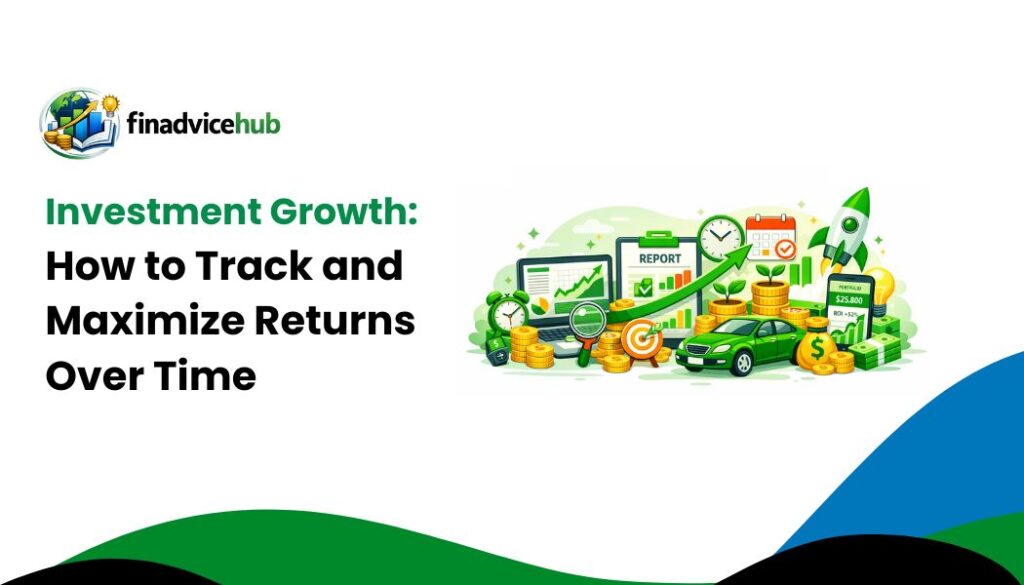
Investing isn’t just about buying stocks, bonds, or real estate. It’s about understanding how your money grows over time and making decisions that actually help your wealth increase. Knowing how to track investment growth and measure portfolio performance gives you real insight into what’s working and what isn’t.
Growth comes in different forms: some investments appreciate, others generate income, and the smartest approach often combines both. By keeping an eye on capital appreciation, reinvesting dividends, and adjusting for inflation, you set your portfolio up for steady long-term progress.
Whether you’re just starting out or already have experience, tracking your investments and applying long-term growth strategies can turn small contributions into meaningful wealth over time. Real examples from stocks, mutual funds, and real estate show that thoughtful, consistent action truly pays off.
Understanding Investment Growth
Investment growth is the increase in the value of your investments over time. It can occur through capital appreciation, income generation, or a combination of both. Understanding how investments grow helps you make informed decisions and plan for your financial future.
Definition and Importance
Investment growth refers to the rise in the value of an asset or portfolio. It is critical because:
- It builds wealth over time.
- It helps you measure the effectiveness of investment strategies.
- It provides a benchmark for financial goals such as retirement or buying a home.
Capital Appreciation vs Income
Investments can grow via:
| Type of Growth | Description | Examples |
| Capital Appreciation | Increase in the value of the principal investment | Stocks rising in price, real estate property value increases |
| Income | Earnings generated from the investment | Dividends, interest, and rental income |
Most investors benefit from a combination of both. For example, reinvesting dividends amplifies total portfolio growth.
Factors Affecting Growth
Investment growth is influenced by multiple factors:
- Market performance: Volatility can affect short-term returns.
- Economic trends: Inflation, interest rates, and GDP growth impact asset values.
- Asset allocation: Diversification spreads risk and affects returns.
- Time horizon: Longer investment periods usually yield higher long-term growth.
Long-Term vs Short-Term Growth
| Growth Type | Characteristics | Ideal For |
| Short-Term Growth | Quick returns, higher volatility | Active traders, opportunistic investments |
| Long-Term Growth | Gradual appreciation, compounding benefits | Retirement planning, wealth accumulation |
Real-Life Significance
Consider an investor who bought $10,000 in an S&P 500 index fund 20 years ago. With average annual returns of ~8%, the investment could grow to over $46,000—showing the power of investment compounding.
Measuring Investment Growth
Tracking your investments is crucial for assessing investment performance and making timely adjustments.
Growth Rate Formula
The simplest formula for calculating investment growth rate:
[Growth Rate (%) = ((Ending Value − Beginning Value) / Beginning Value) × 100]
Example:
If your portfolio grew from $10,000 to $12,000:
[Growth Rate = ((12,000 − 10,000) / 10,000) × 100 = 20%]
Tracking Portfolio Performance
Effective tracking involves:
- Using investment tracking tools.
- Reviewing asset allocation regularly.
- Comparing performance against benchmarks like the S&P 500 or bond indices.
Recommended Tools Table:
| Tool | Features | Use Case |
| Morningstar | Portfolio analysis, risk assessment | Mutual funds, ETFs |
| Personal Capital | Net worth tracking, retirement planner | Comprehensive portfolio tracking |
| Yahoo Finance | Real-time quotes, performance graphs | Individual stocks and ETFs |
| Excel/Google Sheets | Custom tracking, growth calculations | DIY investors |
Reinvested Dividends Impact
Reinvesting dividends can have a surprisingly powerful impact on your investment growth. Instead of taking dividend payments as cash, putting them back into your portfolio allows those funds to start earning returns themselves. Over time, this creates a compounding effect, where not only does your original investment grow, but the reinvested dividends also generate additional returns.
For example, imagine two investors who start with the same amount in a stock or mutual fund. One chooses to reinvest dividends, while the other withdraws them. Even if both experience the same market growth, the investor who reinvests dividends will likely see their portfolio grow significantly more over 20 years.
This simple yet consistent action demonstrates how small decisions can accumulate into substantial long-term financial benefits, highlighting the importance of reinvestment in a growth-focused strategy.
Inflation-Adjusted Growth
Nominal returns don’t account for inflation. Real growth is:
[Real Growth Rate = Nominal Growth Rate − Inflation Rate]
Example: 8% nominal return – 3% inflation = 5% real growth.
Online Tools for Calculation
- Investment Growth Calculators: Automatically calculate compounded growth.
- Digital Portfolio Analytics: Uses AI for predictive investment modeling.
- Mobile apps: Offer AI investment growth forecasting for retail investors.
Examples and Scenarios
Practical examples help investors visualize potential growth outcomes.
Stock Market Growth Examples
Consider an investor who put $5,000 into Apple stock back in 2010. Over the years, the value of that investment didn’t just grow steadily, it multiplied dramatically thanks to capital appreciation. As Apple’s stock price increased, the original investment began to compound, creating a significant rise in portfolio value.
On top of that, dividends paid out over the years were reinvested, further accelerating the growth. By 2025, that initial $5,000 could grow to over $60,000, illustrating how a combination of long-term holding, capital gains, and reinvested dividends can turn a modest investment into a substantial sum. This example highlights the importance of patience and strategic reinvestment in achieving meaningful investment growth.
Chart Idea: Line chart showing yearly portfolio growth for different tech stocks.
Mutual Funds Growth Illustration
Imagine consistently investing $100 every month into an S&P 500 index fund. At first, the growth may seem slow and almost unnoticeable, but over time, the power of long-term growth strategies becomes clear. Each monthly contribution adds to the principal, and the returns generated begin to compound year after year.
After 20 years of disciplined investing, that modest $100-per-month habit could grow into over $50,000. This example demonstrates how regular contributions, combined with patience and a long-term mindset, can turn small, consistent investments into a substantial portfolio. It’s a clear illustration of how steady, long-term strategies outperform attempts at quick wins in the market.
Real Estate Investment Growth
Consider someone who purchased a property for $200,000 back in 2010. Over the years, the value of the property increased steadily, and by 2025, it could be worth around $350,000. This capital appreciation shows how real estate can build wealth over time, especially when held for the long term.
Beyond the increase in property value, rental income provides another source of growth. Monthly rental payments not only cover expenses but can also be reinvested or saved, further boosting overall returns. Together, property appreciation and rental income demonstrate how real estate can be a powerful component of a diversified, long-term investment growth strategy.
Retirement Account Growth
| Account Type | Contribution | Growth Rate | Ending Value (20 yrs) |
| 401(k) | $500/month | 7% | $250,000 |
| Roth IRA | $6,000/year | 8% | $265,000 |
Real-Life Case Studies
Case Study: Investor A vs Investor B
Investor A tracks and reinvests dividends, diversifies assets → 12% CAGR.
Investor B ignores tracking → 7% CAGR.
Lesson: Proper investment tracking and strategy dramatically affect results.
Challenges and Considerations
Even the best strategies face obstacles.
Market Volatility Impact
Markets naturally go through ups and downs, and it’s normal for portfolio values to fluctuate along the way. Even well-performing investments can lose value temporarily during periods of uncertainty or economic turbulence.
This is why maintaining a long-term focus is so important. Short-term drops may feel alarming, but history shows that patient investors who stay the course are far more likely to see their portfolios recover and grow over time. Understanding that volatility is part of the journey can help you make calmer, more strategic decisions instead of reacting impulsively to every market swing.
Fees and Taxes Affecting Growth
Management fees, broker fees, and taxes can reduce capital appreciation.
Table: Annual Fees Impact
| Fee Type | Annual % | Effect on $10,000 |
| Mutual Fund Fees | 1.0% | $2,000 lost over 20 yrs |
| Trading Fees | 0.5% | $1,000 lost over 20 yrs |
| Taxes | 15% gains | $3,000 lost over 20 yrs |
Overestimating Future Returns
It’s common for many investors to assume that high returns will continue indefinitely. Dreams of double-digit gains every year can be enticing, but the reality of the market is much more unpredictable.
Setting realistic expectations is crucial for avoiding disappointment and making smarter decisions. Historically, equities tend to return around 5–8% annually, while bonds generally yield 2–3%. Understanding these averages helps investors plan more effectively, stay patient during slower periods, and focus on steady, long-term investment growth rather than chasing unrealistic short-term gains.
Tracking Errors
Manual errors or spreadsheet mistakes can distort growth metrics. Reliable AI-driven analytics help.
Best Practices to Avoid Mistakes
- Automate tracking with apps.
- Rebalance portfolio periodically.
- Use investment growth calculators for projections.
Strategies to Maximize Growth
Now that you understand growth and challenges, these strategies help you maximize returns.
Diversification
- Spread investments across stocks, bonds, real estate, and ETFs.
- Reduces risk and stabilizes portfolio growth.
Long-Term Investing
- Stay invested over the years to take advantage of compounding.
- Avoid short-term market panic selling.
Reinvesting Earnings
Dividends and interest payments aren’t just extra cash; they’re powerful tools for growing your portfolio. By reinvesting them rather than spending them, you allow these earnings to start generating returns of their own.
Over time, this approach can accelerate capital appreciation, turning what might seem like small, occasional payments into a meaningful boost to your overall investment growth. The compounding effect of reinvested earnings is one of the simplest yet most effective ways to maximize long-term returns without increasing your initial contributions.
Choosing Growth-Oriented Assets
When aiming to maximize investment growth, it helps to focus on sectors with strong potential for long-term expansion. Industries like technology, healthcare, and green energy have shown consistent innovation and market demand, making them attractive areas for growth-oriented investments.
In addition to choosing promising sectors, modern tools like AI investment growth forecasting can help identify emerging trends before they become mainstream. By combining sector research with predictive analytics, investors can make more informed decisions, positioning their portfolios to capture opportunities that might otherwise be overlooked. This strategic approach can give your investments an edge in a rapidly evolving market.
Tracking and Reviewing Portfolio Regularly
Regularly reviewing your portfolio is one of the most effective ways to stay on top of your investments. Whether you check in monthly or quarterly, these reviews help you spot underperforming assets and make adjustments before small issues turn into bigger problems.
In today’s digital age, using portfolio growth analytics can take these reviews a step further. Predictive modeling tools analyze trends and historical performance, helping you anticipate potential risks and opportunities. By combining consistent review habits with smart analytics, you can make more informed decisions and keep your portfolio aligned with your long-term growth goals.
Investment Growth Tracking Checklist:
| Task | Frequency | Tools |
| Portfolio Review | Quarterly | Personal Capital |
| Rebalance Allocation | Annually | Excel/Financial Advisor |
| Track Performance vs Benchmark | Monthly | Morningstar, Yahoo Finance |
| Reinvest Dividends | Automatic | Brokerage Platforms |
Conclusion
Investment growth doesn’t just happen by chance. It’s the result of understanding your investments, measuring how they perform, and applying smart strategies over time.
By keeping track of performance, reinvesting earnings, and spreading your investments across different assets, you give your portfolio the best chance to grow. Modern tools, including AI-powered analytics, can make this process even smarter and more efficient.
According to actual examples from the real world, investors who pay attention to tracking, fees, and market fluctuations tend to outperform those who ignore these factors. With careful planning and consistent effort, you can transform your investments into a powerful tool for achieving your long-term financial goals.
FAQs
What is investment growth?
Investment growth refers to the increase in value of your assets over time. It’s not just about the numbers on your statement, it’s about understanding how your money works for you. Growth can come from rising asset prices, interest earned, dividends, or rental income. Thinking about growth in this way helps you plan for the long term, rather than focusing on short-term market fluctuations.
How is investment growth measured?
Tracking growth isn’t complicated, but it does require consistency. At its simplest, growth is the difference between what you initially invested and what your portfolio is worth now. More precise methods account for reinvested dividends, interest, and fees. Tools like portfolio trackers or even a well-organized spreadsheet can reveal trends in your investments, helping you see which assets contribute most to your long-term wealth.
How does reinvesting dividends affect growth?
Reinvesting dividends is like planting seeds that grow into more seeds. Instead of taking payouts as cash, reinvesting allows these earnings to generate additional returns. Over the years, this compounding effect can turn modest portfolios into significant sums. Even small dividend payments, when reinvested consistently, can accelerate growth far beyond what market appreciation alone would achieve.
How does inflation impact growth?
Inflation silently erodes the purchasing power of your money. A portfolio that grows nominally might still lose value in real terms if returns don’t outpace inflation. Accounting for inflation helps you understand the true growth of your investments and ensures that your long-term strategy actually increases wealth in practical terms not just on paper.
How can I track my portfolio growth?
Tracking growth effectively isn’t about checking your portfolio every day; it’s about establishing a system. Regular reviews, whether monthly or quarterly, combined with digital analytics tools, help you spot trends, underperforming assets, and opportunities. The key is consistency: routine tracking allows you to make proactive decisions before small issues turn into setbacks.
What are growth vs income investments?
Growth investments focus on appreciation stocks or assets expected to increase in value over time. Income investments, on the other hand, prioritize steady cash flow, like dividends or bond interest. Understanding the balance between these types helps tailor your portfolio to your goals, whether that’s aggressive long-term wealth building or stable income generation. Most successful investors combine both in a way that suits their risk tolerance and timeline.
How to maximize long-term investment growth?
Maximizing growth isn’t about chasing hot stocks or timing the market. It’s about consistent contributions, reinvesting earnings, diversifying across assets, and staying patient. Long-term investors benefit from compounding, careful selection of growth-oriented assets, and leveraging modern tools like predictive analytics. Even small, disciplined actions reviewing your portfolio, reinvesting dividends, and adjusting for inflation can dramatically improve results over decades.