
Buying a home involves far more than just saving for a down payment. One of the most significant, yet sometimes overlooked, expenses is the closing cost. Closing costs encompass the various fees, taxes, and charges that must be paid to finalize a real estate transaction. Understanding, calculating, and planning for these costs is crucial for homebuyers and sellers alike. This guide provides an in-depth look at closing costs, breaking down components, calculation methods, and practical budgeting tips, ensuring you can approach your home purchase with confidence.
Understanding Closing Costs
Definition and Purpose
A closing cost is a fee charged during the settlement of a real estate transaction. These costs are incurred to cover the administrative, legal, and financial services required to transfer property ownership. Closing costs are separate from the down payment and can range from 2% to 5% of the home purchase price, depending on the property location, loan type, and negotiated agreements.
The purpose of closing costs is to compensate professionals involved in the transaction, such as title companies, attorneys, appraisers, and lenders. They also include taxes and insurance required to ensure legal compliance and financial security. Closing costs are often seen as unavoidable expenses but can be managed effectively through planning and negotiation.
Common Components: Title, Escrow, Taxes
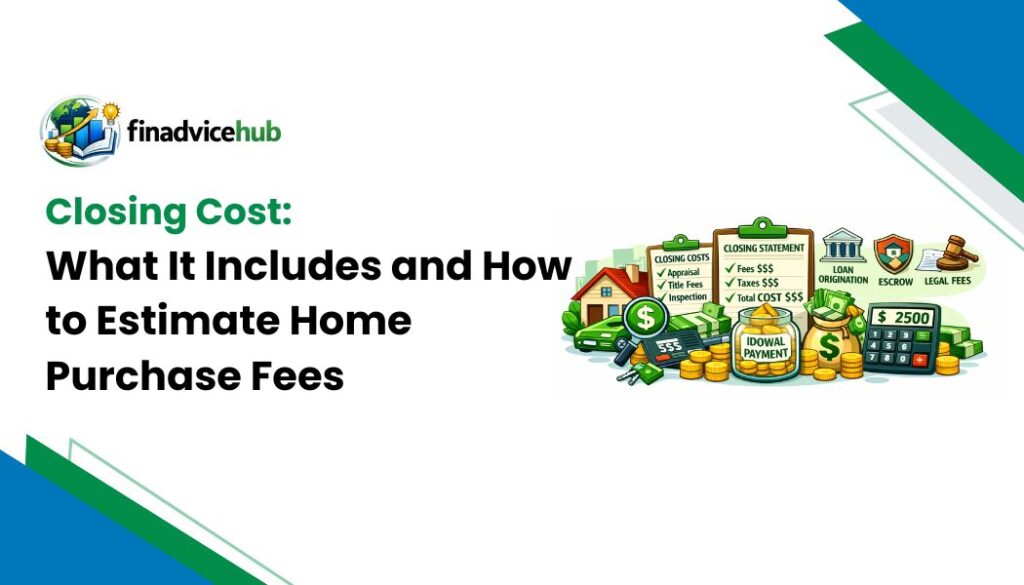
Typical components of closing costs include:
- Title insurance: Protects against disputes over property ownership.
- Escrow fees: Fees paid to the third-party company that manages funds during the transaction.
- Property taxes: Prorated taxes owed at closing.
- Loan origination fees: Charges by lenders to process and underwrite the mortgage.
- Appraisal and inspection fees: Costs for assessing property value and condition.
Understanding each component is essential for accurate closing cost calculation and overall financial planning.
Buyer vs Seller Responsibilities
Responsibilities for closing costs vary depending on the transaction type and negotiation agreements. Generally:
- Buyers pay fees related to loan origination, appraisal, title insurance, and escrow setup.
- Sellers typically cover real estate agent commissions and may contribute to buyer’s closing costs as part of negotiation.
Both parties may agree to split certain costs, such as prorated property taxes or HOA fees, depending on state laws and contractual terms. Clarifying responsibilities early in the process helps prevent last-minute surprises.
Average Closing Cost Percentages
Closing costs typically range from 2% to 5% of the home purchase price. For example, on a $400,000 home, buyers can expect to pay between $8,000 and $20,000 in total closing expenses. These percentages vary by state due to differing transaction taxes, title insurance requirements, and local regulations. Using historical data and state-specific insights can help estimate realistic costs before finalizing a home purchase.
Misconceptions About Closing Costs
Many buyers believe that closing costs are fixed or can be ignored until the final paperwork stage. In reality:
- Costs vary based on lender, property, and state laws.
- Some fees, like title insurance or appraisal, are negotiable.
- Certain expenses may be rolled into the mortgage or reimbursed by the seller with proper negotiation.
Accurate understanding avoids underestimating expenses and improves home purchase cost planning.
Calculating Closing Costs
Step-by-Step Calculation
- Determine Home Price: Begin with the agreed purchase price.
- List Standard Fees: Include lender charges, title and escrow fees, taxes, HOA fees, and inspections.
- Apply Average Percentages: Multiply the home price by 2–5% to estimate total closing costs.
- Adjust for State-Specific Fees: Include local transaction taxes or other regulatory charges.
- Review Loan Terms: Incorporate fees for loan processing, origination, and mortgage insurance.
Example Calculation:
Home price: $350,000
Estimated closing cost (3%): $10,500
This calculation provides a baseline, which can be refined using online closing cost calculators.
Including Lender and Third-Party Fees
Closing costs encompass multiple third-party fees:
- Lender fees: Loan origination, processing, underwriting, and application fees.
- Third-party fees: Appraisal, inspection, and title search charges.
- Government fees: Recording, transfer taxes, and other settlement costs.
Including all parties ensures accurate estimation and prevents financial surprises at closing.
State-Specific Variations
Closing costs can vary significantly by state. For instance:
- In California, higher transfer taxes and title insurance fees increase costs.
- In Texas, certain fees are typically paid by the seller, reducing buyer expenses.
Understanding state-specific rules is critical for realistic budgeting and negotiating closing cost responsibilities effectively.
Using Online Calculators
Digital tools, including AI-powered calculators, allow buyers to input home price, location, loan type, and down payment to estimate closing costs in real time. These tools can simulate multiple scenarios, accounting for:
- Property taxes and HOA fees
- Loan-specific fees
- Prorated insurance or prepaid expenses
Interactive calculators save time and improve transaction fee transparency.
Example Calculations
Scenario:
Home price: $400,000
Average closing cost: 3.5%
Closing costs: $14,000
Breakdown:
- Title insurance: $1,500
- Escrow fees: $1,200
- Loan origination: $2,500
- Taxes & HOA fees: $3,000
- Miscellaneous: $5,800
This example illustrates how various components combine to create the total closing cost, emphasizing the importance of detailed planning.
Components Breakdown
Understanding the individual components of closing costs is crucial for accurate estimation and planning. Each fee serves a specific purpose in a real estate transaction, and being aware of them helps both buyers and sellers avoid surprises.
Title Insurance
Title insurance protects the buyer and lender from potential disputes regarding property ownership, liens, or encumbrances that may arise after purchase. There are two main types:
- Owner’s title insurance: Protects the buyer’s financial interest in the property.
- Lender’s title insurance: Required by lenders to protect their investment in the mortgage loan.
Cost Considerations: Title insurance typically ranges from 0.5% to 1% of the home purchase price. For example, on a $400,000 property, title insurance could cost between $2,000 and $4,000. Costs vary by state and title company. Understanding this fee helps in negotiating and comparing quotes from different providers.
Escrow Fees
Escrow fees are paid to a neutral third party that manages funds and documents during the transaction. The escrow company ensures that all conditions of the sale are met before funds and property are exchanged.
Key Points:
- Covers document preparation, fund distribution, and administrative services.
- Usually split between buyer and seller depending on local customs.
- Typical cost: $500–$2,000 depending on property value and complexity.
For instance, in California, escrow fees are commonly split 50/50, while in Texas, the buyer may bear most of the cost.
Property Taxes and HOA Fees
Property taxes are prorated at closing, meaning the buyer pays for the portion of the year they will own the home. HOA fees, if applicable, are also often collected at closing to cover monthly or yearly homeowner association obligations.
Example:
- Annual property tax: $4,800
- Closing date: June 30 (half-year ownership)
- Prorated tax due: $2,400
Properly accounting for these expenses is essential for accurate closing cost calculation and monthly budget planning.
Loan Origination and Processing
Lenders charge loan origination fees for processing and underwriting a mortgage. This fee covers administrative work, credit checks, and verification of documents. Additional processing fees may include:
- Application fees
- Underwriting fees
- Document preparation fees
Typical Cost: 0.5%–1% of the loan amount. For example, a $300,000 loan may incur $1,500–$3,000 in origination and processing fees. Buyers should compare fees across lenders and consider negotiating lower costs, especially for first-time homebuyers.
Other Miscellaneous Fees
Miscellaneous fees can vary widely depending on the property, lender, and state regulations. Common examples include:
- Appraisal fees: Assessing property value, $300–$600.
- Home inspection fees: Evaluating property condition, $300–$500.
- Recording fees: Charged by local government to record property ownership.
- Courier or document preparation fees: Usually minor but add up to several hundred dollars.
Even small fees can accumulate significantly, so including them in the closing cost breakdown ensures accurate financial planning.
This Components Breakdown section gives buyers and sellers a clear understanding of where their money goes and how to plan accordingly. Accurate knowledge of each component enables better negotiation, financial preparedness, and the avoidance of unexpected expenses at closing.
Planning and Budgeting
Proper planning and budgeting for closing costs is critical for a smooth home purchase. Many buyers focus solely on the down payment and forget that closing costs can add an additional 2–5% of the home price. By preparing in advance, buyers avoid last-minute financial stress and can negotiate effectively with sellers and lenders.
Saving for Closing Costs
Saving for closing costs should be a deliberate part of your home purchase plan. Start by estimating total costs based on home price and typical percentages. For example, for a $350,000 home with an average closing cost of 3.5%, you should plan to save about $12,250.
Strategies for saving:
- Open a dedicated savings account for home purchase expenses.
- Allocate a fixed percentage of monthly income toward this fund.
- Include potential prorated taxes and HOA fees in your calculations.
- Factor in miscellaneous fees such as inspection or recording costs to avoid underfunding.
Saving in advance ensures that you can cover closing costs without compromising other financial goals.
Negotiation Strategies
Negotiation can help reduce the financial burden of closing costs. Buyers may request that sellers cover part or all of the closing costs, especially in a buyer’s market. Lenders may also offer credits to offset fees if you agree to a slightly higher interest rate.
Tips for negotiation:
- Research average closing costs in your state to know what is reasonable.
- Ask your lender for a fee breakdown and identify negotiable items, such as processing or underwriting fees.
- Consider “seller concessions,” where sellers contribute a portion of closing costs as part of the sale agreement.
A proactive approach can reduce out-of-pocket expenses by several thousand dollars, making homeownership more affordable.
Incorporating Costs into Mortgage
In some cases, buyers can roll closing costs into the mortgage loan rather than paying them upfront. This approach increases the loan principal, slightly raising monthly payments, but reduces immediate cash outflow.
Example:
- Home price: $400,000
- Estimated closing cost: $12,000
- Adding closing cost to mortgage at 6% interest for 30 years increases monthly payment by approximately $72.
While convenient, this strategy should be used cautiously, as it increases overall interest paid and may affect loan-to-income ratio calculations for future refinancing.
Planning for Unexpected Fees
Even with thorough planning, unexpected fees can arise. These may include last-minute tax adjustments, HOA prorations, or lender-required inspections. Creating a contingency fund of 5–10% above your estimated closing costs is recommended to cover surprises.
Example:
- Estimated closing costs: $12,000
- Contingency fund (10%): $1,200
- Total funds to have ready: $13,200
This ensures you can close the transaction without delays or financial strain.
Best Practices for First-Time Buyers
First-time buyers often underestimate closing costs. Following these best practices can improve affordability:
- Use online closing cost calculators to simulate different scenarios.
- Review closing cost estimates provided by multiple lenders before committing.
- Factor in all recurring costs such as property taxes and insurance.
- Negotiate seller contributions where possible.
- Maintain a contingency fund to cover unexpected fees.
By combining careful budgeting, negotiation, and proactive planning, first-time buyers can approach closing with confidence and avoid common pitfalls.
Challenges and Considerations
While closing costs are a predictable part of homebuying, they often involve complexities that can impact affordability. Understanding these challenges is essential for effective financial planning and avoiding surprises that could delay or derail a real estate transaction.
Hidden Fees
One of the most common challenges is hidden fees charges that are not immediately apparent in the initial loan estimate. These can include:
- Courier or document handling fees
- Wire transfer charges for escrow deposits
- Local recording fees not disclosed upfront
- HOA transfer or initiation fees
For first-time buyers, overlooking hidden fees can lead to a shortfall at closing. A detailed review of the Closing Disclosure provided by your lender at least three days before closing helps identify these costs. Always request clarification on any line items you do not understand to avoid last-minute surprises.
Last-Minute Cost Changes
Closing costs are estimates, not fixed amounts, and certain costs may fluctuate before final settlement. Examples include:
- Changes in property taxes or utility assessments
- Increased HOA fees or assessments
- Lender-required inspections or repairs identified late in the process
Even a few hundred dollars in unexpected costs can affect affordability. Keeping a contingency fund of 5–10% of the estimated closing cost is a practical way to mitigate the impact of these changes.
State-Specific Rules
Closing costs vary widely across states due to differences in transfer taxes, title insurance requirements, and regulatory fees. For example:
- In New York, buyers may face high recording fees and mortgage tax.
- In Texas, sellers traditionally pay a larger portion of closing costs.
Understanding state-specific rules allows buyers to anticipate expenses accurately and incorporate them into the overall home purchase budget. Real estate professionals, online tools, and local government websites are reliable sources for state-specific data.
Impact on Overall Home Affordability
Closing costs directly influence a buyer’s total home purchase budget. Ignoring or underestimating these expenses can make a home unaffordable, even if the mortgage itself is manageable. For example:
- Home price: $400,000
- Estimated closing costs (3%): $12,000
- Down payment (20%): $80,000
- Total cash needed at closing: $92,000
Incorporating closing costs into affordability calculations ensures that buyers are financially prepared and reduces the risk of overextension.
Avoiding Common Mistakes
To manage closing costs effectively, avoid these common errors:
- Underestimating total costs: Include all fees lender, third-party, state, and miscellaneous charges.
- Failing to compare lender fees: Rates and processing costs can vary significantly.
- Neglecting negotiation opportunities: Many fees, including some lender or escrow charges, can be reduced or waived.
- Ignoring contingency funds: Always set aside extra cash to handle unexpected expenses.
- Relying solely on estimates: Confirm final figures through the Closing Disclosure and state-specific regulations.
Being proactive, informed, and thorough ensures that closing costs do not derail the homebuying process and preserves overall financial stability.
Conclusion
Closing costs are an integral part of the homebuying process, yet they are often misunderstood or underestimated. These fees cover a wide range of services, from title and escrow fees to loan origination charges, property taxes, and miscellaneous third-party expenses. On average, buyers can expect to pay 2–5% of the home purchase price, but the exact amount varies based on state-specific rules, lender requirements, and property characteristics.
Proper understanding and planning for closing costs can significantly improve affordability and reduce financial stress. By breaking down each component, using online closing cost calculators, and factoring in hidden or last-minute fees, buyers and sellers can make informed decisions. Negotiation strategies, incorporating costs into the mortgage, and maintaining contingency funds are practical approaches that enhance financial preparedness.
Ultimately, approaching closing costs with knowledge and foresight ensures that the home purchase process is smooth, transparent, and financially manageable. For first-time buyers, detailed research and proactive planning are essential to avoid surprises and maintain control over the total investment required for homeownership.
FAQs
1. What are closing costs in real estate?
Closing costs are the fees and expenses incurred during the final stages of a real estate transaction, separate from the down payment. They cover the administrative, legal, and financial services required to transfer property ownership from seller to buyer. Typical components include title insurance, escrow fees, loan origination charges, property taxes, and inspection fees. Closing costs generally range from 2% to 5% of the home purchase price, though the exact amount varies by state, lender, and property type.
2. How are closing costs calculated?
Closing costs are calculated by adding up all applicable fees and charges related to the property transaction. The calculation process typically involves:
- Determining the home purchase price.
- Listing all relevant costs, including lender fees, title and escrow charges, appraisal fees, and local taxes.
- Applying average percentages, usually between 2–5% of the property price, to estimate total costs.
- Adjusting for state-specific fees or regulations.
- Reviewing lender documentation to include loan origination, underwriting, and other administrative costs.
Online closing cost calculators and AI tools can also provide estimates by simulating various scenarios and fee structures.
3. Who pays closing costs: buyer or seller?
Closing cost responsibilities can vary based on local customs, state law, and negotiated agreements:
- Buyers typically cover loan-related fees, title insurance, and escrow costs.
- Sellers generally pay real estate agent commissions and may agree to contribute toward buyer’s closing costs.
In some cases, parties may split certain costs such as prorated property taxes or HOA fees. Clarifying responsibilities before closing is essential to avoid surprises.
4. Can closing costs be negotiated?
Yes, many closing cost fees are negotiable. Buyers can:
- Request seller concessions, where the seller covers a portion of closing costs.
- Negotiate with lenders to reduce or waive certain fees, such as loan processing or underwriting charges.
- Compare multiple lenders to identify lower fees or better terms.
Negotiation can reduce total closing costs by several thousand dollars, which is especially valuable for first-time homebuyers or those with tight budgets.
5. Are there online closing cost calculators?
Yes. Online calculators allow buyers to input their home price, down payment, loan type, and location to estimate total closing costs. Advanced AI-powered calculators can simulate multiple scenarios, including varying interest rates, property taxes, HOA fees, and lender charges. These tools are useful for realistic budgeting and planning, helping buyers avoid underestimating expenses before the final settlement.
6. How do closing costs affect mortgage affordability?
Closing costs directly influence a buyer’s total cash required at purchase. Even if the mortgage monthly payment is manageable, underestimating closing costs can strain finances or reduce funds available for emergencies. For example, a $400,000 home with 3% closing costs requires $12,000 in addition to the down payment. Buyers must include closing costs in their affordability calculations to ensure the home fits within their overall financial plan.
7. What is included in closing cost fees?
Closing cost fees typically include a combination of the following:
- Title insurance to protect ownership rights.
- Escrow fees for a neutral third party to manage funds and documents.
- Loan origination and processing fees charged by lenders.
- Property taxes and prorated HOA fees, if applicable.
- Appraisal and inspection fees to verify property value and condition.
- Recording fees and other administrative costs.
Understanding each component helps buyers budget accurately and avoid unexpected costs at settlement.